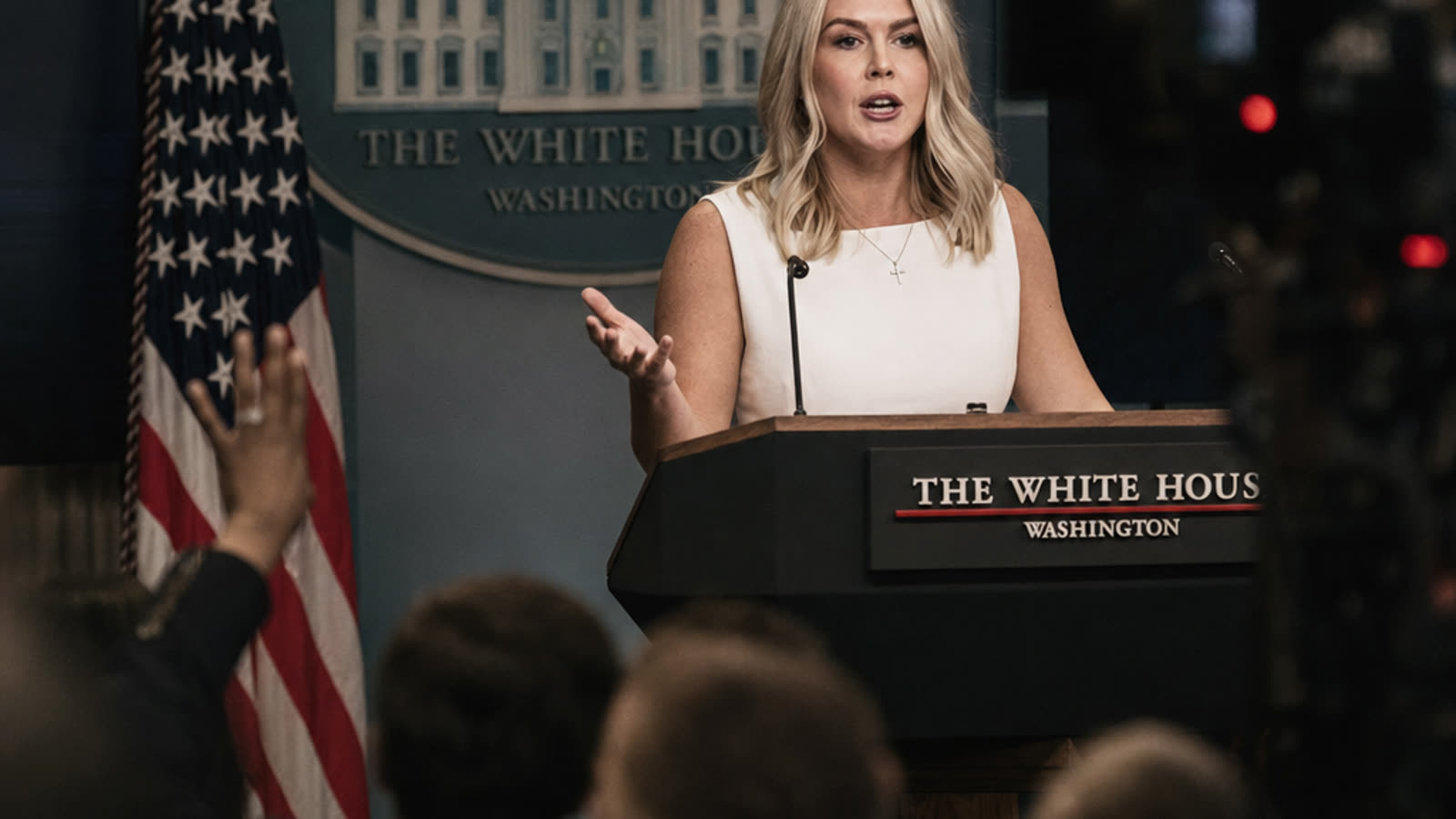
Donald Trump's decision to install Katie Zacharia as his next White House press secretary is less a personnel announcement than a statement of intent: the briefing room will be a battlefield, not a stage.
Zacharia arrives without the cable-news celebrity that defined predecessors like Kayleigh McEnany or the polarizing theatrics of Sean Spicer's tenure. Her background skews toward operational communications work rather than punditry, a profile that suggests the Trump team wants someone who can execute a strategy rather than become the strategy. In a second term where the president himself remains the undisputed main character, a lower-wattage spokesperson may be precisely the point.
The briefing room as weapon
The White House press secretary role has always been a peculiar hybrid—part information officer, part political combatant, part human shield. Under Trump's first administration, the position became something closer to performance art, with briefings that veered between must-watch television and extended exercises in grievance. The Biden and subsequent years dialed back the drama but never quite resolved the fundamental tension between informing the press corps and managing it.
Zacharia's selection hints at a third approach: treating the briefing room as one communications channel among many, subordinate to the president's direct-to-audience apparatus of rallies, social media, and friendly interviews. The spokesperson becomes an implementer of talking points rather than a star in her own right.
What the pick reveals about Trump 2.0
Second-term administrations typically prize loyalty and operational competence over fresh faces and bold ideas. Zacharia's appointment fits that pattern. She is not a figure who will overshadow her principal or freelance on policy. In an administration that has already demonstrated its willingness to purge officials deemed insufficiently devoted, that quality may matter more than communications brilliance.
The choice also suggests the Trump team has absorbed a lesson from its first term: the press secretary who becomes famous often becomes a liability, generating her own news cycles and eventually her own book deal. A functional anonymity may be the goal.
Our take
The White House press secretary has always been a barometer of how an administration views the media—as adversary, necessary evil, or occasionally useful conduit. Trump's selection of Zacharia reads as a vote for controlled hostility: professional enough to avoid unforced errors, obscure enough to keep the spotlight where the president wants it. Whether the briefing room can sustain relevance under such a framework is an open question. What is not in doubt is that the Trump team has decided the answer matters less than it once did.