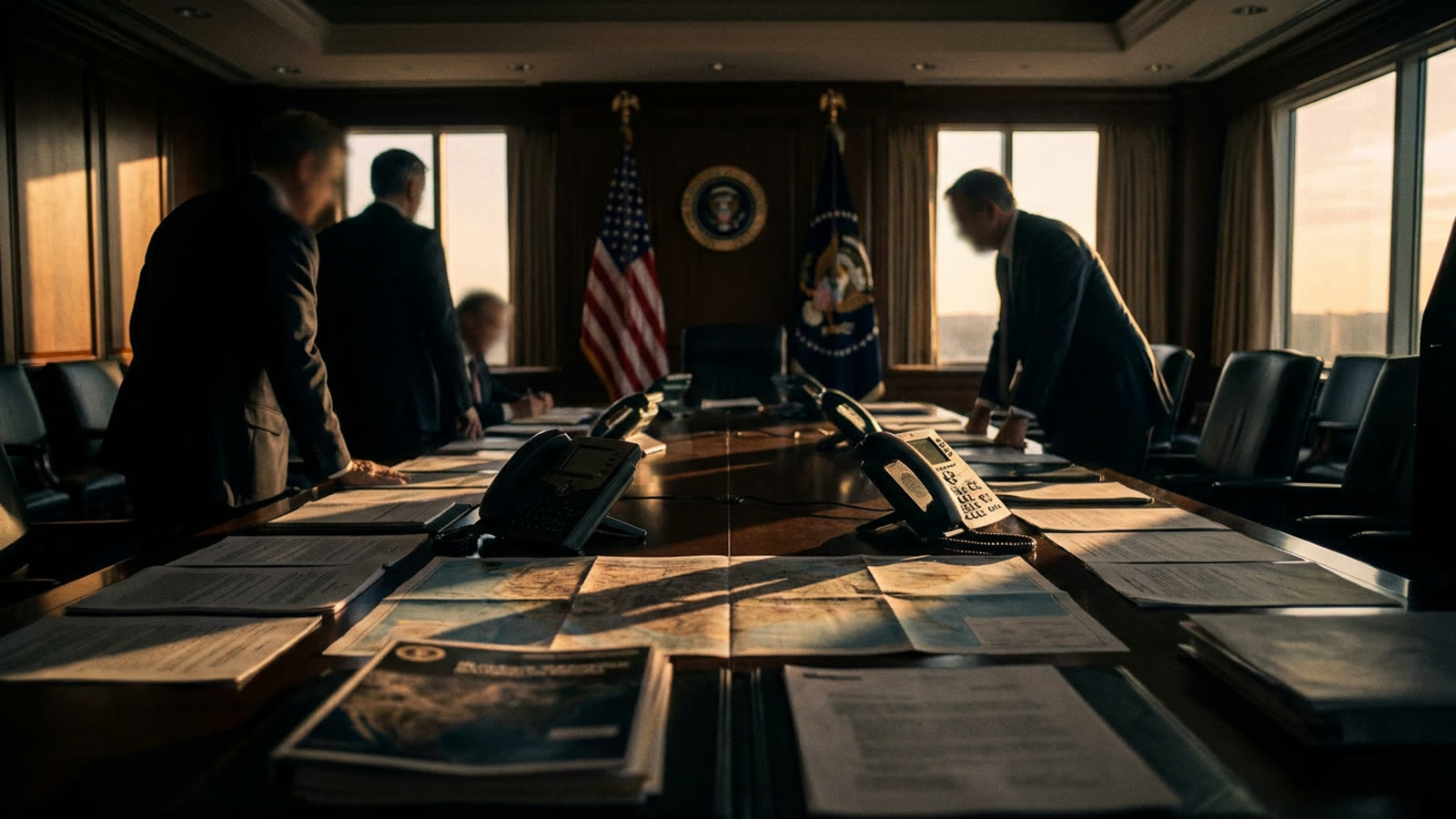
The meeting in the Situation Room on Thursday was not about whether the United States would continue military operations against Iran. That ship sailed weeks ago. The question now confronting President Trump and his national security team is one of calibration: how much force, against which targets, and with what endgame in mind.
Administration officials briefed on the discussions describe a president torn between his instinct for dramatic action and the counsel of advisers urging restraint. The Iranian nuclear program — long the casus belli for hawks in both parties — has advanced to the point where intelligence assessments suggest Tehran could produce weapons-grade uranium within months. Yet the costs of a full-scale bombing campaign remain daunting, both militarily and diplomatically.
The target list grows longer
Pentagon planners have presented Trump with a spectrum of options, from limited strikes on Revolutionary Guard facilities to a comprehensive campaign against Iran's nuclear infrastructure. The latter would require sustained operations over days or weeks, risking significant American casualties and almost certainly drawing in regional proxies from Lebanon to Yemen.
What has changed in recent days is the intelligence picture. Satellite imagery and signals intercepts suggest Iran has dispersed key components of its nuclear program to hardened sites that would require bunker-busting munitions to destroy. The window for a surgical strike, if it ever existed, appears to be closing.
Congressional Republicans watch nervously
The timing could hardly be worse for a president already at odds with his own party. Republican leaders on Capitol Hill have grown increasingly vocal about the lack of consultation on Iran policy, with several committee chairs demanding classified briefings they say have been slow to materialize.
The War Powers Resolution looms as a potential flashpoint. While the administration maintains that existing authorizations cover current operations, a sustained campaign would test that legal theory — and the patience of senators who remember the endless conflicts of the post-9/11 era.
The diplomatic vacuum
Conspicuously absent from the current deliberations is any serious diplomatic track. The Swiss channel that once carried messages between Washington and Tehran has gone quiet. European allies, already strained by trade disputes, have offered little beyond pro forma statements of concern.
This leaves Trump in a position familiar to American presidents: possessing overwhelming military power but uncertain how to translate it into lasting political outcomes. The lessons of Iraq and Afghanistan hang over every discussion, even if they are rarely mentioned aloud.
Our take
Trump has spent years promising to be tougher on Iran than his predecessors while simultaneously pledging to end America's forever wars. Those two commitments are now in direct collision. The president's decision in the coming days will reveal which instinct prevails — and whether he has a theory of victory that extends beyond the next news cycle. History suggests that starting a war is considerably easier than ending one on favorable terms.