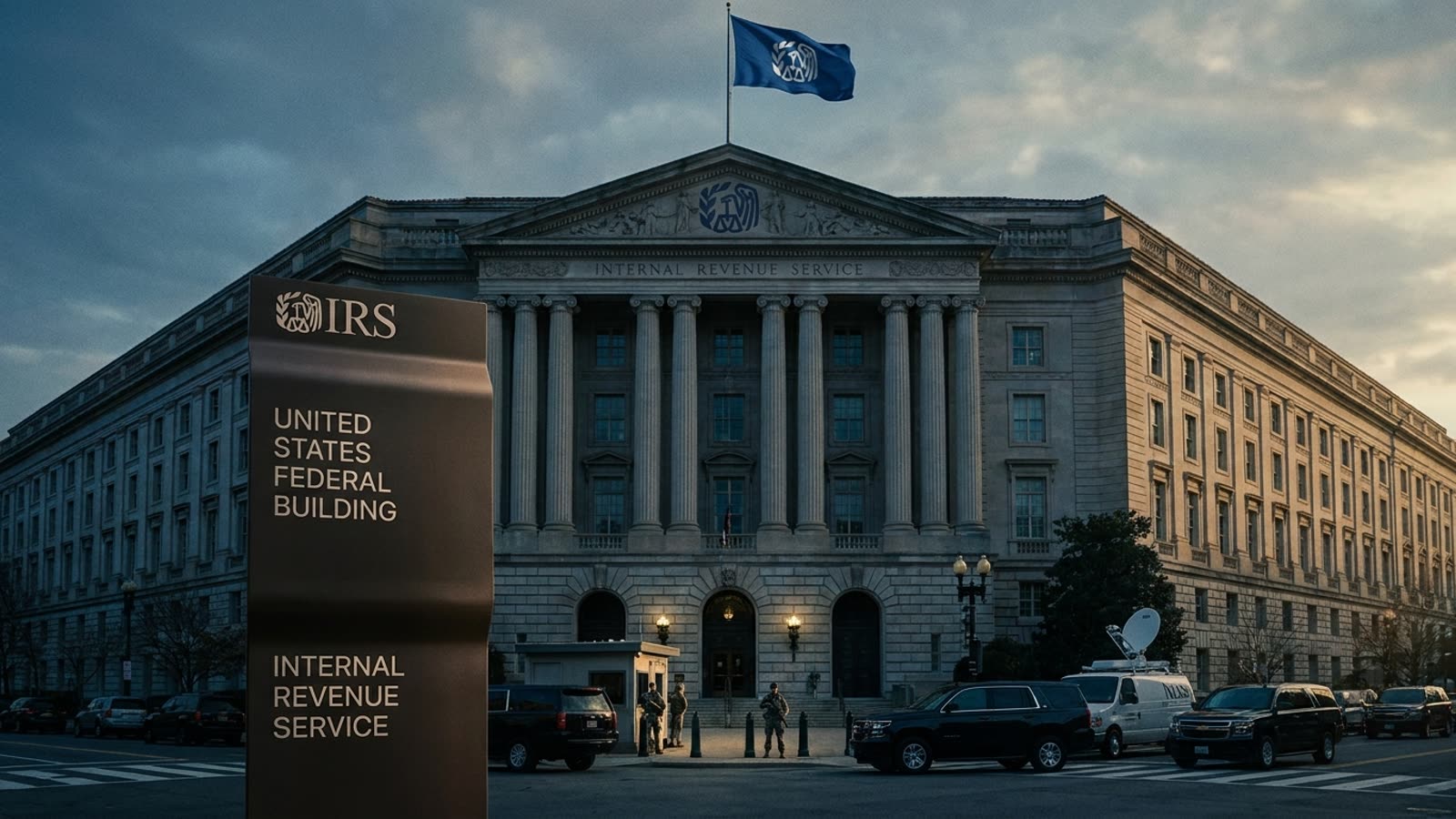
The Internal Revenue Service finds itself in a position no federal agency relishes: possessing a clear legal mandate it cannot execute. According to reporting from The New York Times, the Trump administration has established an informal but functionally binding immunity from IRS audits for members of the president's immediate family—a protection that extends well beyond the sitting president himself and into the sprawling Trump business empire.
This is not, technically, a new law. It is something more durable: an understanding. The IRS, already gun-shy after years of political battering over allegations of targeting conservative groups, has received unmistakable signals that any audit touching Trump family finances would be treated as an act of institutional hostility. The result is a de facto safe harbor for the most financially complex first family in modern history.
The mechanics of non-enforcement
The arrangement works through omission rather than decree. No executive order bars IRS scrutiny of Trump family returns. Instead, the agency's leadership has internalized the political reality that such an audit would trigger immediate retaliation—budget cuts, personnel investigations, congressional hearings framed as exposés of "deep state" overreach. Career officials, already demoralized by waves of departures and reorganizations, have made the rational calculation that discretion is the better part of continued employment.
The practical effect is that Ivanka Trump, Donald Trump Jr., Eric Trump, and their associated business entities operate in a tax environment unavailable to any other American family. Complex transactions that would ordinarily invite IRS scrutiny—real estate valuations, foreign income, charitable deductions, pass-through entity structures—proceed without the oversight that applies to every other taxpayer of comparable wealth.
The constitutional silence
The Constitution offers the president immunity from criminal prosecution while in office, but says nothing about his relatives, his businesses, or the civil enforcement of tax law. Previous administrations maintained at least the fiction of arm's-length separation between the White House and IRS enforcement decisions. The Nixon tapes revealed the opposite impulse—a president eager to weaponize audits against enemies—but even Nixon did not claim immunity for his own family's finances.
What distinguishes the current arrangement is its openness. The immunity is not hidden; it is understood by all relevant parties and functions as a known feature of the political landscape. This transparency, paradoxically, makes it harder to challenge. There is no smoking-gun memo to leak, no explicit order to defy. There is only the ambient reality that certain tax returns will not be examined.
Our take
The United States has stumbled into a constitutional novelty: hereditary tax immunity. It arrived not through legislation or court ruling but through the simple exhaustion of institutional resistance. The IRS, an agency whose legitimacy depends on the perception of equal treatment, now operates under conditions that make equal treatment impossible. This is not a crisis that will resolve itself when administrations change; it is a precedent that future presidents of both parties will be tempted to invoke. The question is no longer whether the tax code applies to the powerful. It is whether anyone will pretend it does.