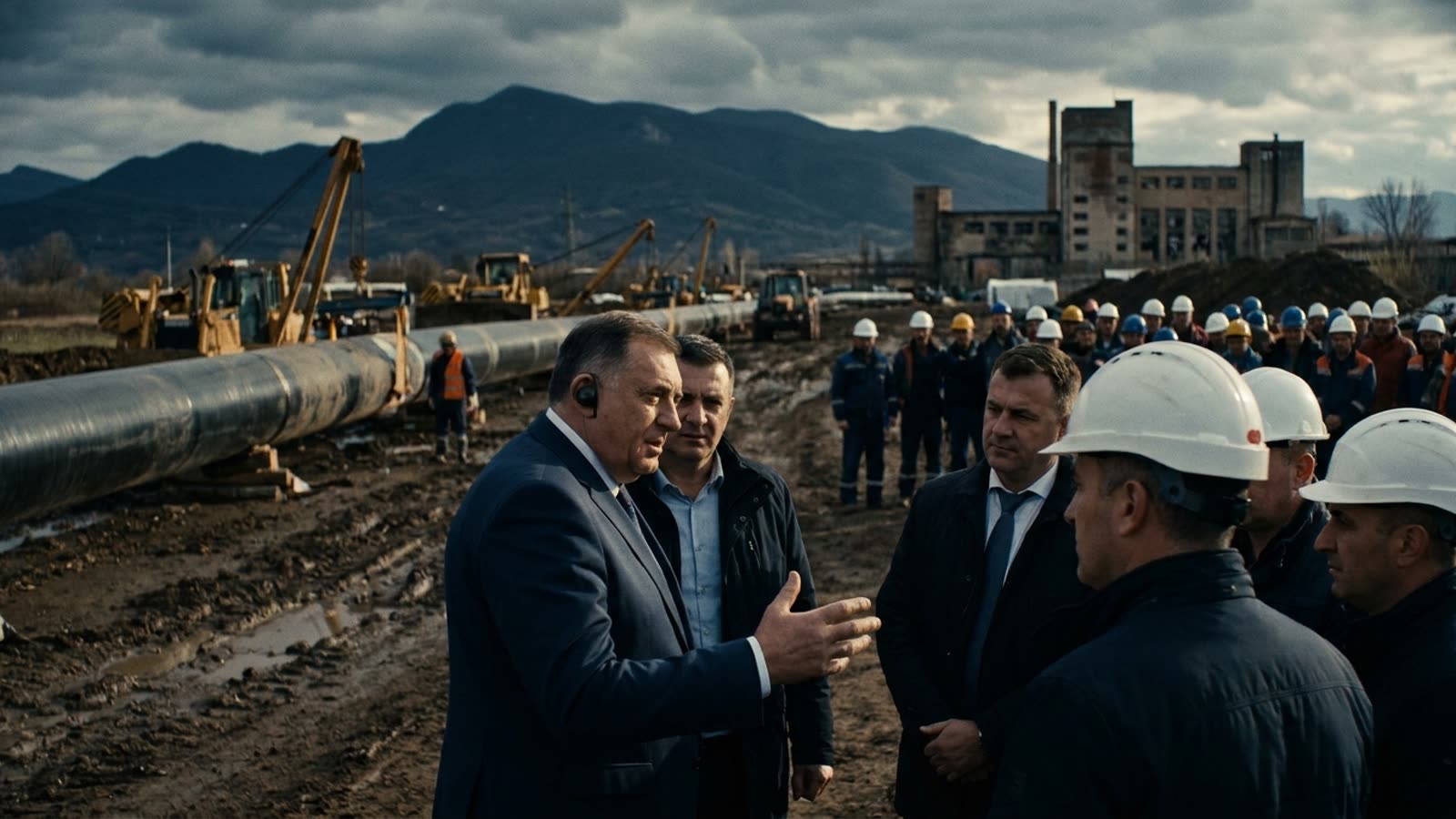
When the daughter of a sitting White House chief of staff shows up in a breakaway Balkan statelet to discuss gas pipelines with a businessman courting Russian energy interests, it is no longer possible to pretend that American foreign policy has a single author.
Republika Srpska — the Serb-dominated entity within Bosnia and Herzegovina — has become an unlikely proving ground for a parallel diplomatic apparatus staffed by Trump loyalists operating outside the State Department's chain of command. According to reporting this week, at least six current and former campaign advisers recently traveled there ahead of local elections, while the chief of staff's daughter joined an American entrepreneur exploring infrastructure deals that would deepen the region's ties to Moscow.
The visits are not illegal. But they are clarifying.
The Dodik factor
Milorad Dodik, the Serb nationalist leader who runs Republika Srpska, has spent years cultivating relationships with the American right. Sanctioned by the Biden administration for threatening Bosnian stability, Dodik has found warmer receptions in Trump-world, where his anti-Brussels rhetoric and Orthodox Christian nationalism resonate with a strain of conservative thinking that views the European Union as a bureaucratic enemy and Russia as a misunderstood civilizational ally.
The gas pipeline under discussion would, if built, offer Republika Srpska an energy corridor that bypasses EU-aligned infrastructure — a strategic gift to Moscow at a moment when the West is still attempting to wean Europe off Russian hydrocarbons. That American political figures are even entertaining such conversations suggests the administration's public posture of transatlantic solidarity is, at minimum, contested internally.
The freelance problem
Presidents have always relied on informal emissaries. But the Trump administration's tolerance for freelance diplomacy has reached a scale that makes traditional statecraft nearly impossible. The State Department cannot credibly negotiate with Sarajevo if Dodik believes he has a backchannel to the Oval Office through campaign operatives and family members. Foreign governments learn quickly whom to call.
The pattern is familiar from the first Trump term, when Rudy Giuliani's Ukraine adventures eventually produced an impeachment. The difference now is institutional: with loyalists embedded across agencies and a second-term mandate, there is less friction to slow these parallel tracks.
Our take
The Balkans are not a sideshow. The region's unresolved ethnic tensions and proximity to both NATO and Russian influence make it a seismograph for broader geopolitical shifts. When Trump allies treat Republika Srpska as a networking opportunity rather than a policy challenge, they are not merely embarrassing the foreign service — they are signaling to Moscow that American commitments in southeastern Europe are negotiable. That signal will be received, and it will have consequences long after the current administration leaves office.