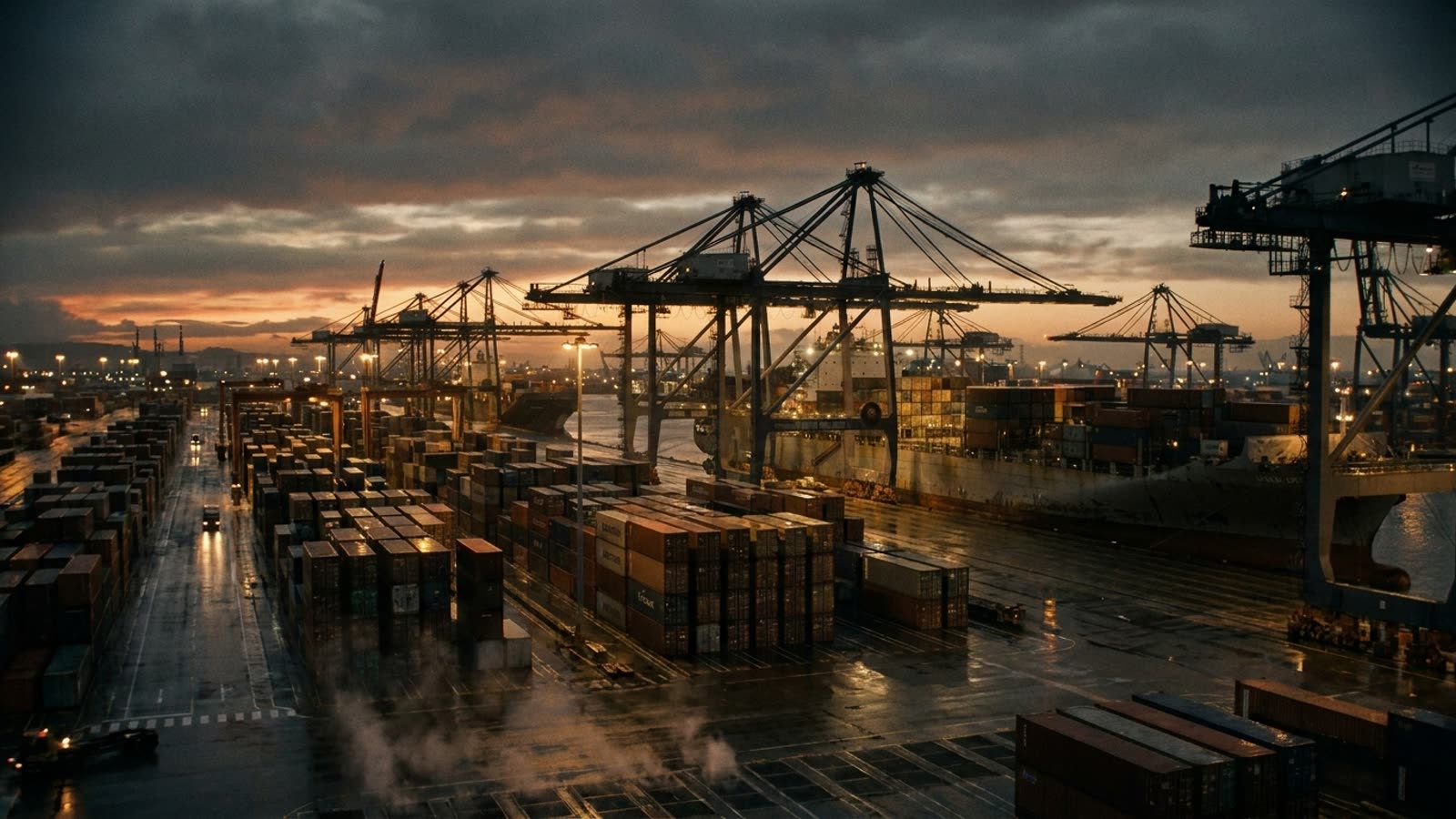
The White House announced Tuesday that new tariffs will target 59 countries plus the European Union, a scope so vast it effectively amounts to a unilateral rewriting of America's trading relationships with most of the planet. The move transforms what had been a series of bilateral skirmishes into something closer to a siege mentality—Washington against the world, with American consumers and manufacturers caught in the crossfire.
The administration frames this as rebalancing decades of unfair practices, but the sheer breadth suggests a different calculus: leverage through chaos. When you threaten everyone simultaneously, you force them to negotiate individually, on your terms, against your timeline. It is a strategy borrowed from real estate development, where overwhelming counterparties with complexity can extract concessions that rational negotiation never would.
The inflation problem nobody wants to discuss
The Federal Reserve has spent the better part of three years wrestling inflation back toward target, and Chair Powell's team finally seemed to be approaching something like victory. Core PCE has drifted toward the 2% range, rate cuts have been tentatively discussed, and markets had begun pricing in a soft landing. This tariff package threatens to undo that progress in a single policy stroke.
Tariffs are, in their mechanical essence, a tax on imports—paid not by foreign governments but by American importers, who pass costs to consumers. The Peterson Institute estimates that tariffs of this magnitude could add between 0.8 and 1.2 percentage points to consumer prices over 18 months. That would push the Fed back into hawkish territory precisely when the economy can least afford it, with housing still unaffordable and consumer credit stretched thin.
The supply chain question
American manufacturing spent the post-pandemic years painstakingly rebuilding supply chains that had been exposed as fragile. Companies diversified away from China, invested in Mexican and Southeast Asian facilities, and generally accepted higher costs in exchange for resilience. This tariff package upends that logic by targeting not just China but the very countries that were supposed to be the alternatives.
Vietnam, Thailand, Indonesia—all are on the list. So is Mexico, despite the USMCA agreement that was supposed to create a protected North American trading bloc. Corporate supply chain officers, who had finally stopped having nightmares about 2021, are now facing the prospect of redesigning their networks for a third time in five years. Some will simply absorb the costs. Others will pass them along. A few will move production back to the United States, which is presumably the point—though at prices American consumers may not be willing to pay.
The European wildcard
Including the EU in this package is particularly provocative. Brussels has its own protectionist instincts, particularly around agriculture and digital services, and European leaders have been itching for a reason to retaliate against American tech giants. A trade war with Europe would be qualitatively different from one with China—these are nominal allies, NATO partners, countries whose cooperation Washington needs on everything from Ukraine to Iran. The administration appears to be betting that Europeans will fold rather than escalate. That bet may prove correct, but the relationship damage will outlast any tariff schedule.
Our take
There is a legitimate case for strategic decoupling from China and for pressuring trading partners who maintain asymmetric barriers. But this is not that. This is a blunderbuss fired into a crowded room, with the administration apparently confident that it can sort out the casualties later. The immediate winners are domestic producers in protected industries and, paradoxically, China—which now looks like a more predictable trading partner than the United States. The losers are American consumers, the Fed's credibility, and the post-war trading system that, for all its flaws, made American prosperity possible. Trade policy by tantrum is not a strategy. It is an abdication of one.