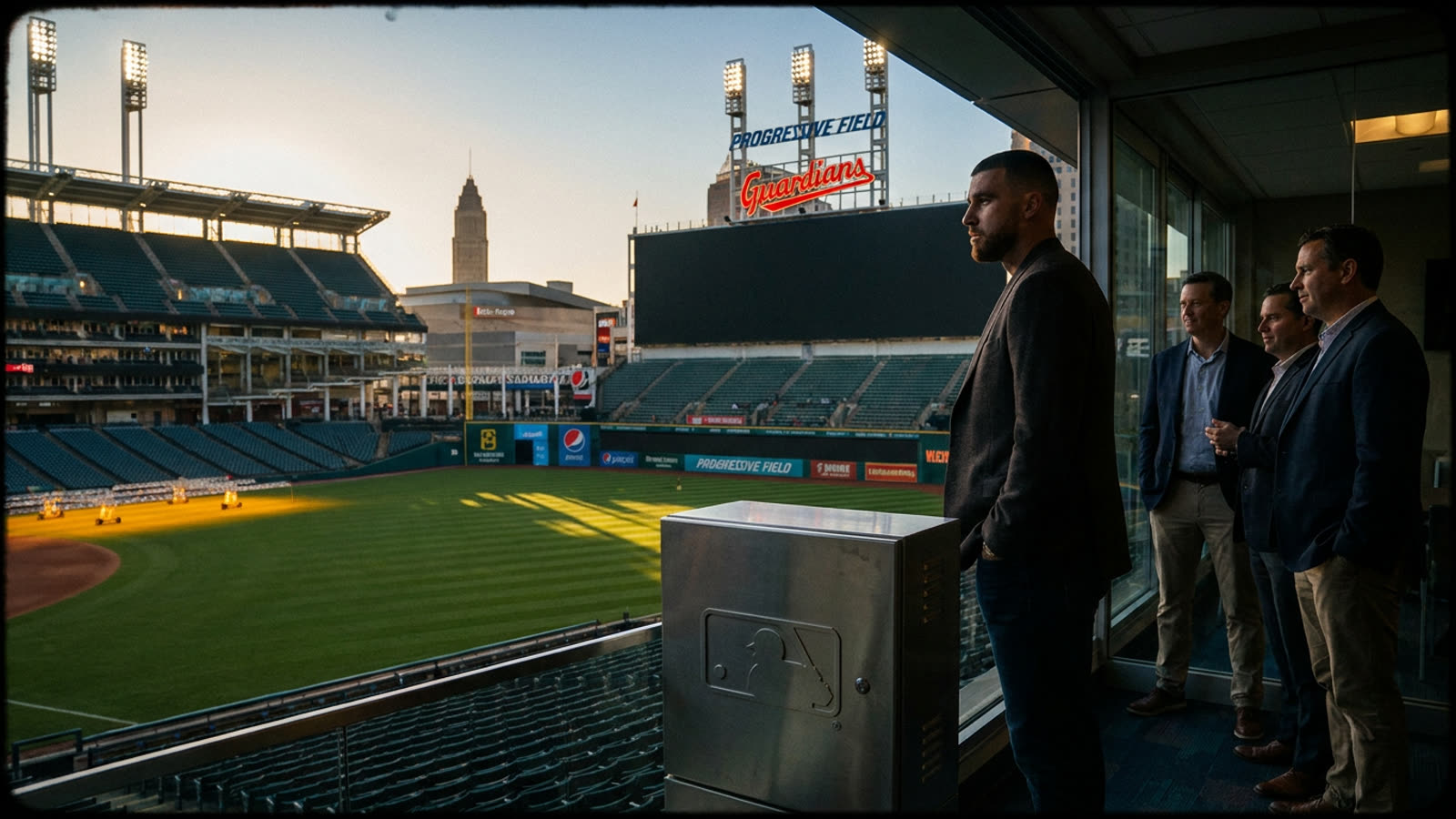
When Travis Kelce announced he was joining the Cleveland Guardians ownership group, the reaction was a collective shrug dressed as enthusiasm. Of course he is. Patrick Mahomes already owns a piece of the Kansas City Royals. Russell Wilson has equity in the Seattle Mariners. Derek Carr bought into the Las Vegas Aviators. The NFL-to-MLB ownership pipeline has become so routine that its absence would be the story.
Kelce's investment, the financial terms of which remain undisclosed, adds another data point to a phenomenon that says more about athlete economics than it does about baseball fandom. The 36-year-old tight end, still under contract with Kansas City through 2027, grew up in Cleveland Heights and attended the University of Cincinnati — the regional ties are genuine. But this is less about hometown sentimentality than it is about what modern NFL contracts now enable.
The math behind the movement
Kelce's four-year, $57.25 million extension signed in 2024 made him the highest-paid tight end in league history at the time. Add endorsement income reportedly exceeding $20 million annually — from Pfizer to State Farm to his hosting gig on Amazon's "Are You Smarter Than a Celebrity?" — and you have a player whose liquid capital rivals that of mid-tier private equity associates. The Guardians, valued by Forbes at approximately $1.3 billion, represent a relatively affordable entry point compared to NFL franchises now trading above $6 billion.
Minority ownership stakes in MLB teams typically start in the low eight figures, offering players like Kelce exposure to appreciating assets without operational headaches. The Guardians, under principal owner David Blitzer, have been aggressive in courting celebrity investors — a strategy that generates media attention while diversifying the cap table.
What it means for Cleveland
The Guardians have quietly built one of baseball's most efficient organizations, reaching the American League Division Series in 2024 despite a payroll ranked in the bottom third of the league. Kelce's involvement won't change roster construction or front-office philosophy, but it does something arguably more valuable: it keeps Cleveland in the conversation. A franchise competing in a mid-market against the Yankees and Dodgers media machines needs every attention advantage it can manufacture.
Kelce's celebrity footprint — amplified considerably by his relationship with Taylor Swift — ensures that Guardians highlights will occasionally penetrate audiences who couldn't name the team's starting rotation. Whether that translates to ticket sales or merchandise revenue remains speculative, but the calculus for Blitzer is straightforward: famous partners cost nothing in dilution if the valuation keeps climbing.
Our take
The Travis Kelce ownership story is less interesting as a sports transaction than as a cultural marker. We have reached the point where elite NFL players accumulate enough wealth during their playing careers to become capital allocators before retirement — and they're choosing baseball, not football, because the entry price still permits it. Kelce buying into the Guardians is savvy, regionally appropriate, and entirely predictable. The surprise would have been if he hadn't.