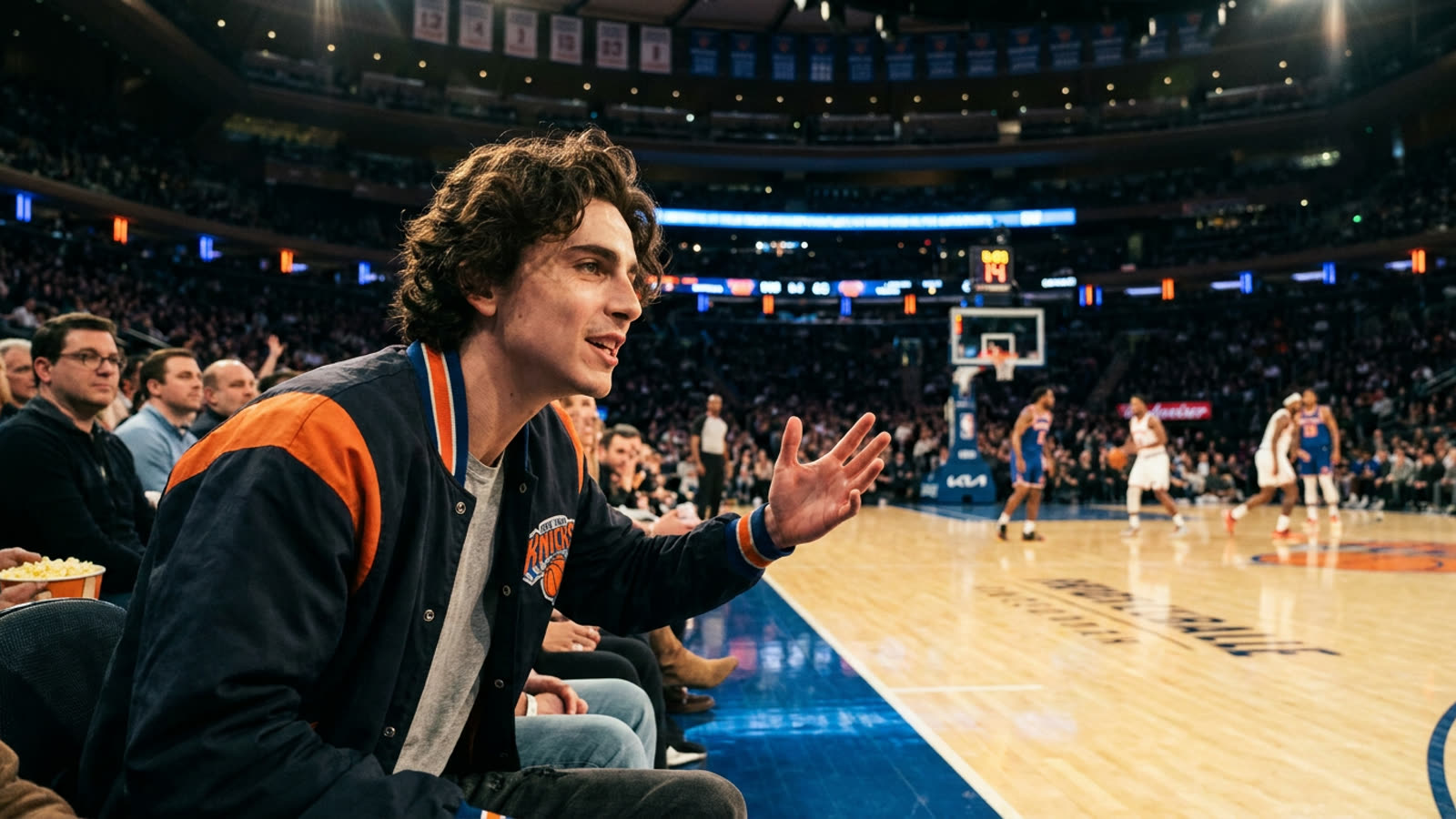
When the New York Knicks clinched their first NBA Finals berth since 1999, the cameras found Timothée Chalamet exactly where you'd expect: courtside at Madison Square Garden, visibly losing his composure alongside 19,000 other New Yorkers who have waited a generation for this moment.
The Oscar-nominated actor wasn't there for the content. He wasn't there because a brand placed him in the seat. He was there because he's been a Knicks fan since childhood, back when being a Knicks fan meant absorbing punishment season after season with no promise of redemption. That distinction matters more than it might seem.
The authenticity problem
Celebrity courtside culture has become exhausting. The front row at any marquee NBA game now resembles a carefully curated Instagram feed more than a basketball arena—influencers in pristine outfits who couldn't name three players on the roster, tech founders performing fandom for the cameras, musicians whose allegiances shift with playoff brackets. The seats have become billboards, and the celebrities in them have become advertisements for themselves.
Chalamet represents something different. His Knicks fandom predates his fame, documented in interviews from his early career when he was still a working actor from Hell's Kitchen rather than the face of a Chanel fragrance. He's been photographed at games during losing seasons, when there was no cultural cachet in being associated with a franchise that had become shorthand for dysfunction.
Why this moment resonates
The footage of Chalamet after the final buzzer—hugging strangers, filming the celebration on his phone like any other fan, visibly emotional—went viral not because he's famous but because his reaction was indistinguishable from the reactions of lifelong fans around him. In an age of parasocial performance, his joy appeared unmediated.
There's also the matter of timing. Chalamet is at the apex of his career, fresh off his Bob Dylan transformation in the upcoming biopic and commanding the kind of cultural attention that makes every public appearance feel significant. He could be anywhere. That he chose to be at the Garden, sweating through his shirt alongside investment bankers and construction workers and everyone else who has suffered through the Isiah Thomas years, says something about what he values.
Our take
We've grown so accustomed to celebrity as performance that genuine enthusiasm now reads as remarkable. Chalamet geeking out with Jalen Brunson and Josh Hart shouldn't be noteworthy—it's just a fan meeting players he admires. But in a cultural moment where authenticity is the scarcest commodity, his unguarded joy at the Garden felt almost subversive. The Knicks haven't won anything yet, and their Finals opponent will be formidable. But for one night, at least, the most famous person in the building was just another New Yorker who finally got to see his team make it.