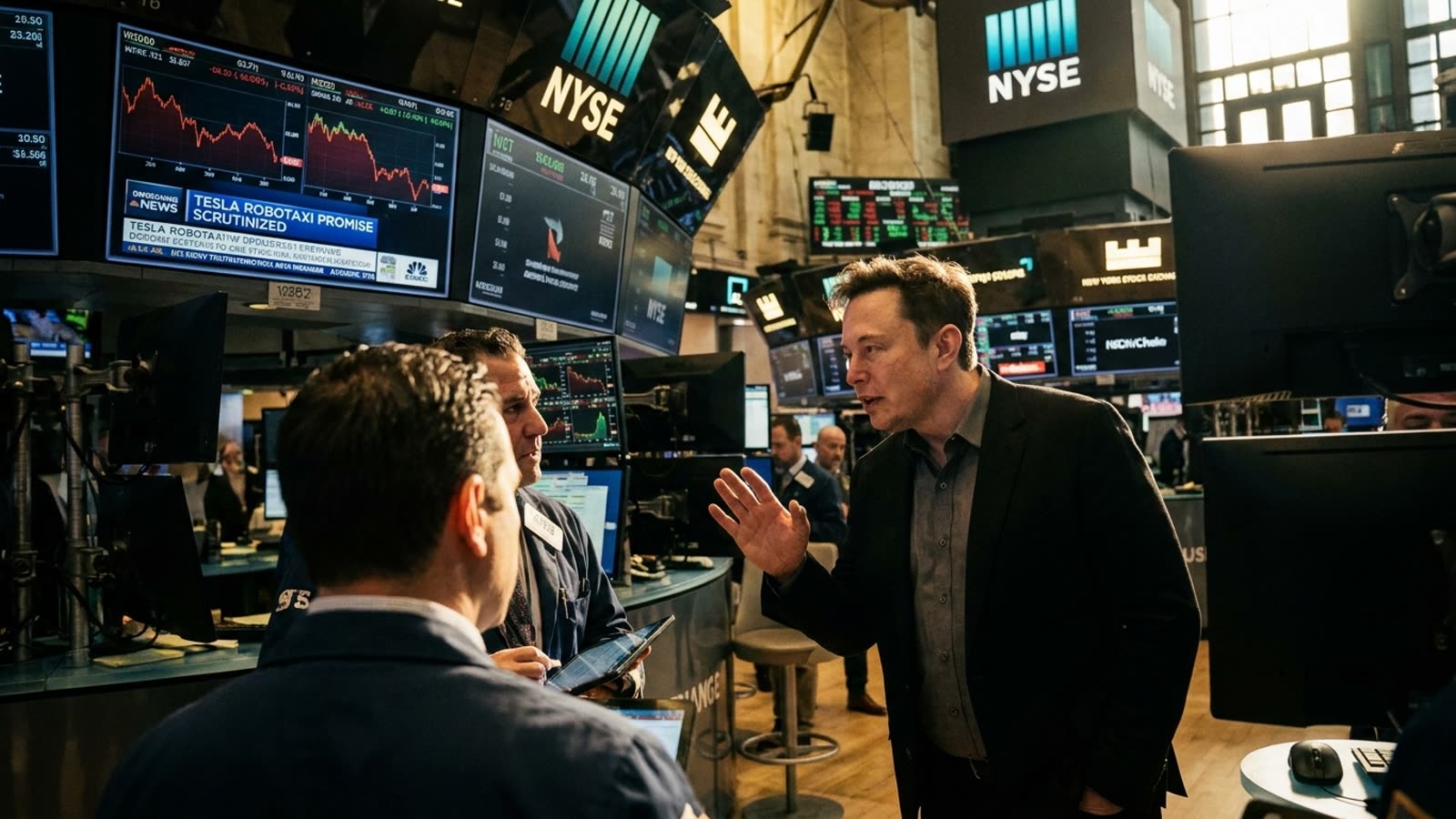
Tesla's third-quarter earnings call delivered the kind of announcement that, from any other automaker, would be front-page news: customers will be able to add their personal vehicles to a company-operated robotaxi network starting in 2027. From Tesla, it lands with the dull thud of déjà vu. Elon Musk first promised a million robotaxis on the road by 2020. Six years past that deadline, the company is still asking investors to trust the timeline.
The difference this time, Tesla argues, is infrastructure. The company claims its Full Self-Driving software has now accumulated billions of miles of real-world data, and that its custom AI training chips—manufactured in-house rather than sourced from external suppliers—give it a computational edge rivals cannot match. The pitch to shareholders is that Tesla is no longer a carmaker with an AI hobby; it is an AI company that happens to sell cars.
The economics of owner participation
The proposed model is seductive on paper. Tesla owners would opt their vehicles into a managed fleet when not in use, earning a share of ride revenue while Tesla handles dispatch, insurance, and liability. For owners, it transforms a depreciating asset into a passive-income machine. For Tesla, it solves the capital problem that has hobbled Waymo and Cruise: instead of buying and maintaining thousands of purpose-built vehicles, Tesla would leverage millions of cars already on the road.
Skeptics note the regulatory minefield. No state currently permits unsupervised commercial robotaxi operations using consumer-owned vehicles. Tesla's existing FSD suite still requires driver supervision under its own terms of service. Bridging that gap in twelve months would require not just technological breakthroughs but a wholesale shift in how American regulators think about liability.
Why Wall Street is listening anyway
Tesla shares rose in after-hours trading following the call, suggesting investors are willing to price in at least some probability of success. The reasoning is partly defensive: if autonomous driving does become viable at scale, Tesla's data moat—hundreds of thousands of vehicles uploading driving footage daily—could prove insurmountable. Betting against the company has been a losing trade for most of the past decade.
Yet the same logic has justified previous hype cycles that failed to materialise. Tesla's 2016 claim that all new vehicles had the hardware for full autonomy proved premature; those sensors were later deemed insufficient. The 2019 promise of coast-to-coast autonomous drives never arrived. Each delay has been met with a fresh timeline and a request for continued patience.
Our take
Tesla's robotaxi vision is not impossible—it is merely unproven, and the company's credibility on timelines is thin. The owner-fleet model is genuinely clever if it works, turning customers into stakeholders and sidestepping the capital constraints that have stalled competitors. But clever models require execution, and execution requires regulatory approval that Tesla has not secured. Investors are right to watch closely; they would be unwise to take the 2027 date as anything more than an aspiration.