The metamorphosis of TeraWulf from Bitcoin miner to AI infrastructure provider is now complete in all but name. The company's first-quarter results reveal that revenue from selling compute power to artificial intelligence customers has overtaken income from mining cryptocurrency, a milestone that crystallizes what industry observers have suspected for months: the economics of proof-of-work mining are becoming a sideshow to the insatiable demand for GPU cycles.
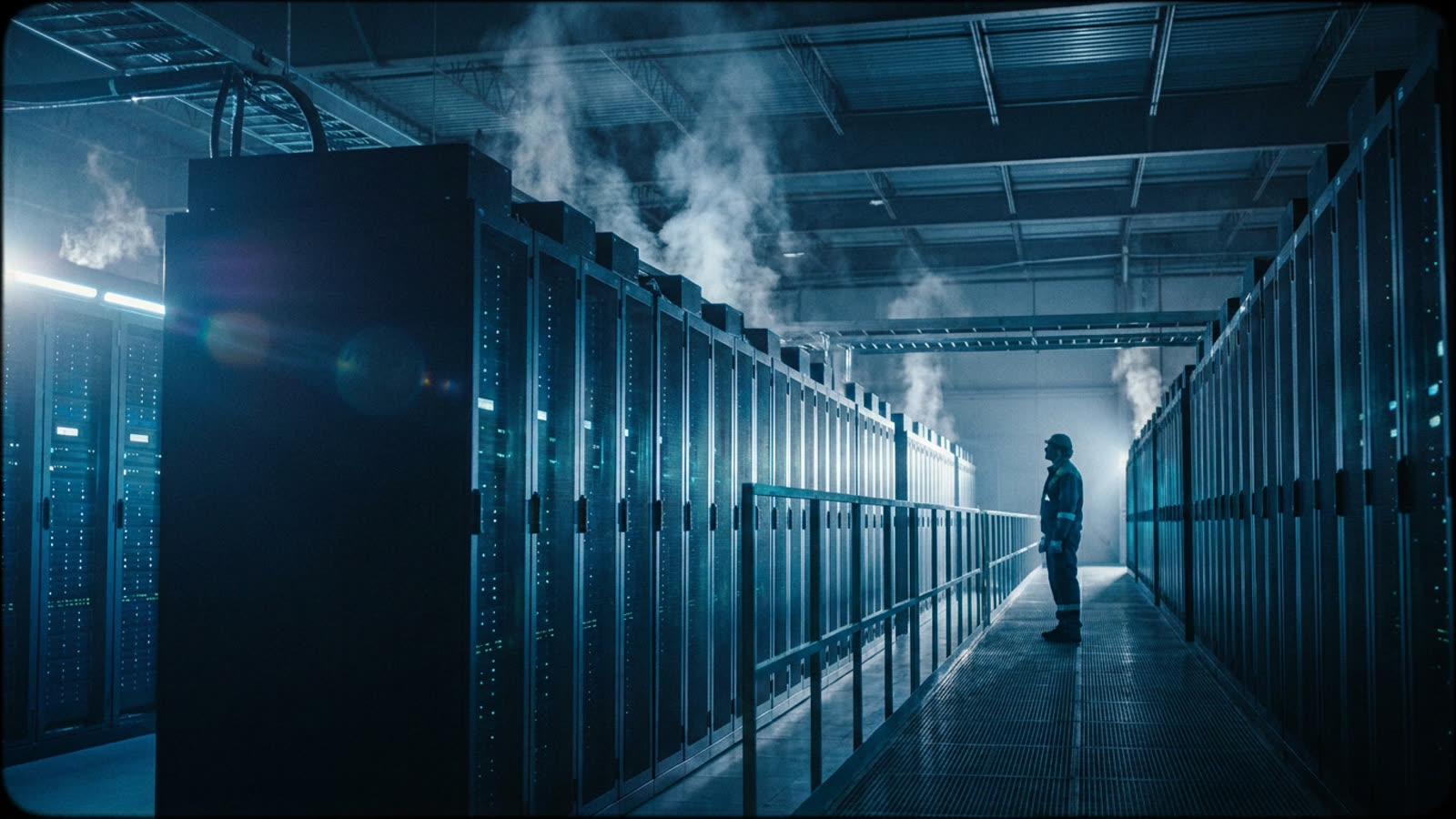
TeraWulf's pivot is not subtle. The firm has been aggressively repurposing its data center capacity—originally built to chase Bitcoin block rewards—toward hosting high-performance computing workloads for AI model training and inference. That transition is now paying dividends in top-line growth, even if the bottom line remains deep in the red.
The math behind the pivot
Bitcoin mining has always been a brutal arbitrage between electricity costs, hardware depreciation, and the coin's spot price. When BTC rallies, miners print money; when it stagnates or falls, margins evaporate. AI compute, by contrast, offers contracted revenue at predictable rates, often with hyperscaler-grade customers willing to sign multi-year deals. For a company sitting on megawatts of low-cost power and cooling infrastructure, the calculus is obvious.
TeraWulf is not alone. Rivals like Core Scientific and Hut 8 have made similar noises about diversifying into high-performance computing. But TeraWulf's Q1 numbers are the starkest evidence yet that the pivot is not merely strategic posturing—it is operational reality.
A $427 million asterisk
The headline loss demands context. A significant portion stems from non-cash impairments and the accounting quirks that accompany rapid capital redeployment. Still, the figure underscores that transitioning from one capital-intensive business to another is expensive, and shareholders are financing the bridge. Management will need to demonstrate that AI revenue can scale faster than the red ink accumulates.
Our take
TeraWulf's earnings report is less about one company's balance sheet and more about the gravitational pull of artificial intelligence on every adjacent industry. Bitcoin mining infrastructure was always a bet on cheap power and specialized silicon; it turns out those same ingredients are exactly what the AI boom requires. The miners who recognized this early are repositioning themselves as the picks-and-shovels suppliers of the generative-AI gold rush. Those who cling to proof-of-work orthodoxy may find their rigs stranded as the market moves on.