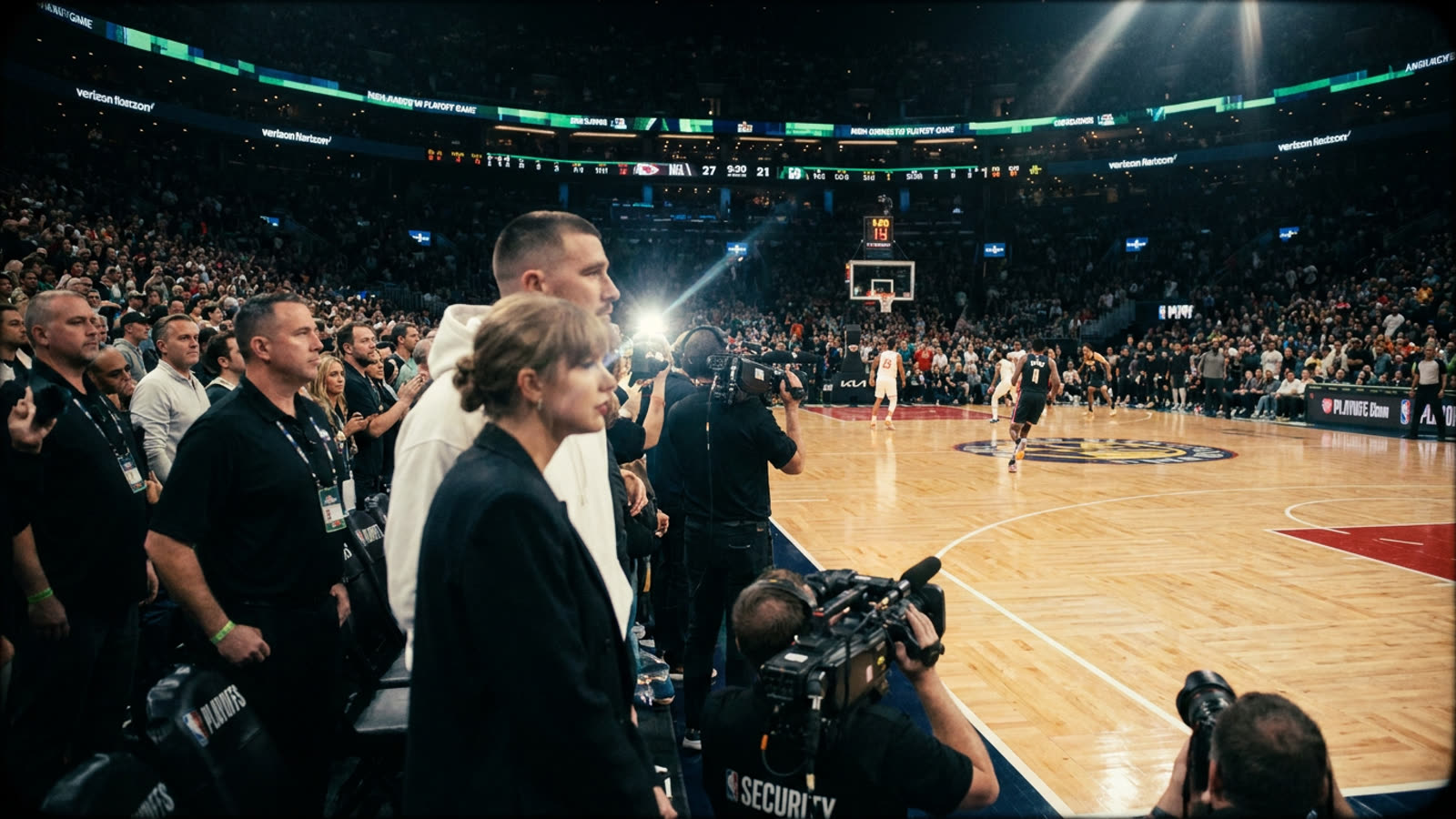
The cameras found them within seconds of tip-off: Taylor Swift in a vintage Knicks jacket, Travis Kelce in something that probably cost more than a used sedan, both occupying the kind of floor seats that require either generational wealth or a publicist with excellent relationships. Game 3 of the Eastern Conference Finals was technically about basketball. The broadcast suggested otherwise.
This is not a complaint. This is an observation about what the NBA has become and, more importantly, what it has always wanted to be.
The courtside industrial complex
No major American sports league has invested more deliberately in celebrity adjacency than the NBA. The architecture is literal: those floor seats exist inches from the action specifically because famous faces photograph better when LeBron James nearly lands in their laps. The NFL keeps its celebrities in luxury boxes. Baseball scatters them throughout the stands. The NBA puts them on camera, names them on broadcast, and watches the social media engagement spike.
Swift and Kelce represent the apex of this strategy. She brings an audience that doesn't care about pick-and-roll coverage. He brings legitimacy as an active professional athlete. Together, they generate the kind of cross-platform attention that no amount of advertising could purchase. ESPN's broadcast cut to them at least four times in the first quarter alone—each cut a tacit acknowledgment that some viewers are watching for reasons that have nothing to do with Donovan Mitchell's shooting percentage.
The economics of attention
The NBA's regular-season ratings have been a documented concern for years. The playoffs, however, remain robust precisely because the league has learned to package them as cultural events rather than mere athletic competitions. Celebrity attendance is part of that packaging. When Spike Lee argues with Reggie Miller, when Jack Nicholson grimaces at a Lakers loss, when Swift and Kelce canoodle through a timeout—these moments become the highlights that travel beyond sports media into the broader cultural conversation.
The Knicks, playing their first Conference Finals game at Madison Square Garden in over a decade, understood the assignment. The celebrity row featured enough famous faces to staff a mid-budget Netflix series. The Garden has always traded on its mythology as the world's most famous arena; nights like this are how that mythology gets refreshed for a new generation.
Our take
There's something faintly absurd about a basketball broadcast that functions partly as a celebrity-watching exercise, but absurdity and effectiveness are not mutually exclusive. The NBA has built a product that appeals to people who care deeply about basketball and people who care deeply about seeing Taylor Swift react to a three-pointer. That's not a bug in the system. That's the system working precisely as intended, and the league's continued cultural relevance depends on it.