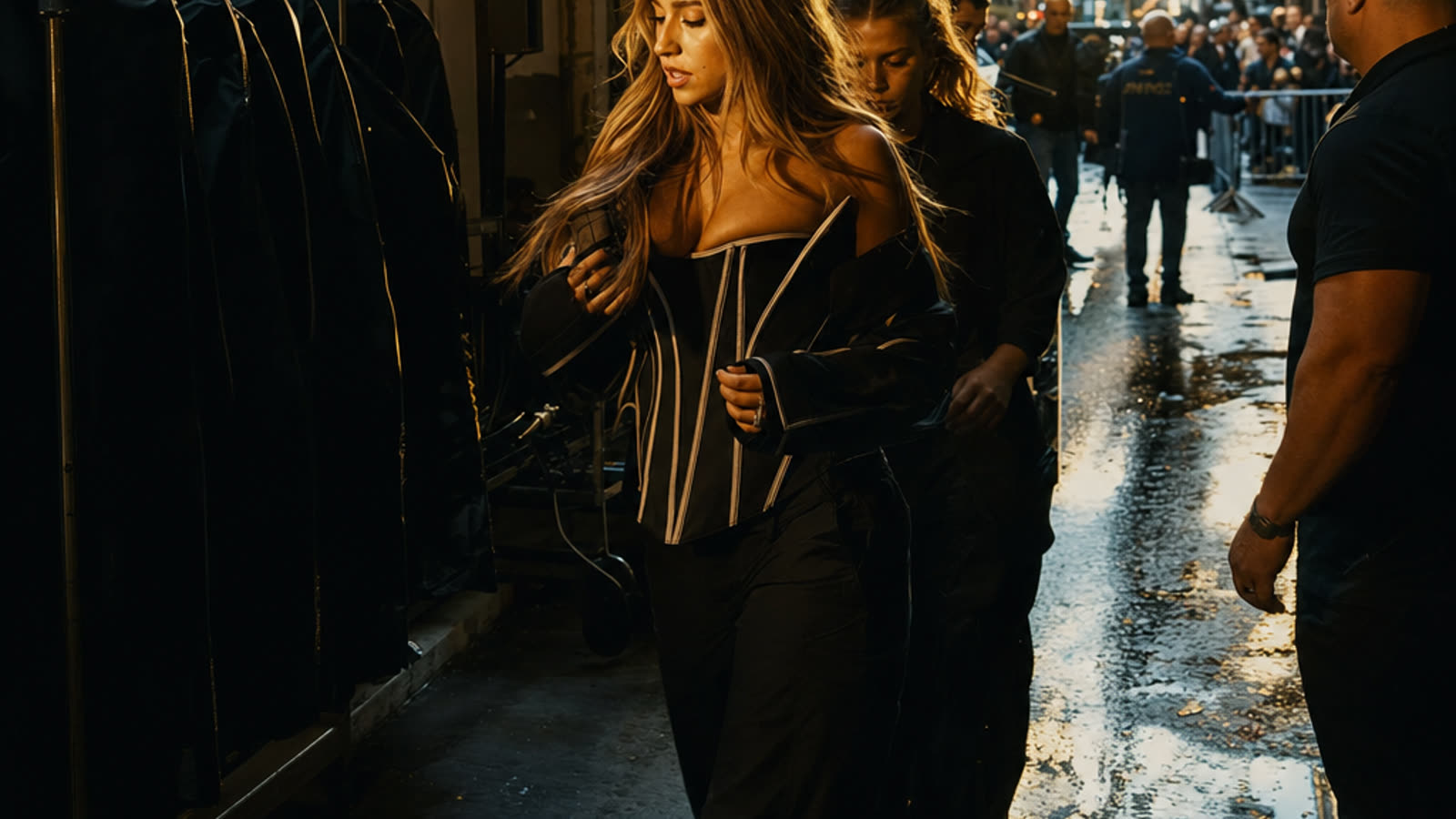
Tate McRae has figured out what Madonna understood in 1990 and what Dua Lipa rediscovered in 2020: the corset is not a costume, it's a thesis statement.
The 23-year-old Canadian singer, whose "Greedy" became one of 2024's most inescapable pop songs, has spent the past eighteen months systematically building an aesthetic around structured bodices, boned tops, and waist-cinching silhouettes that would make Vivienne Westwood proud. Where her early career saw her in the standard-issue athleisure of a dancer-turned-pop-hopeful, McRae's current visual language is deliberate, almost architectural. She's not wearing corsets because they're trending on TikTok. She's wearing them because she's decided that's who she is now.
The choreography of constraint
What makes McRae's corset commitment notable is that she's primarily a dancer—someone whose art form depends on unrestricted movement. The choice to perform intricate choreography while laced into structured garments isn't just a fashion statement; it's a flex. Her recent tour looks, designed in collaboration with stylist Law Roach's protégé Jason Bolden, have featured custom pieces that somehow accommodate both the rigidity of boning and the demands of her athletic stage presence. The message is clear: she can do both, and she'll make it look effortless.
This tracks with a broader generational shift among young female performers. Where the 2010s saw pop stars compete to appear most "relatable" in oversized hoodies and sneakers, the current cohort—Sabrina Carpenter, Chappell Roan, and now McRae most consistently—have embraced overt glamour as a form of artistic authority. The corset, historically a symbol of constraint, becomes in their hands a symbol of control.
Calgary to couture
McRae's trajectory from YouTube dance covers in Calgary to fashion-week fixture has been remarkably swift. She was 13 when she placed third on "So You Think You Can Dance: The Next Generation." She was 20 when "Greedy" went viral. She's 23 now and sitting front row at Versace. The fashion industry, always hungry for fresh faces who can actually move product, has embraced her with the enthusiasm typically reserved for nepo babies and K-pop stars.
But McRae's appeal to luxury houses goes beyond her streaming numbers. She represents a type that fashion has long sought but rarely found: the genuine triple threat who can dance in their clothes, sing about their clothes, and make their clothes look like they were always meant to be worn that way. Her Instagram feed reads less like a pop star's diary and more like a carefully curated lookbook, each post reinforcing the corset-as-identity thesis.
Our take
There's something refreshing about a young pop star who has clearly thought about her image beyond "what's cute" or "what's comfortable." McRae's corset fixation may seem like a minor style note, but it represents something larger: a generation of performers who understand that in an attention economy, visual consistency is currency. She's not reinventing fashion—the corset has been cycling through pop culture since Gaultier put one on Madonna—but she's claiming it with the kind of conviction that turns a trend into a trademark. Whether she's still wearing them at 30 is beside the point. Right now, she owns it.