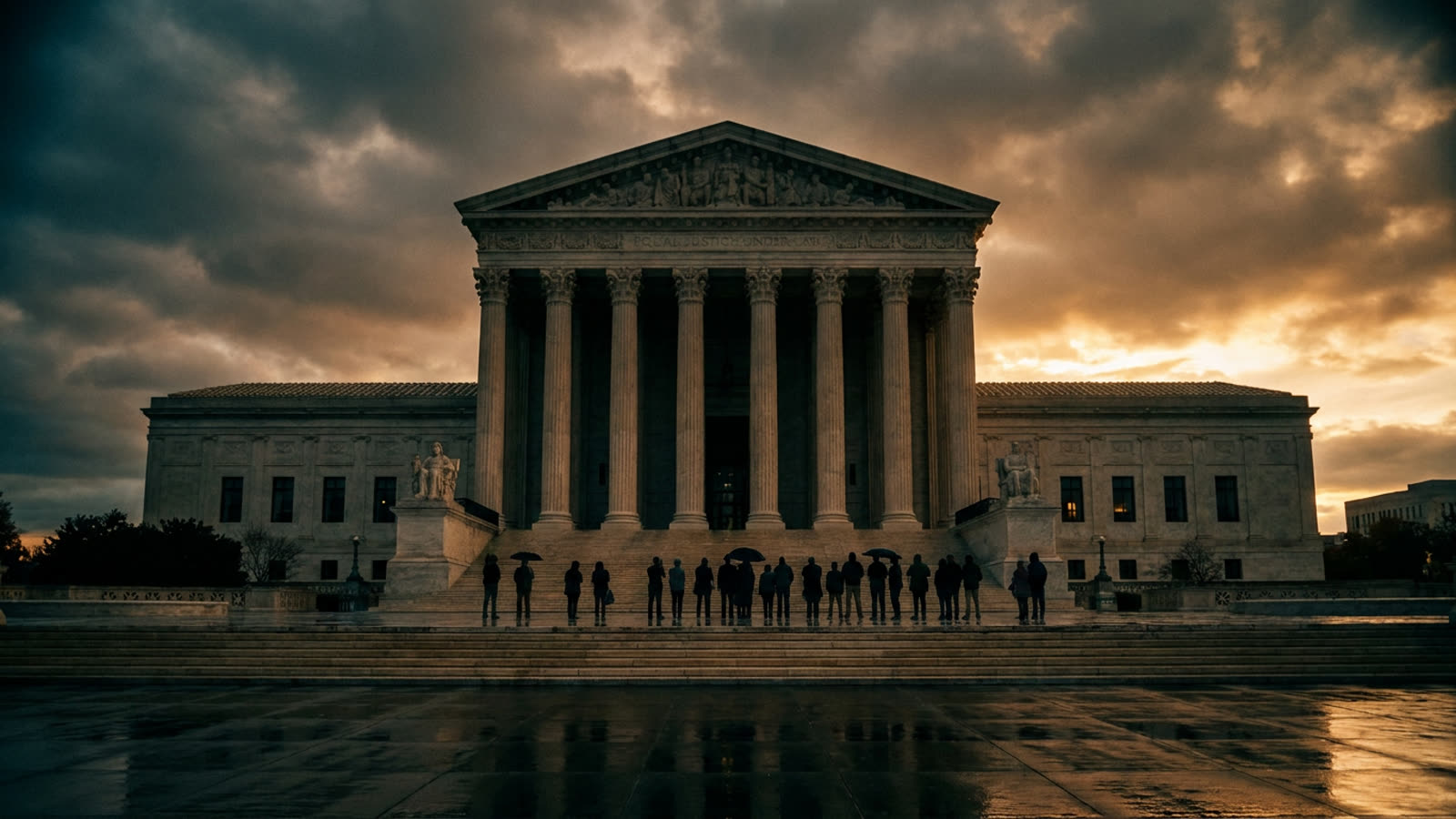
Hawaii's gun law was supposed to be untouchable. The state's requirement that residents demonstrate a specific need before carrying a firearm in public had survived for decades, insulated by geography, culture, and a population largely unbothered by mainland gun politics. That era ended today when the Supreme Court struck down the regulation, extending the logic of its 2022 Bruen decision to America's most isolated state and signaling that the Second Amendment's new maximalism has no natural boundary.
The ruling was not close. The Court's conservative majority held that Hawaii's "may-issue" permitting scheme—which gave local officials discretion to deny carry permits to applicants who could not articulate a particularized reason for needing a weapon—violated the constitutional right to bear arms as the Court now interprets it. The decision follows the framework established in New York State Rifle & Pistol Association v. Bruen, which requires gun regulations to have historical analogues from the founding era to survive scrutiny.
The Bruen blueprint expands
Hawaii's law was among the last standing examples of discretionary permitting. After Bruen invalidated New York's similar scheme, states like California, New Jersey, and Maryland scrambled to rewrite their statutes. Hawaii, perhaps betting on its unique circumstances—low gun violence rates, strong local support for restrictions, and a legal culture that had long deferred to public safety arguments—held out. That gamble failed.
The majority opinion, authored by Justice Clarence Thomas, rejected Hawaii's argument that its island geography and distinct history justified different treatment. "The Second Amendment's protections do not diminish at the water's edge," Thomas wrote, dismissing the notion that states with different settlement patterns or cultural attitudes toward firearms could craft tailored regulations. The Constitution, in this reading, is a one-size-fits-all garment.
What remains of state authority
The practical implications are significant but unevenly distributed. Hawaii will now join the majority of states with "shall-issue" permitting, where officials must grant carry licenses to applicants who meet objective criteria like background checks and training requirements. For most Americans, this changes nothing—they already live under such regimes. But the ruling's symbolic weight matters more than its immediate footprint.
Gun control advocates had hoped that Bruen's historical-analogue test might leave room for regulations in places with genuinely distinctive traditions. Hawaii, with its monarchy-era weapons restrictions and post-statehood consensus around gun control, seemed a plausible candidate for such treatment. The Court's rejection of that argument suggests that the historical inquiry is less a genuine search for founding-era parallels than a one-way ratchet toward deregulation.
Our take
The Court is not wrong that the Second Amendment applies in Hawaii as it does in Texas. What is striking is the majority's apparent indifference to the question of whether constitutional interpretation should accommodate genuine regional variation in a continental nation. Hawaii's gun law was not an outlier imposed by coastal elites on a resistant population; it reflected the preferences of the state's own citizens, expressed through their elected representatives. The Court has decided that those preferences, however democratically legitimate, cannot override its reading of an eighteenth-century text. That is a coherent legal position. It is also a reminder that federalism, in the current Court's hands, is a selective principle—robust when it protects conservative policy preferences, fragile when it does not.