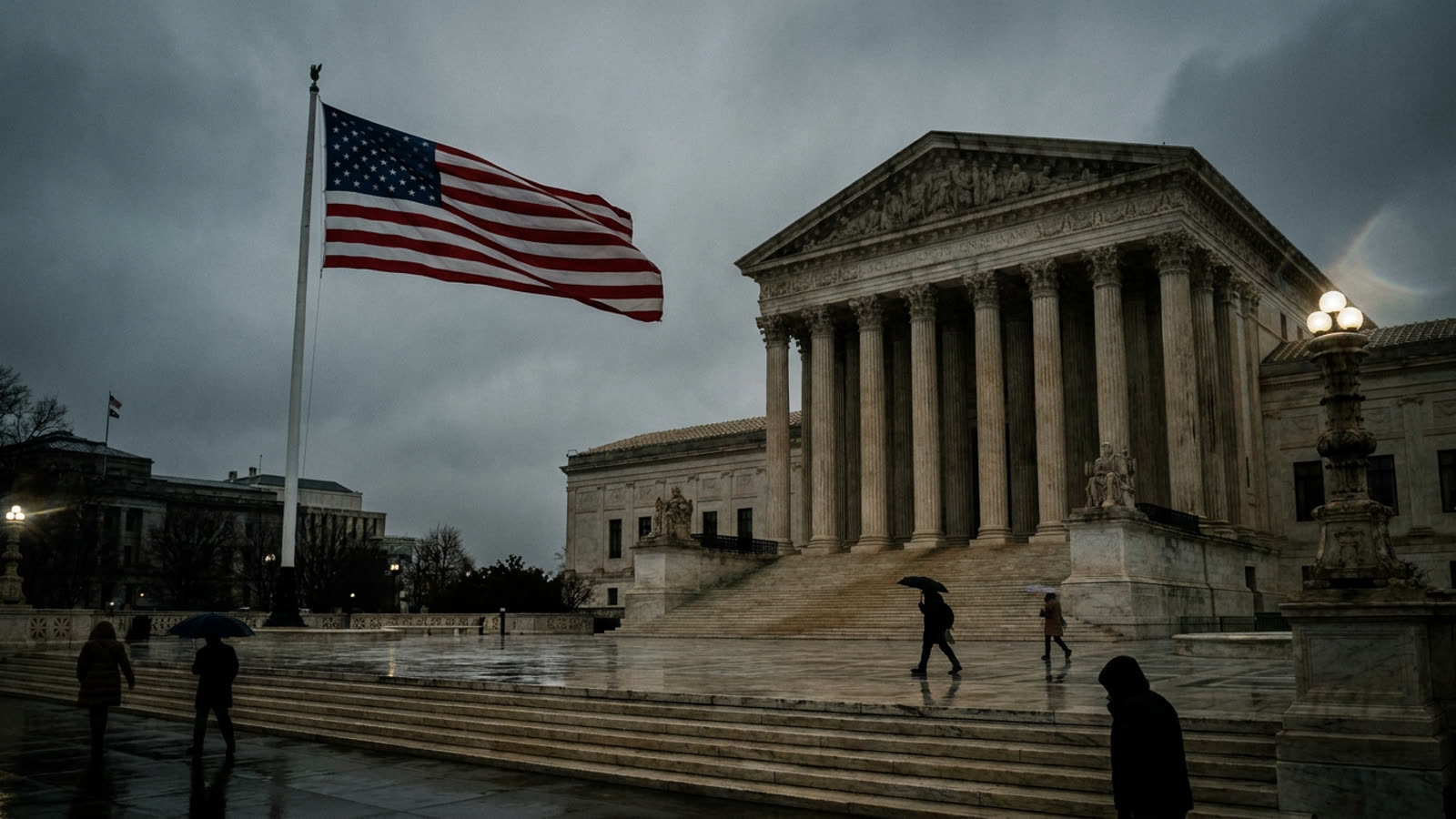
The Supreme Court's decision to take up Arizona's proof-of-citizenship voting law is not, as some will frame it, a narrow administrative dispute. It is the opening of a constitutional door that could fundamentally alter who gets to vote in American elections—and how difficult states can make it for them to do so.
Arizona wants to require documentary proof of citizenship before residents can register to vote in state and local elections. The law has been blocked by lower courts as conflicting with the National Voter Registration Act, which requires states to accept a simple sworn statement of citizenship on federal registration forms. But Arizona, backed by a coalition of Republican-led states, argues that the federal law cannot preempt its sovereign interest in ensuring only citizens cast ballots.
The Court's willingness to hear the case signals that at least four justices believe there is something worth resolving here—and given the current composition of the bench, that should worry voting rights advocates considerably.
The mechanics of exclusion
Proof-of-citizenship requirements sound reasonable in the abstract. Who could object to verifying that voters are actually citizens? But the devil, as always, resides in the documentation. An estimated 7 percent of American citizens lack ready access to a passport or birth certificate—the documents Arizona would require. That figure rises sharply among the elderly, the poor, and naturalized citizens who may have received their papers decades ago and misplaced them since.
The burden falls unevenly, which is precisely the point critics make. Studies of similar laws in other states have found that eligible voters are turned away or discouraged from registering at rates that dwarf the vanishingly rare instances of non-citizen voting that such laws purport to prevent. The Brennan Center has documented fewer than 100 credible cases of non-citizen voting across billions of ballots cast over the past two decades.
Federal supremacy on trial
The legal question is whether the National Voter Registration Act's requirement that states accept a federal registration form—which includes only a citizenship attestation, not documentary proof—preempts state laws demanding more. Lower courts have consistently said yes, reasoning that Congress intended to create a uniform, accessible floor for voter registration.
Arizona and its allies argue that the Supremacy Clause does not extend this far, that states retain inherent authority to police the qualifications of their own electorates. It is an argument that echoes the states' rights reasoning of an earlier era, updated for contemporary anxieties about immigration and election integrity.
If the Court sides with Arizona, the floodgates open. Texas, Georgia, and a dozen other states have similar legislation queued up, waiting for constitutional clearance. The result would be a patchwork of registration requirements that could disenfranchise millions of eligible voters—disproportionately those who already face the highest barriers to political participation.
Our take
The Court is not being asked whether non-citizens should vote—no serious person argues they should. It is being asked whether states can impose documentary burdens that will predictably exclude far more eligible citizens than ineligible non-citizens. That is a question about democratic access, not election security. Arizona's law is a solution in search of a problem, and the problem it will create—legitimate voters unable to exercise their franchise—is both foreseeable and deliberate. The justices should recognize the difference between preventing fraud and manufacturing disenfranchisement.