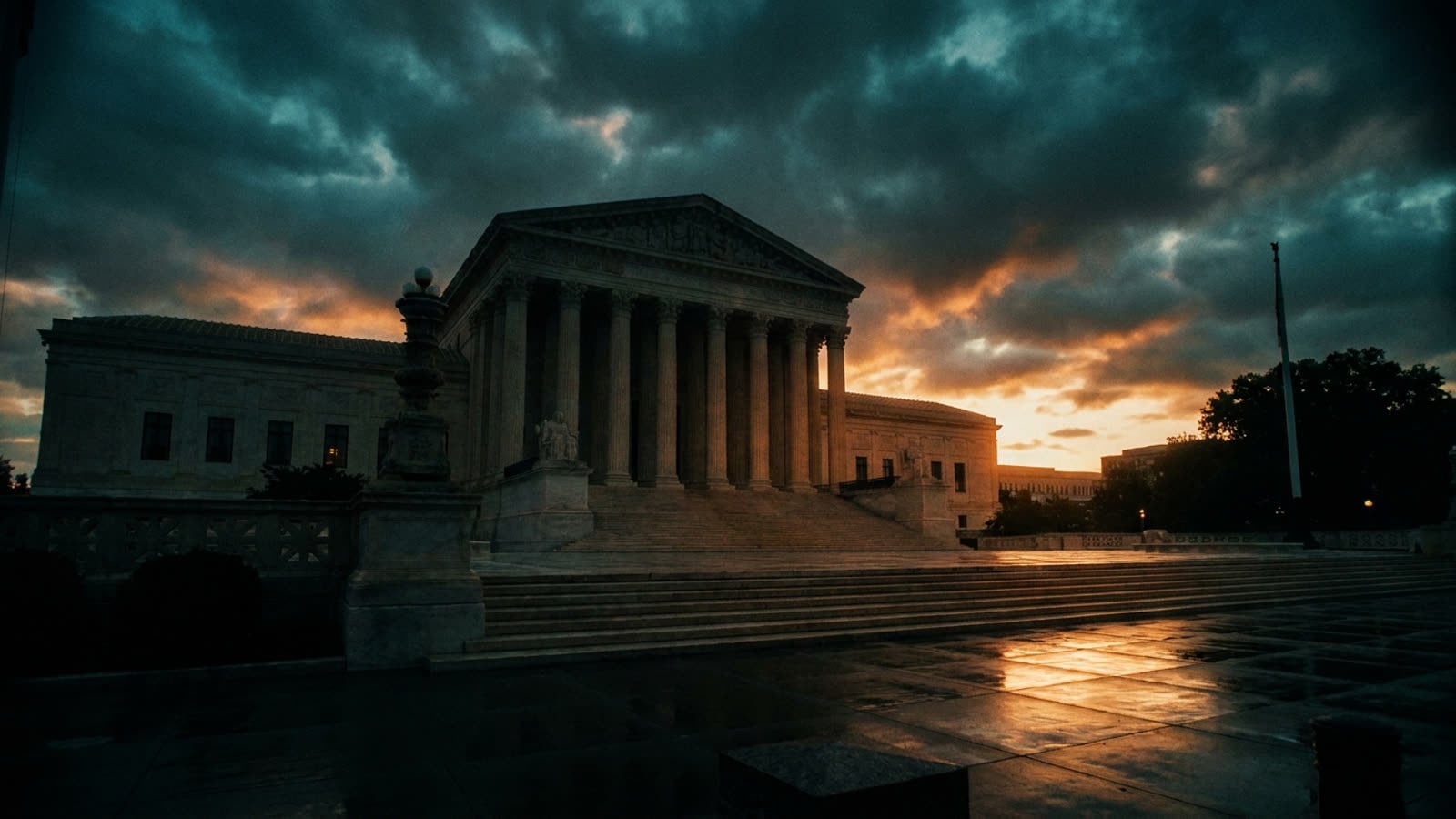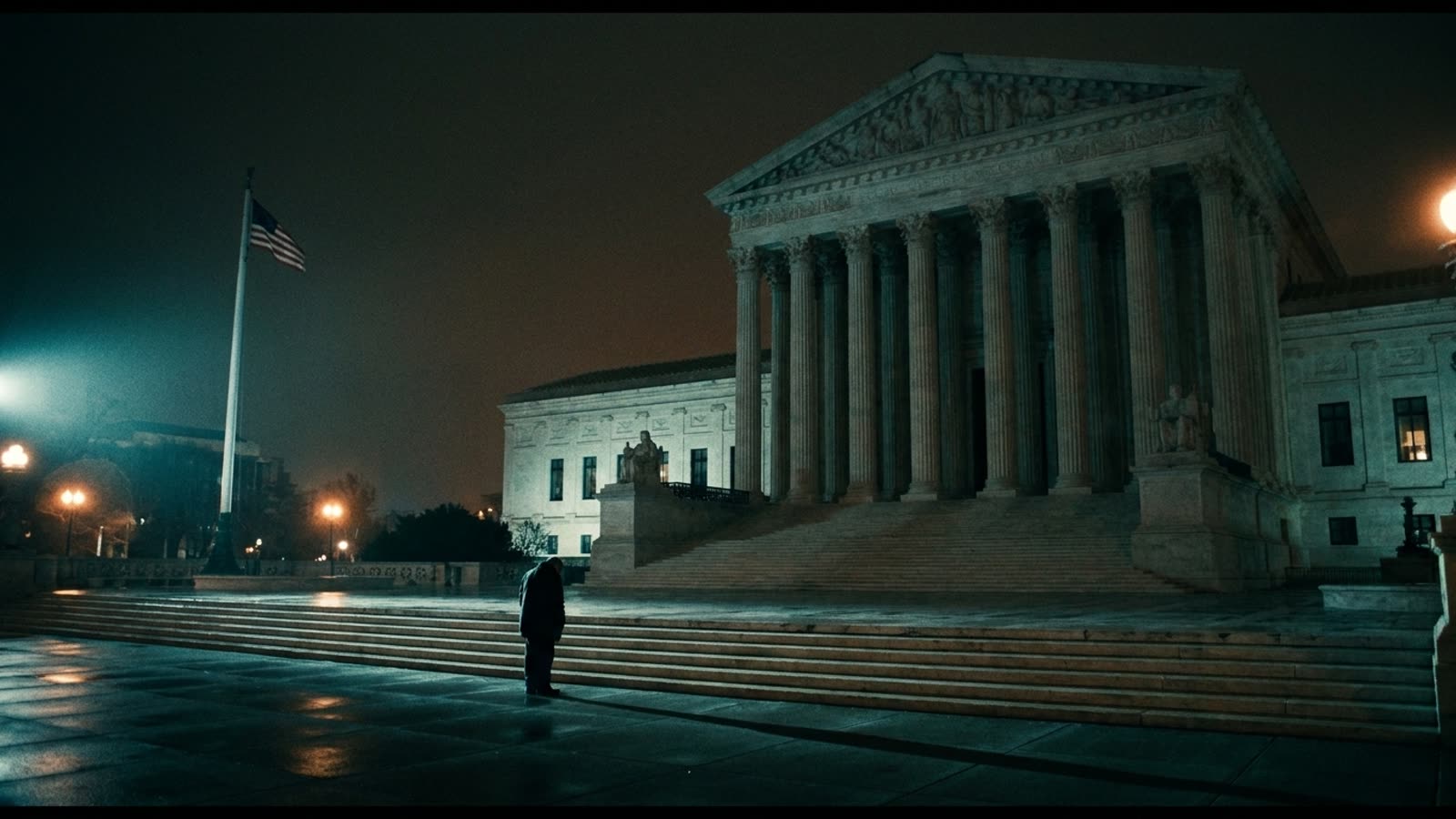
For years, the Supreme Court has carefully sidestepped the most combustible question in Second Amendment jurisprudence: whether the Constitution protects not just the right to bear arms, but the right to bear these arms — the semi-automatic rifles that have become synonymous with both American gun culture and American mass shootings. That evasion ended today.
The Court announced it will review state bans on AR-style semi-automatic rifles, a case that could reshape firearms regulation nationwide and force the justices to confront the logical endpoint of their own precedents. Since District of Columbia v. Heller in 2008 established an individual right to gun ownership, and New York State Rifle & Pistol Association v. Bruen in 2022 demanded that regulations be grounded in historical tradition, lower courts have been left to puzzle out which weapons fall within constitutional protection. The AR-15 — owned by an estimated 20 million Americans, yet banned or restricted in ten states — sits at the precise fault line.
The doctrinal trap
The Court's Bruen framework created an intellectual problem the justices now must solve. Under that decision, modern gun laws must have historical analogues from the Founding era or the period of the Fourteenth Amendment's ratification. But semi-automatic rifles did not exist in 1791 or 1868. Defenders of assault weapons bans argue this makes such weapons regulable; opponents counter that the principle of Heller — which protected handguns as the "quintessential self-defense weapon" — extends to whatever arms are in "common use" today. With AR-15s among the best-selling firearms in America, the "common use" argument is not frivolous.
The justices will have to decide whether commonality alone confers constitutional protection, or whether the state retains authority to restrict weapons whose lethality exceeds any plausible self-defense need. Neither answer is comfortable. The first could constitutionalize ownership of increasingly destructive technology; the second requires the Court to make judgments about firepower that sound more legislative than judicial.
Political timing
The decision to grant certiorari arrives in a charged moment. Gun control advocates had hoped the current Court — which has shown little appetite for Second Amendment restrictions — would simply let lower court rulings stand, leaving a patchwork of state laws in place. Instead, the justices have chosen to nationalize the question. Oral arguments will likely fall in the Court's next term, with a decision possible by mid-2027.
For Republicans, the case offers a chance to entrench gun rights beyond the reach of future Democratic administrations. For Democrats, it represents a potential electoral liability: a ruling striking down assault weapons bans would land months before the 2028 presidential primaries, energizing both parties' bases in unpredictable ways.
Our take
The Court has spent nearly two decades building a Second Amendment jurisprudence that treats gun ownership as a near-absolute right while declining to specify its outer limits. That was always an unstable arrangement. By taking this case, the justices are acknowledging what everyone already knew: Bruen was not the final word, but an invitation to further litigation. The AR-15 question will force the Court to say plainly what kind of society the Second Amendment requires — or permits. Whatever they decide, roughly half the country will consider it an outrage. That is the price of clarity.