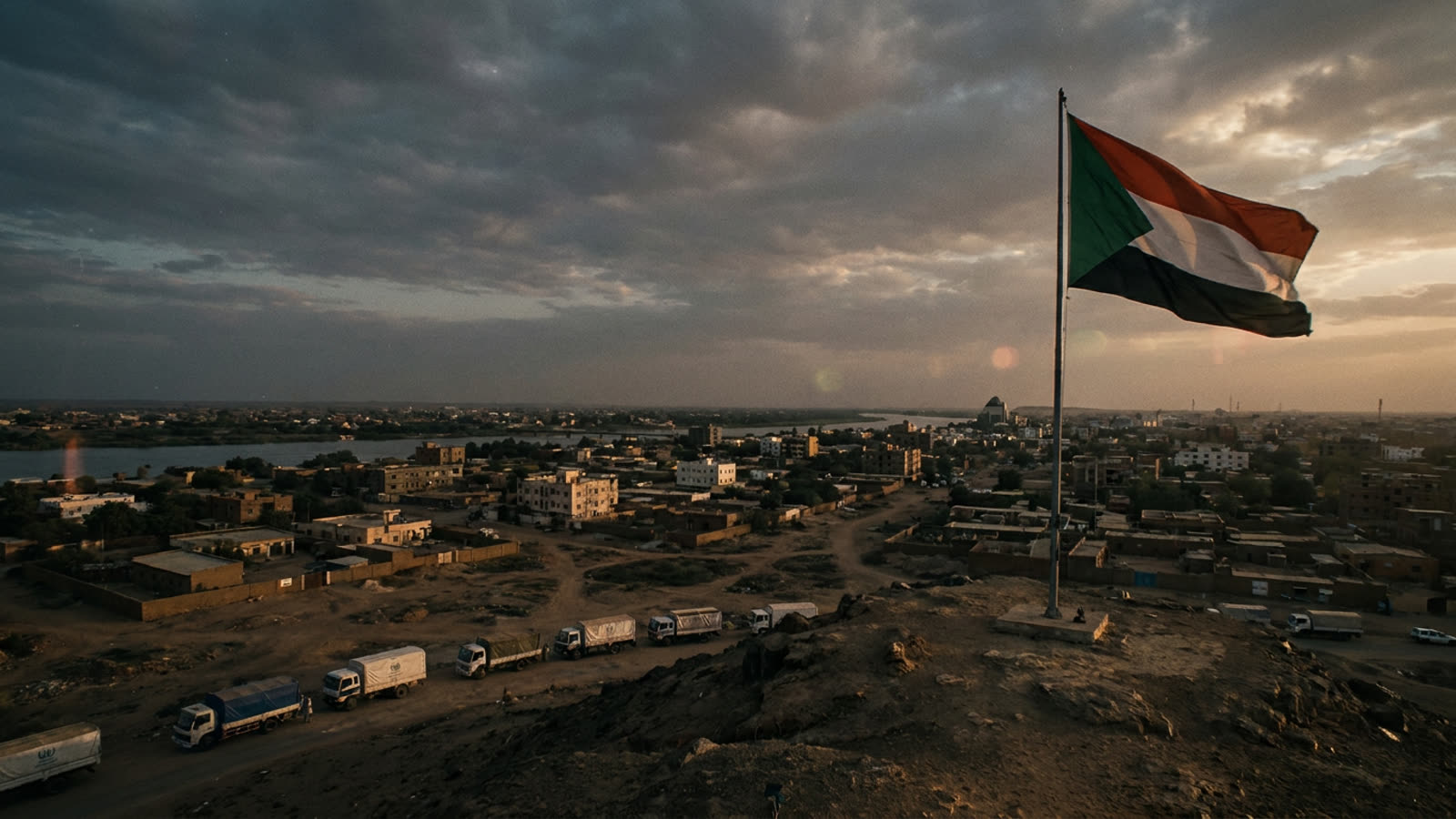
The cruelest consequence of the Iran war may be unfolding thousands of miles from the Strait of Hormuz, in a country that has nothing to do with the conflict. Sudan, already experiencing what the United Nations calls the world's worst hunger crisis, now faces the prospect of losing what remains of its harvest season as the ripple effects of American military operations choke off the aid and trade routes keeping its population alive.
The mechanism is grimly straightforward. Sudan imports roughly 40 percent of its grain through Red Sea ports, and the war has transformed that waterway into a zone of heightened insurance premiums, diverted shipping, and sporadic interdiction. Humanitarian organizations report that food shipments are arriving weeks late or not at all. Meanwhile, the country's domestic agricultural sector—already devastated by its own civil war between the Sudanese Armed Forces and the Rapid Support Forces—cannot compensate for the shortfall.
A compounding catastrophe
Sudan entered 2026 with approximately 25 million people facing acute food insecurity, according to the Integrated Food Security Phase Classification. The harvest season that should be underway now was meant to provide modest relief. Instead, farmers in the country's breadbasket regions report they cannot access seeds, fertilizer, or fuel—all of which have become scarcer and more expensive as global supply chains bend around the Iran conflict. The fighting between Sudan's domestic factions has displaced millions and made large swaths of arable land inaccessible, but the Iran war has added an external dimension to what was already an internal catastrophe.
The World Food Programme has been forced to cut rations repeatedly this year, not because donor funding has dried up entirely, but because the logistics of moving food into Sudan have become prohibitively complex. Ships that once transited the Red Sea routinely now take longer routes around the Cape of Good Hope, adding weeks and costs that humanitarian budgets cannot absorb.
The diplomatic blind spot
As Washington and Tehran inch toward what may become a peace agreement, Sudan barely registers in the negotiating framework. The emerging deal appears focused on nuclear constraints, sanctions relief, and regional security guarantees—legitimate priorities, but ones that do not contemplate the humanitarian externalities of the conflict. There is no mechanism being discussed to compensate countries like Sudan for the collateral damage of a war they did not start and cannot escape.
This is not unique to the Iran conflict; great-power confrontations routinely produce forgotten victims. But the speed with which Sudan has dropped from international attention—even as its crisis accelerates—suggests a troubling hierarchy of suffering. A famine in Africa simply cannot compete for bandwidth with oil prices and nuclear diplomacy.
Our take
The Iran war will end, probably soon, and the participants will declare victory or at least relief. Sudan will still be starving. The honest accounting of this conflict must eventually include the lives lost not to missiles but to disrupted grain shipments and unplanted fields—the people who died because the world's attention and resources were elsewhere. That accounting is unlikely to happen, which is precisely why it matters.