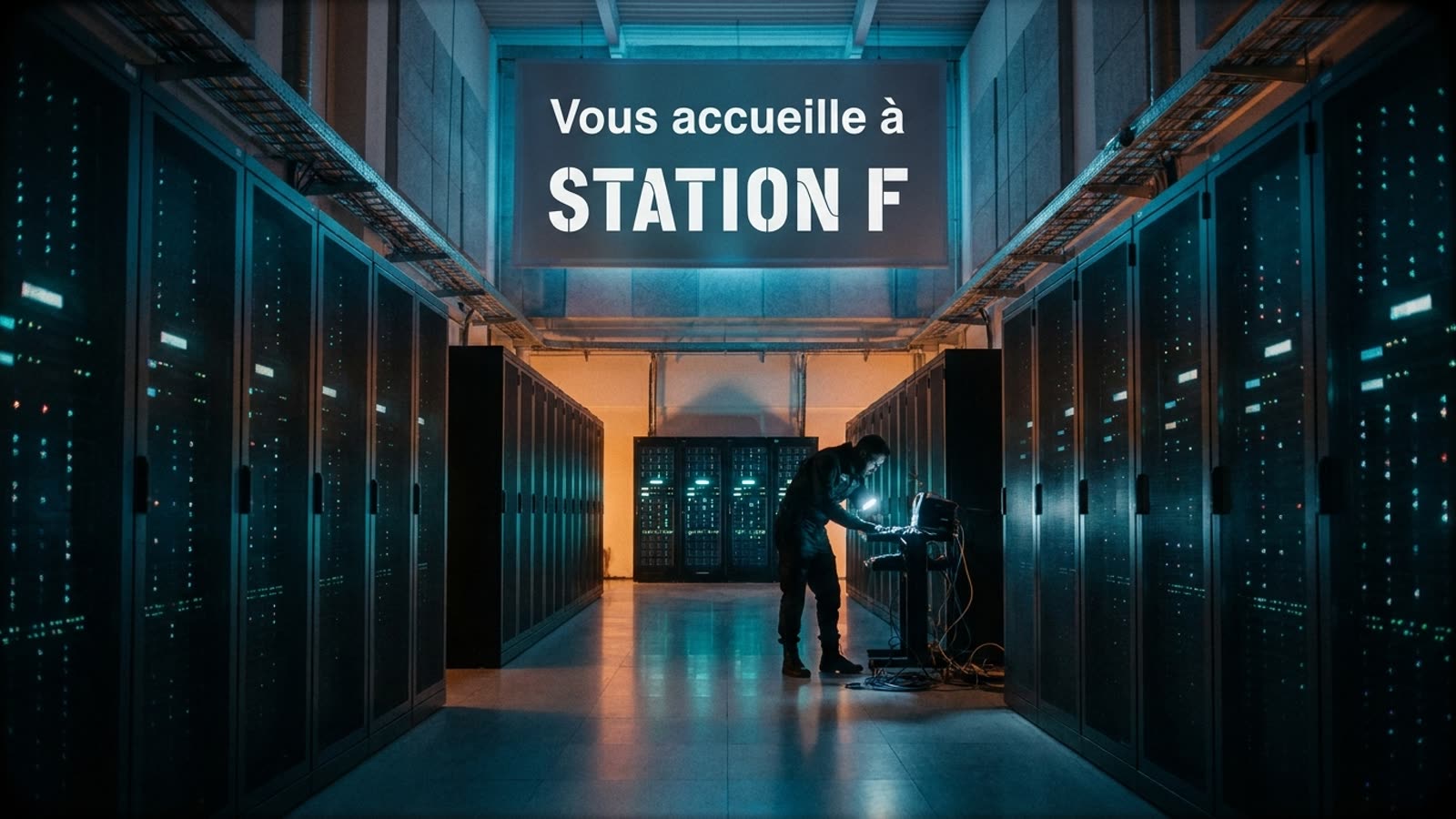
While Silicon Valley's venture capitalists fret about saturated deal flow and San Francisco's exodus narrative, something interesting is happening in a converted railway depot in Paris's 13th arrondissement. Station F, the 34,000-square-meter campus that Xavier Niel opened in 2017, has evolved from a flashy real-estate play into arguably the most consequential launchpad for European AI startups.
The shift didn't happen overnight. For years, Station F was dismissed by serious technologists as a WeWork with better PR—a place where lifestyle founders workshopped pitch decks between espresso breaks. That reputation is now outdated. The campus has become a magnet for AI ventures precisely because it sits at the intersection of three forces that matter enormously in 2026: regulatory arbitrage, talent density, and capital that actually understands deep tech.
The regulatory advantage nobody talks about
Europe's AI Act, which entered full force earlier this year, was supposed to be the continent's competitive handicap—a bureaucratic millstone that would drive innovation to more permissive jurisdictions. The opposite is happening. Startups building enterprise AI, particularly in healthcare, finance, and industrial automation, are discovering that EU compliance is becoming a selling point rather than a burden. Station F's in-house legal clinics, staffed by specialists who've been navigating the AI Act since its draft stages, give resident companies a head start that American competitors can't easily replicate.
French tax incentives for R&D-intensive companies—the Crédit d'Impôt Recherche can cover up to 30 percent of qualifying expenditures—sweeten the proposition further. For a cash-burning AI startup, that's not a rounding error.
Talent flows where talent gathers
Paris has quietly assembled one of the world's densest concentrations of machine-learning researchers. The city hosts major AI labs from Meta, Google DeepMind, and Hugging Face, plus elite engineering schools like École Polytechnique and ENS. Station F's proximity to this ecosystem means founders can poach—or at least network with—researchers who might otherwise never consider a startup. The campus now runs dedicated AI-focused programs with partners including Microsoft, LVMH, and Ubisoft, each bringing domain expertise and, crucially, potential first customers.
The numbers tell the story: Station F's latest cohort includes more than 200 AI-native startups, up from roughly 60 three years ago. Several have already raised Series A rounds north of €20 million from European deep-tech funds that historically struggled to find local deal flow.
What it still lacks
Station F is not Y Combinator, and pretending otherwise would be naive. It doesn't write checks, doesn't take equity, and doesn't provide the kind of alumni network that can open doors in enterprise sales across North America. European exits remain smaller and rarer. The campus's corporate partners sometimes treat their accelerator programs as innovation theater rather than genuine pipeline development.
But for founders who want to build AI companies that can sell into regulated industries worldwide, the Paris address is starting to make strategic sense in ways it didn't five years ago.
Our take
The AI startup map is being redrawn faster than most observers realize. Station F won't replace Sand Hill Road, but it doesn't need to. It needs to be the place where European AI founders can access compliance expertise, deep-tech talent, and patient capital without relocating to a jurisdiction that treats them as regulatory guinea pigs. On that narrow but important mandate, it's delivering. The converted train station has finally found its track.