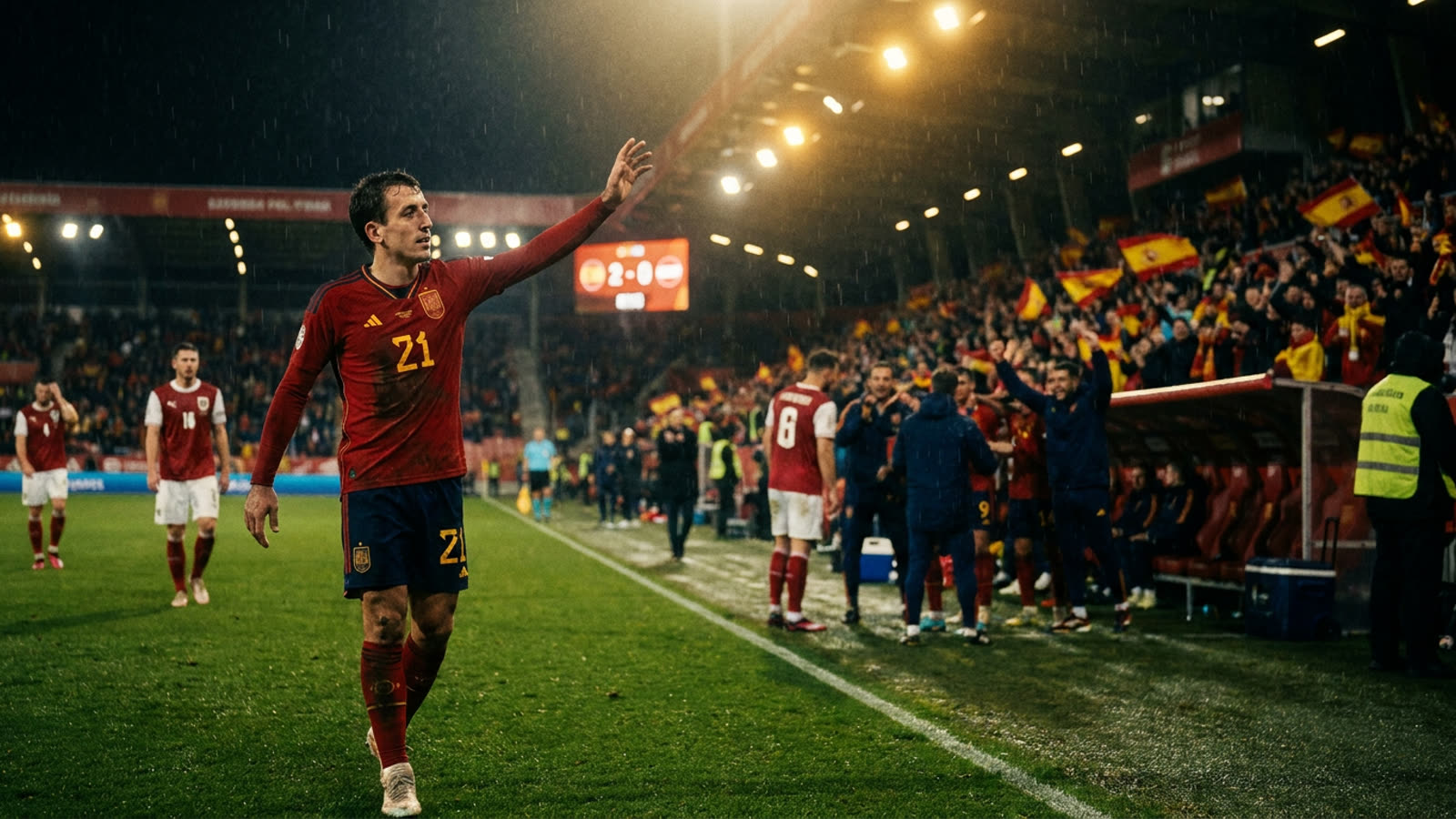
Spain did not merely beat Austria on Wednesday; they administered a masterclass in controlled football that left their opponents looking like they had purchased tickets to watch rather than participate. Mikel Oyarzabal's goal was the statistical punctuation mark, but the story was written in the eighty-seven percent of the match Spain spent dictating terms.
La Roja advance to the round of sixteen having conceded just once in group play, but the defensive record undersells the achievement. This is not a team that defends by packing bodies behind the ball. Spain defend by ensuring their opponents rarely touch it.
The midfield architecture
Luis de la Fuente has built his World Cup campaign around a midfield triangle that would make geometry teachers weep with joy. The passing sequences against Austria regularly hit fifteen, twenty, twenty-five touches before a final ball was even attempted. In an era when most international managers have abandoned positional play for direct, transition-heavy football, Spain remain stubbornly, gloriously committed to the idea that the ball moves faster than any player.
The Austrian press, which had troubled other opponents in qualifying, simply could not locate the ball long enough to apply sustained pressure. Every time they committed players forward, Spain found the free man. Every time they dropped deep, Spain probed patiently until a gap appeared. It was less a football match than a demonstration of thermodynamics: energy expended by Austria chasing, energy conserved by Spain circulating.
Oyarzabal's quiet excellence
The Real Sociedad forward has never been a household name outside Spain, which suits him fine. While flashier attackers grab headlines, Oyarzabal has built a career on intelligent movement, clinical finishing, and an almost supernatural ability to arrive in dangerous positions without anyone noticing until the ball is in the net. His goal against Austria was vintage: a run that began unremarkably, a finish that left the goalkeeper with no chance, a celebration that suggested he had merely completed an administrative task.
At twenty-nine, Oyarzabal is entering what should be his peak years, and this World Cup represents perhaps his best chance at the kind of tournament performance that elevates good players into national heroes. Spain have historically produced these figures—players who define a generation through a single summer of brilliance.
The knockout gauntlet
Spain's reward for group-stage dominance is a round-of-sixteen draw that looks manageable on paper but carries the usual tournament caveats. Knockout football punishes possession teams that cannot convert dominance into goals, and Spain's attacking output, while sufficient, has not been overwhelming. The margins shrink as the stakes rise.
What Spain possess, however, is the rarest commodity in tournament football: a clear identity and the personnel to execute it. They know exactly what they are, and they are very good at being it.
Our take
Spain are not the favorites—that burden falls on the hosts and the usual South American suspects—but they may be the most aesthetically pleasing team in this World Cup. Whether beauty translates to trophies is football's eternal question, and Spain have provided both affirmative and devastating answers over the years. For now, watching them is simply a pleasure, the kind of football that reminds you why you started watching in the first place.