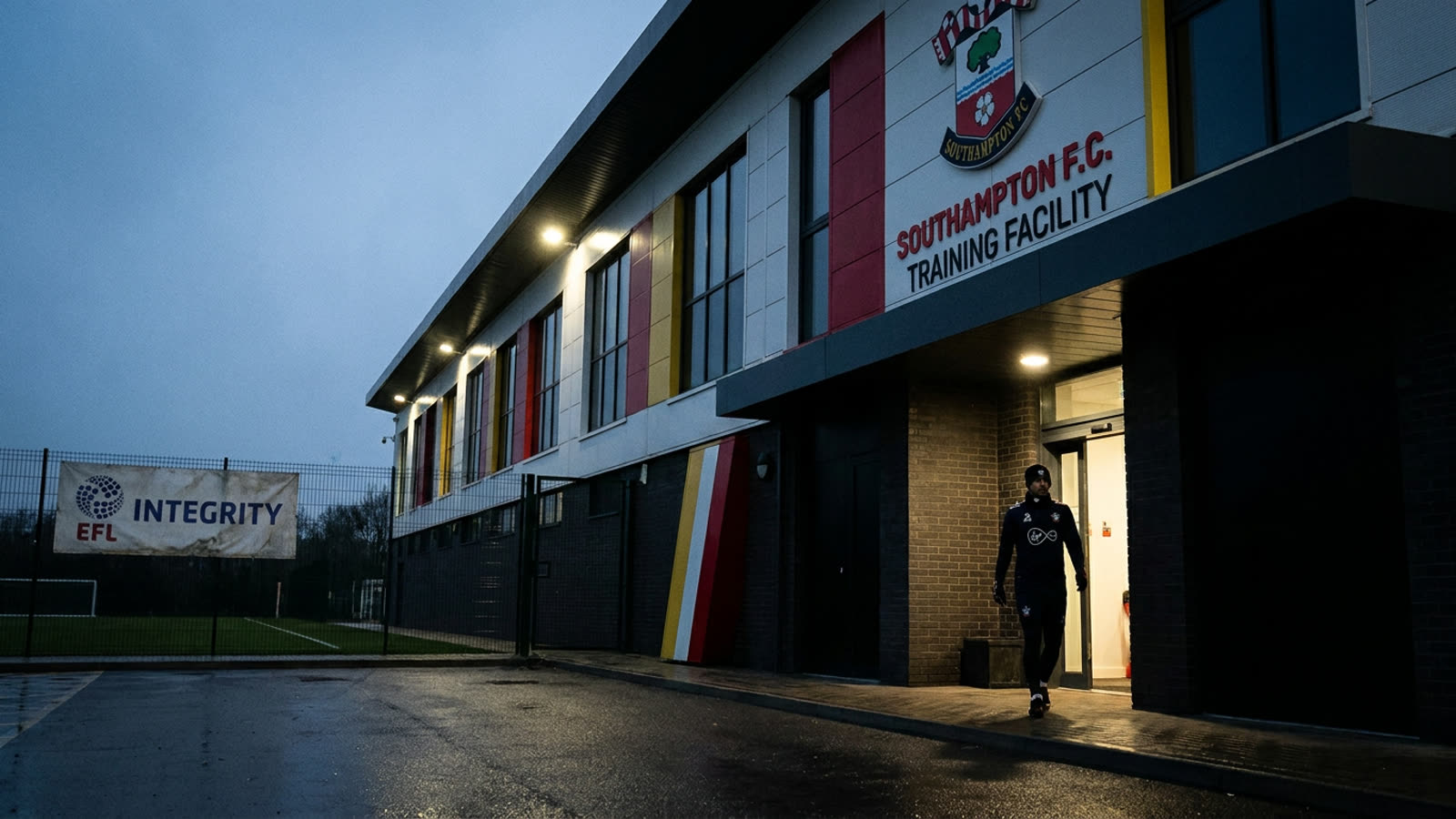
The English Football League has expelled Southampton from the Championship playoffs for spying on opponents, a punishment so severe it has no modern precedent in English professional football. The club, desperate to return to the Premier League after relegation, allegedly gathered confidential information on rival teams through means the EFL deemed sufficiently egregious to warrant immediate disqualification. Southampton's promotion dreams are over, and the sport's governing bodies are suddenly confronting the possibility that competitive espionage is far more widespread than anyone has acknowledged.
The decision lands like a thunderclap because English football's disciplinary apparatus typically operates with all the urgency of a parliamentary subcommittee. Points deductions arrive years after financial irregularities. Transfer bans get appealed into oblivion. Yet here the EFL moved with startling speed, removing a club from an active competition rather than adjudicating the matter after the fact. Whatever Southampton did, the league clearly concluded that allowing them to continue would taint the entire playoff process.
The precedent problem
English football has dealt with spying before, though never quite like this. Leeds United's "Spygate" in 2019, when staff were caught observing Derby County's training sessions, resulted in a modest fine and a lecture about sporting ethics. The FA treated it as embarrassing but ultimately harmless gamesmanship. Southampton's punishment suggests the current allegations involve something categorically different—perhaps digital surveillance, intercepted communications, or inside sources providing tactical information. The EFL has not disclosed specifics, which has only amplified speculation about the scope of the breach.
The club's response has been notably muted. No furious denials, no threats of legal action, just a terse statement acknowledging the decision and promising an internal review. That silence speaks volumes. A club wrongly accused of cheating its way through a playoff campaign would be screaming from the rooftops. Southampton appears to be in damage-limitation mode, which suggests the evidence against them is substantial.
What happens next
The immediate question is who benefits. The team Southampton defeated in the playoff semifinal will presumably be reinstated, though the EFL has not yet confirmed the procedural mechanics. More interesting is whether this triggers a broader investigation. If one club was willing to cross ethical lines this dramatically, the assumption that everyone else is playing clean seems naive. The Premier League and EFL have historically preferred not to look too closely at competitive practices, operating on the theory that what they don't know can't embarrass them. That posture may no longer be tenable.
Southampton's financial situation makes this particularly damaging. The club was banking on promotion revenue to stabilize its books after a difficult period outside the top flight. Another season in the Championship, now guaranteed, will strain budgets and potentially trigger player sales. The reputational damage may prove even more costly—sponsors and investors tend to avoid clubs associated with cheating scandals.
Our take
This is English football's reckoning with a culture of competitive corner-cutting that has long been tolerated as long as it stayed within unspoken limits. Southampton apparently exceeded those limits so dramatically that the EFL had no choice but to act. The real question now is whether this represents an isolated case of institutional arrogance or the first visible evidence of a much larger problem. Given football's historical reluctance to police itself, we suspect the latter. The sport's governing bodies would be wise to launch a comprehensive review before the next scandal forces their hand.