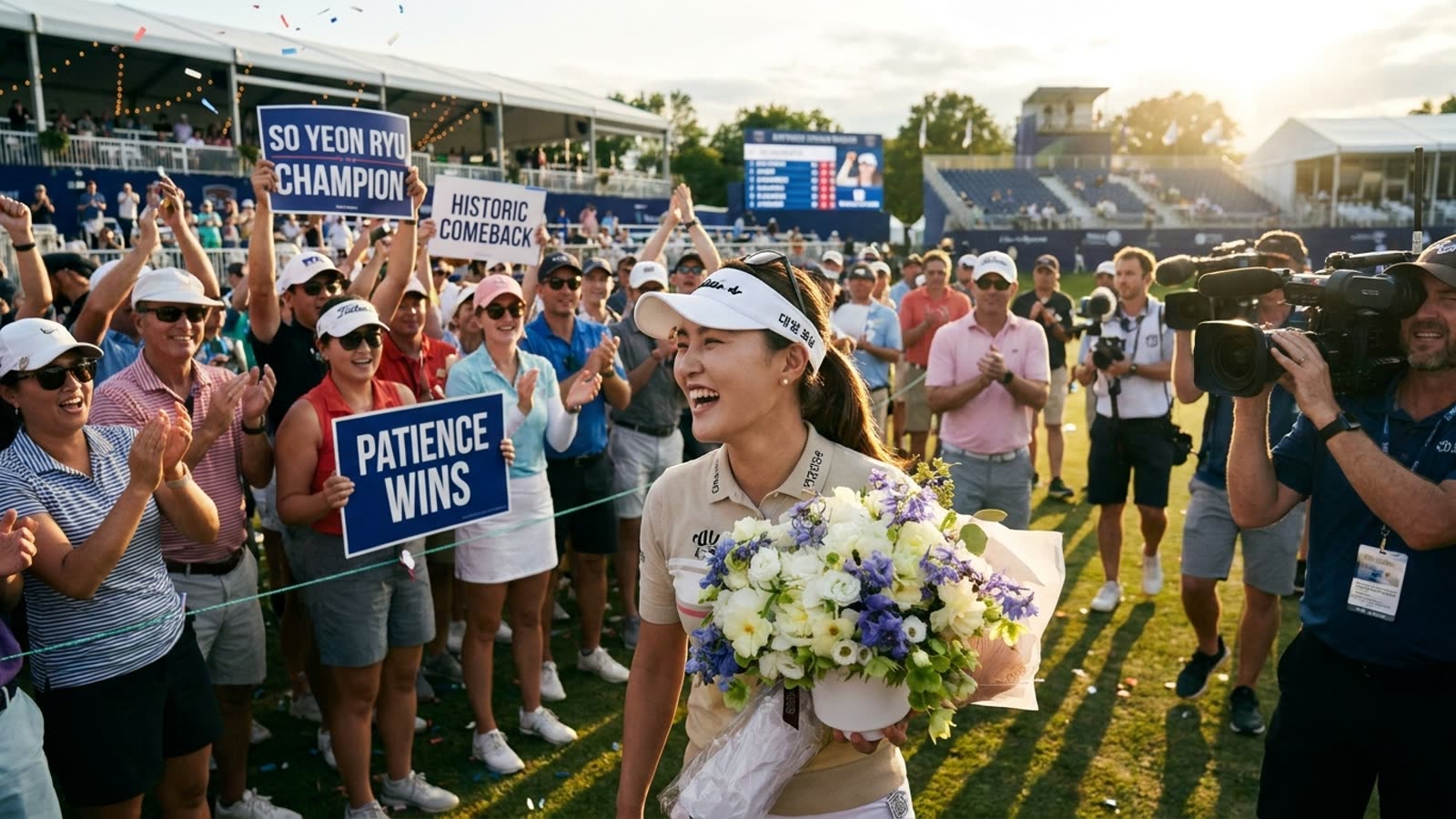
So Yeon Ryu does not hit the ball especially far. She does not pump her fist or stare down opponents. She simply places the ball where it needs to go, over and over, until the scoreboard bends to her will. On Sunday at Sahalee Country Club, that methodical brilliance produced one of the great final-round performances in women's golf: a seven-under 65 that erased a six-shot overnight deficit and delivered Ryu her third career major championship.
The victory ties the largest final-round comeback in women's major history, matching Inbee Park's rally at the 2013 U.S. Women's Open. But where Park benefited from a leader's collapse, Ryu simply refused to miss. She hit seventeen greens in regulation, needed just twenty-five putts, and birdied four of her final seven holes while the leaders ahead of her found Sahalee's towering evergreens and slick greens increasingly unforgiving.
The anatomy of a comeback
Ryu began the day six strokes behind third-round leader Minjee Lee, a position that historically yields major champions roughly three percent of the time. But the Pacific Northwest course, softened by overnight rain, played slightly more receptive than it had all week, and Ryu pounced. Her approach game was surgical: she stuck her iron on the par-three second to three feet, then hit the flagstick on the fifth en route to back-to-back birdies.
By the turn, she had gained four shots on the field. Lee, meanwhile, found water on the tenth and made double bogey. The tournament was suddenly a race, and Ryu was running downhill.
What it means for Ryu's legacy
At 34, Ryu now owns major titles spanning more than a decade, having won her first at the 2011 U.S. Women's Open as a 21-year-old. That longevity is increasingly rare in a women's game trending younger and longer off the tee. Ryu ranks outside the top fifty in driving distance on the LPGA Tour this season, yet she leads the tour in greens in regulation percentage.
Her approach has always been unfashionable: conservative course management, metronomic tempo, an almost eerie calm under pressure. In an era that celebrates bombers, Ryu's game is a throwback to the Ben Hogan school of precision. Sunday proved that school still graduates champions.
Our take
Ryu's victory is a useful corrective to the distance-obsessed discourse that dominates modern golf. Power matters, but Sahalee's tight corridors and elevated greens reminded everyone that placement matters more. At an age when many players begin losing strokes to the field, Ryu found her sharpest form precisely when the stakes were highest. That is not luck. That is the accumulated compound interest of thousands of hours on the range, cashed in on a Sunday afternoon in Washington. The patient game, it turns out, rewards patience.