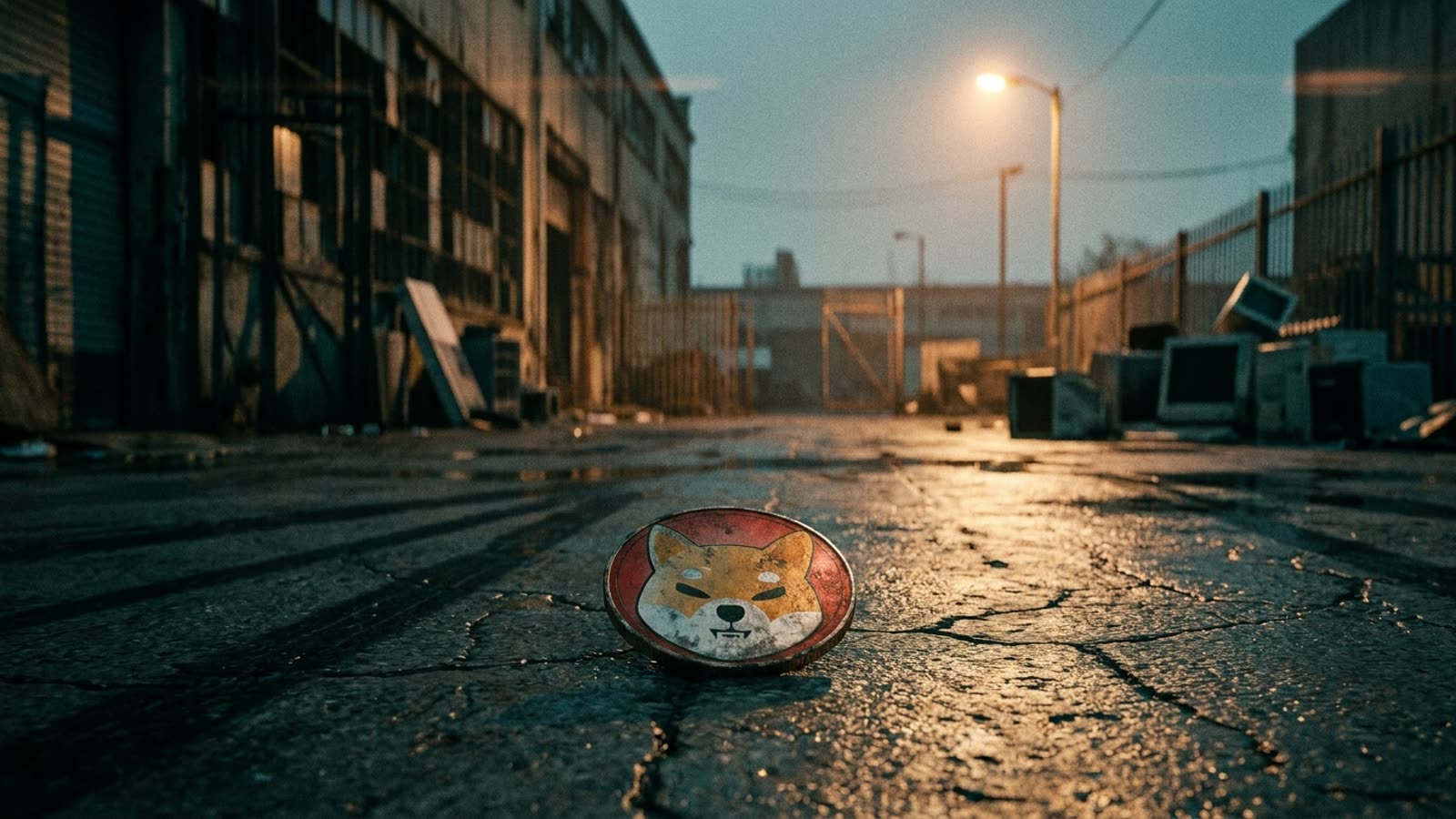
The dog is tired. Shiba Inu, once the scrappy challenger to Dogecoin's meme-coin throne, has lost nearly two-thirds of its value over the past twelve months and shows no signs of a meaningful reversal. At a fraction of a cent per token—roughly $0.00000437 as of this weekend—SHIB sits at market cap rank 37, a position that sounds respectable until you remember it briefly flirted with the top ten during the 2021 mania.
This isn't a crash. It's something worse: a slow, grinding capitulation that suggests retail investors have simply moved on.
The arithmetic of abandonment
Meme coins live and die by attention. Unlike Bitcoin, which can point to institutional accumulation and ETF inflows, or Ethereum, which anchors a sprawling DeFi ecosystem, Shiba Inu's value proposition was always social—a bet that enough people would keep believing, keep buying, keep posting rocket emojis. The tokenomics were designed for virality: a quadrillion-token supply meant anyone could own millions of SHIB for pocket change, creating the psychological illusion of upside.
But illusions require maintenance. The Shiba Inu ecosystem has shipped products—a layer-2 network called Shibarium, a decentralized exchange, even a metaverse project—yet none have generated the network effects needed to sustain speculative interest. Trading volume has cratered. The community Discord servers, once frenetic with hopium, now read like support groups.
What meme coins taught us
The meme-coin boom of 2020-2021 was, in hindsight, a stress test for crypto's cultural thesis. Could a token with no utility, no revenue, and no roadmap beyond "number go up" sustain value purely through collective belief? For a while, the answer was yes. Dogecoin made millionaires. SHIB made more. The lesson seemed to be that narrative was everything.
The correction offers a different lesson: narrative is necessary but not sufficient. Without continuous injections of novelty—celebrity tweets, exchange listings, viral moments—meme coins deflate like party balloons the morning after. The communities that formed around them were real, but community alone cannot generate perpetual demand for an asset with infinite supply and zero cash flows.
The survivors and the dead
Dogecoin, the original, has fared somewhat better, buoyed by Elon Musk's continued, if sporadic, enthusiasm. But even DOGE is down substantially from its highs. The broader meme-coin category—Pepe, Floki, Bonk, and dozens of imitators—has bifurcated into a few resilient names and a graveyard of abandoned Telegram groups.
Shiba Inu occupies an uncomfortable middle ground: too large to ignore, too stale to excite. It persists on exchange listings and in the portfolios of holders who refuse to sell at a loss, a phenomenon traders call "bag-holding." The token isn't dead, but it isn't alive in the way that matters.
Our take
SHIB's slow bleed is a useful corrective to the idea that crypto's speculative excesses were a feature rather than a bug. They were both. Meme coins demonstrated that blockchains could coordinate belief at scale—a genuinely novel capability. They also demonstrated that belief without utility is a depreciating asset. The dog had its day. The day is over.