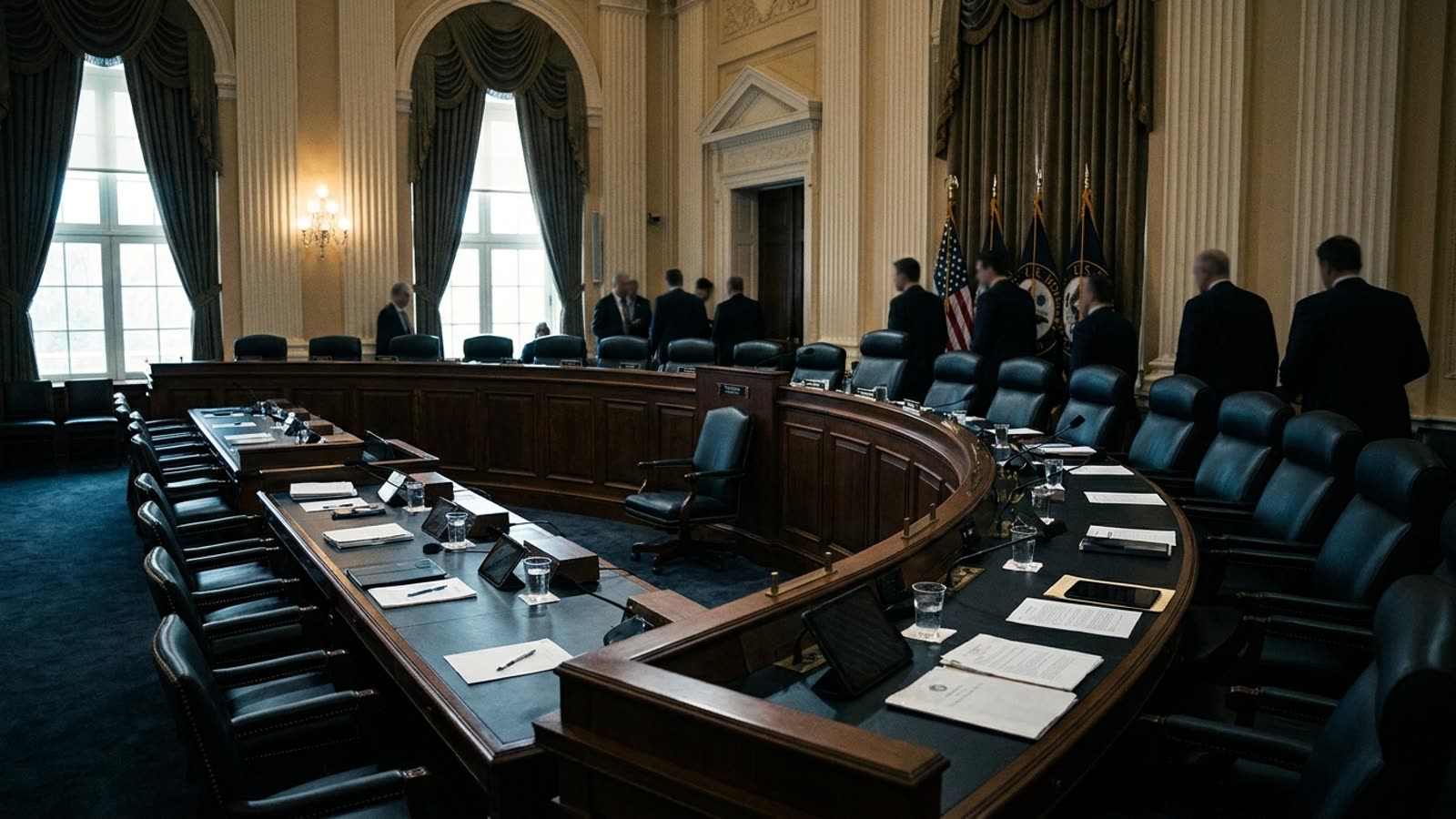
The Republican Senate majority has spent the past week demonstrating, with painful clarity, that holding power and exercising it are entirely different skills.
What began as a routine appropriations negotiation devolved into open warfare between Senate Republicans and the White House over President Trump's proposed "anti-weaponization fund"—a $2 billion discretionary pool intended to compensate individuals the administration deems victims of politically motivated prosecution. By Wednesday, the chaos had metastasized: senators abandoned a planned vote on immigration enforcement funding, leadership publicly contradicted itself within hours, and at least four Republican senators threatened to block all further business until the fund was stripped from the budget.
The anatomy of a collapse
The anti-weaponization fund was always constitutionally suspect—essentially executive branch reparations distributed without judicial review. But what killed it politically wasn't constitutional scruple; it was the realization among vulnerable 2028 senators that voting for a fund widely perceived as a Trump loyalty test would be used against them in swing states. Susan Collins of Maine and Lisa Murkowski of Alaska were the first to publicly defect. By Tuesday, they'd been joined by Thom Tillis and, more surprisingly, John Cornyn, who called the fund "a solution in search of a problem" during a closed-door caucus meeting.
The White House responded with characteristic restraint: a Truth Social post calling the dissenters "RINOs who hate justice" and a threat to primary all four. This had the predictable effect of hardening opposition rather than softening it.
Immigration becomes collateral damage
The more consequential casualty was the immigration enforcement package, which had genuine bipartisan support and was expected to pass with 60-plus votes. Republican leadership had bundled it with the anti-weaponization fund in a procedural gambit designed to force Democrats to choose between border security and opposing Trump. Instead, the gambit forced Republicans to choose between their own members.
By Wednesday afternoon, Majority Leader John Thune announced the chamber would recess without voting on either measure—a stunning admission that he couldn't whip his own caucus on the president's top legislative priority. The immigration package, which included $14 billion for border infrastructure and expedited asylum processing, now faces an uncertain future.
Our take
This is what happens when a political party mistakes dominance for competence. Republicans hold the White House, the Senate, and the House, yet they cannot pass legislation their own voters overwhelmingly support because they've made loyalty to one man's grievances the organizing principle of governance. The anti-weaponization fund was never serious policy; it was a purity test dressed in appropriations language. That it brought down an actual border security bill—the issue Republicans have campaigned on for a decade—is a fitting epitaph for a party that has forgotten what governing is for.