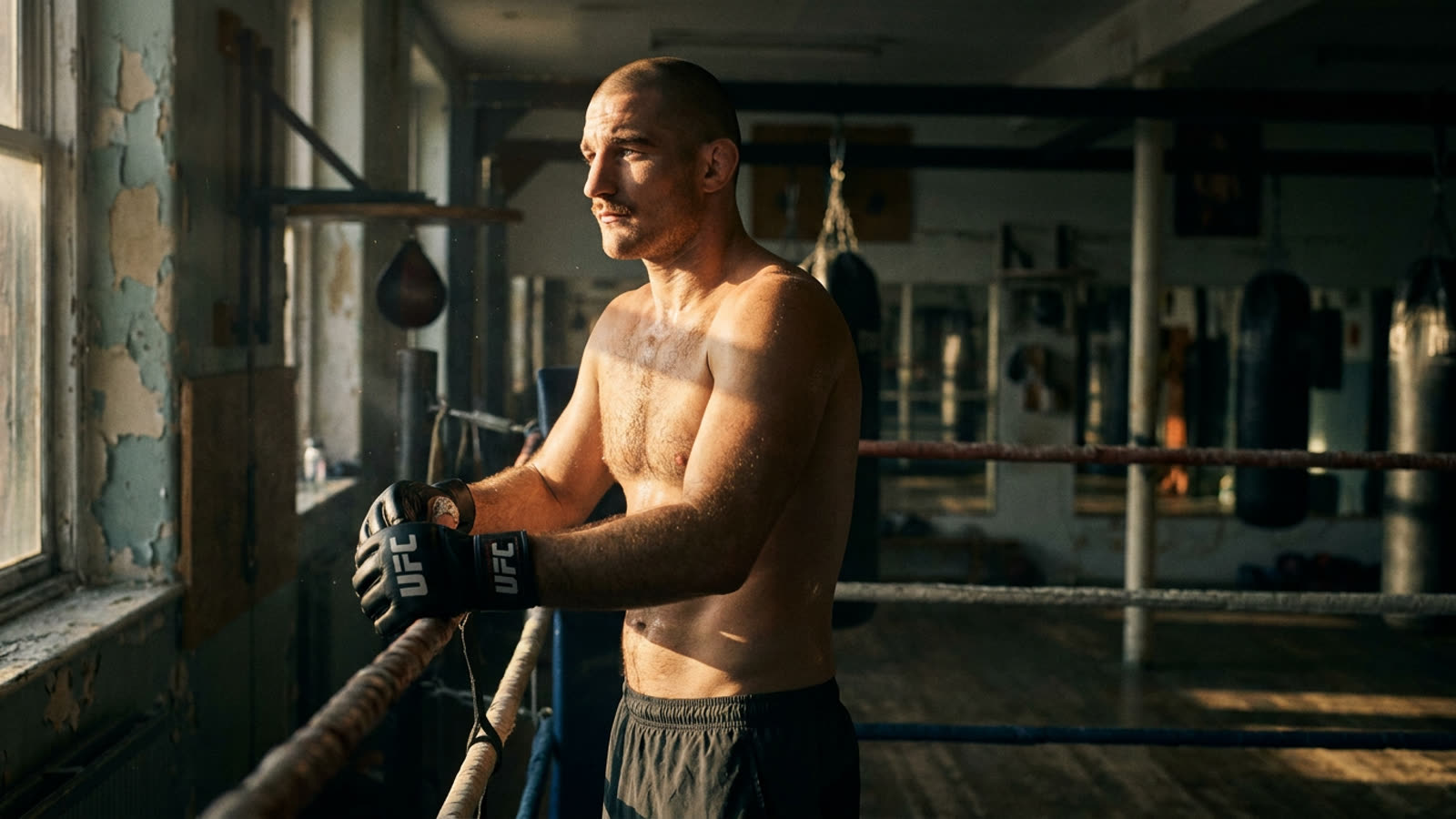
Sean Strickland has never met a quiet moment he couldn't fill with provocation, but his latest crusade—a very public lobbying effort to fight lightweight champion Islam Makhachev—suggests the UFC's most combustible champion is getting bored with the opponents actually available to him.
The middleweight titleholder has spent recent weeks calling out Makhachev across social media and in interviews, framing the hypothetical matchup as a clash of fighting philosophies: his pressure boxing against Makhachev's suffocating grappling, American brashness against Dagestani discipline. Never mind that Strickland would need to cut roughly twenty pounds to make lightweight, or that Makhachev has shown zero interest in moving up. The campaign is less about logistics than positioning.
The villain's dilemma
Strickland's problem is success. Since capturing the middleweight belt in a stunning upset over Israel Adesanya in 2023, he has defended it twice and cleared out the division's most marketable challengers. The remaining contenders—capable fighters all—lack the star power to generate the pay-per-view numbers Strickland's antics deserve. Calling out Makhachev, pound-for-pound the sport's most dominant champion, is a way of staying in the conversation without waiting for the middleweight queue to sort itself out.
It also plays to Strickland's brand. He has built his appeal on being the fighter other fighters find exhausting: politically incorrect, relentlessly online, willing to say whatever generates the most uncomfortable silence in a press conference. A superfight against Makhachev—especially one framed as a culture war proxy—would be his masterpiece of antagonism.
Why it probably won't happen
The UFC rarely books cross-divisional champion fights unless both titles are on the line and both fighters want it. Makhachev is busy defending against a deep lightweight division and has his own superfight ambitions at welterweight. Strickland cutting to 155 would be medically inadvisable and contractually complicated. Dana White has shown no public appetite for the matchup.
But Strickland's goal may not be the fight itself. By inserting himself into the Makhachev discourse, he stays relevant during a fallow period for his own division and reminds the UFC that he is willing to do the promotional work other champions find distasteful.
Our take
Strickland is the UFC's most effective self-marketer precisely because he understands that outrage is a renewable resource. The Makhachev campaign is theater, but it is theater that keeps his name in headlines while middleweight sorts out its next challenger. Whether or not the fight ever materializes, Strickland has already won the only contest he was really entering: the battle for attention.