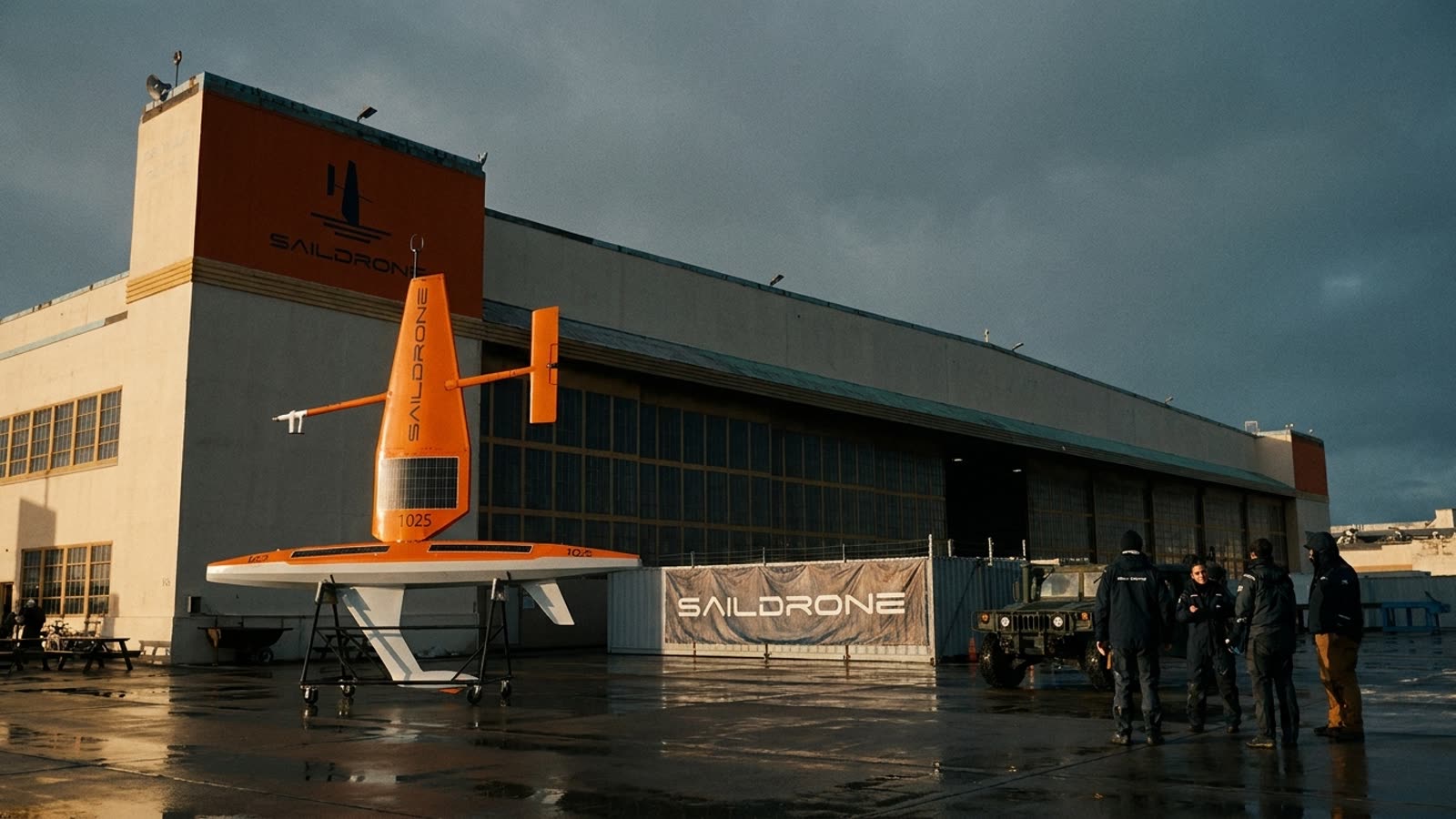
The United States government loses contract protests roughly one time in five, which means that when a small company decides to challenge a federal procurement decision, it is usually burning money on principle. Saildrone, the Alameda-based maker of autonomous sailing drones, apparently did not get that memo—and a federal judge just ruled in its favor over a Navy contract that the service had awarded to a competitor.
The decision is notable not because Saildrone is a household name (it is not) but because successful protests against defense procurement are genuinely unusual. The Government Accountability Office sustains only about 12 to 15 percent of bid protests in a typical year, and challenges that escalate to the Court of Federal Claims fare even worse. For a company with fewer than 500 employees to prevail against the institutional inertia of naval acquisition is, in bureaucratic terms, the equivalent of a club soccer team knocking out Manchester City in the FA Cup.
Why the Navy lost
The specifics of the ruling have not been fully disclosed, but contract protests generally succeed when agencies fail to follow their own evaluation criteria or treat bidders inconsistently. Saildrone's autonomous surface vessels—solar-and-wind-powered craft that can patrol for months without refueling—have been deployed by the Navy for surveillance and data collection in the Pacific and Middle East. The company argued that the service's decision to award a related contract elsewhere ignored its operational track record.
Federal judges are reluctant to second-guess military procurement officials, which makes the ruling all the more striking. The Navy now faces a choice: rebid the contract under tighter scrutiny or appeal and risk further delay in a program area—unmanned maritime systems—where China is investing aggressively.
The bigger procurement picture
Defense acquisition reform has been a Washington talking point for decades, yet the system remains hostile to newcomers. Prime contractors like Lockheed Martin, Raytheon, and General Dynamics win the vast majority of major awards, in part because they understand the labyrinthine rules and maintain permanent lobbying presences on Capitol Hill. Startups and mid-sized firms often find that even a superior product cannot overcome the incumbency advantage baked into evaluation frameworks.
Saildrone's victory will not change that overnight, but it does provide a template. The company had already secured smaller Navy contracts, building a paper trail of successful performance that made the protest credible. Other defense-tech entrants—Anduril, Shield AI, Hadrian—are watching closely. If the courts are willing to enforce evaluation standards rigorously, the moat around legacy contractors becomes slightly less impassable.
Our take
This is a feel-good story for anyone who believes the Pentagon's buying habits are dangerously sclerotic. Saildrone makes a product the Navy demonstrably needs, and a judge forced the service to acknowledge that track record matters. But one ruling does not reform a system designed, intentionally or not, to favor scale over agility. The real test is whether the Defense Department treats this as a wake-up call or an irritating anomaly. Given the institution's allergy to introspection, bet on the latter—at least until the next protest succeeds.