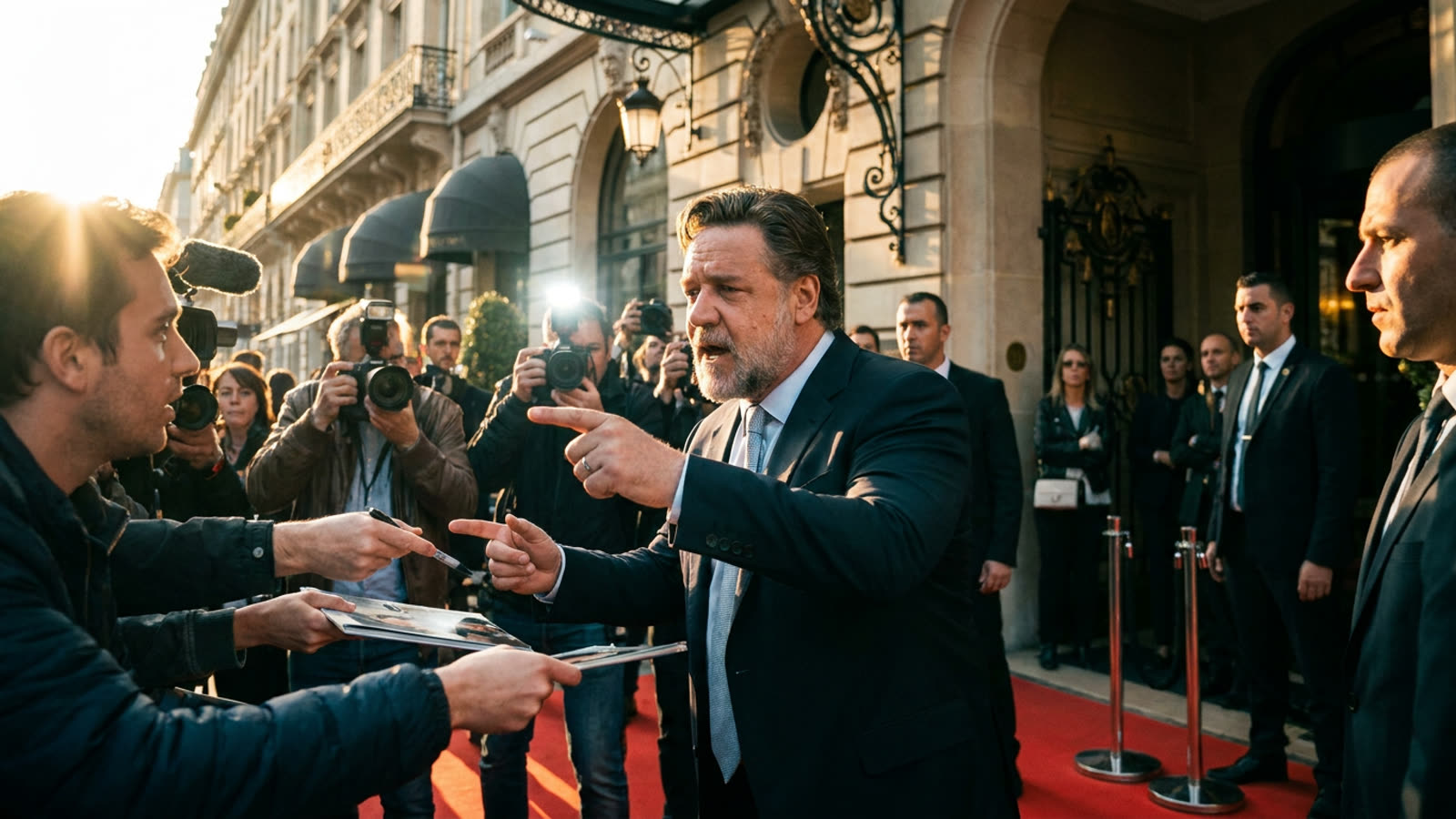
Russell Crowe has never been one to suffer fools, and the autograph dealers camped outside his Paris hotel discovered this anew when the actor issued a pointed warning about their conduct. The 62-year-old, in town for promotional duties, reportedly addressed the cluster of collectors directly, advising them to "behave" or face consequences—a scene that plays like a deleted scene from one of his films, minus the leather armor.
The incident, minor as it may seem, crystallizes a tension that has been simmering in celebrity culture for years. The autograph economy has metastasized from earnest fans clutching playbills into a professionalized industry where the same faces appear outside every premiere, every hotel, every restaurant, armed with stacks of photographs and a financial motive that has nothing to do with admiration.
The Business of Signatures
Authenticated Russell Crowe autographs fetch between $150 and $400 on memorabilia sites, depending on the item. A signed Gladiator poster in good condition can command considerably more. This arithmetic explains why the same dealers materialize wherever A-list talent goes—they are not fans but arbitrageurs, and celebrities know it. The interaction has become transactional on both sides, stripped of whatever charm once existed in the autograph ritual.
Crowe's willingness to confront the situation publicly is characteristic. This is the man who once threw a telephone at a hotel concierge, who has conducted feuds with everyone from studio executives to journalists, and who has never pretended that fame requires him to be pleasant to everyone who demands a piece of his time. His Paris warning was, by his standards, measured.
The Etiquette Collapse
The broader issue is that the unwritten social contract between celebrities and the public has eroded. Social media has convinced many people that access to famous strangers is a right rather than a privilege. Autograph dealers have become more aggressive because the economics reward aggression. And celebrities, in turn, have become warier, more guarded, more likely to travel with security details that would have seemed excessive a generation ago.
Paris, notably, is a particular flashpoint. The city's paparazzi culture and its concentration of luxury hotels make it a natural hunting ground for collectors. Crowe is hardly the first star to bristle at the attention there, but his directness—addressing the crowd rather than simply ignoring them or retreating behind handlers—is increasingly rare.
Our take
There is something almost refreshing about Crowe's approach. In an era when most celebrities manage their public personas with the precision of political campaigns, he remains defiantly himself: prickly, unfiltered, unwilling to pretend that every interaction with strangers is a gift. The autograph dealers will be back tomorrow, of course. But for one moment outside a Paris hotel, the power dynamic was clear. Maximus still knows how to work a crowd—even when he is telling them to leave him alone.