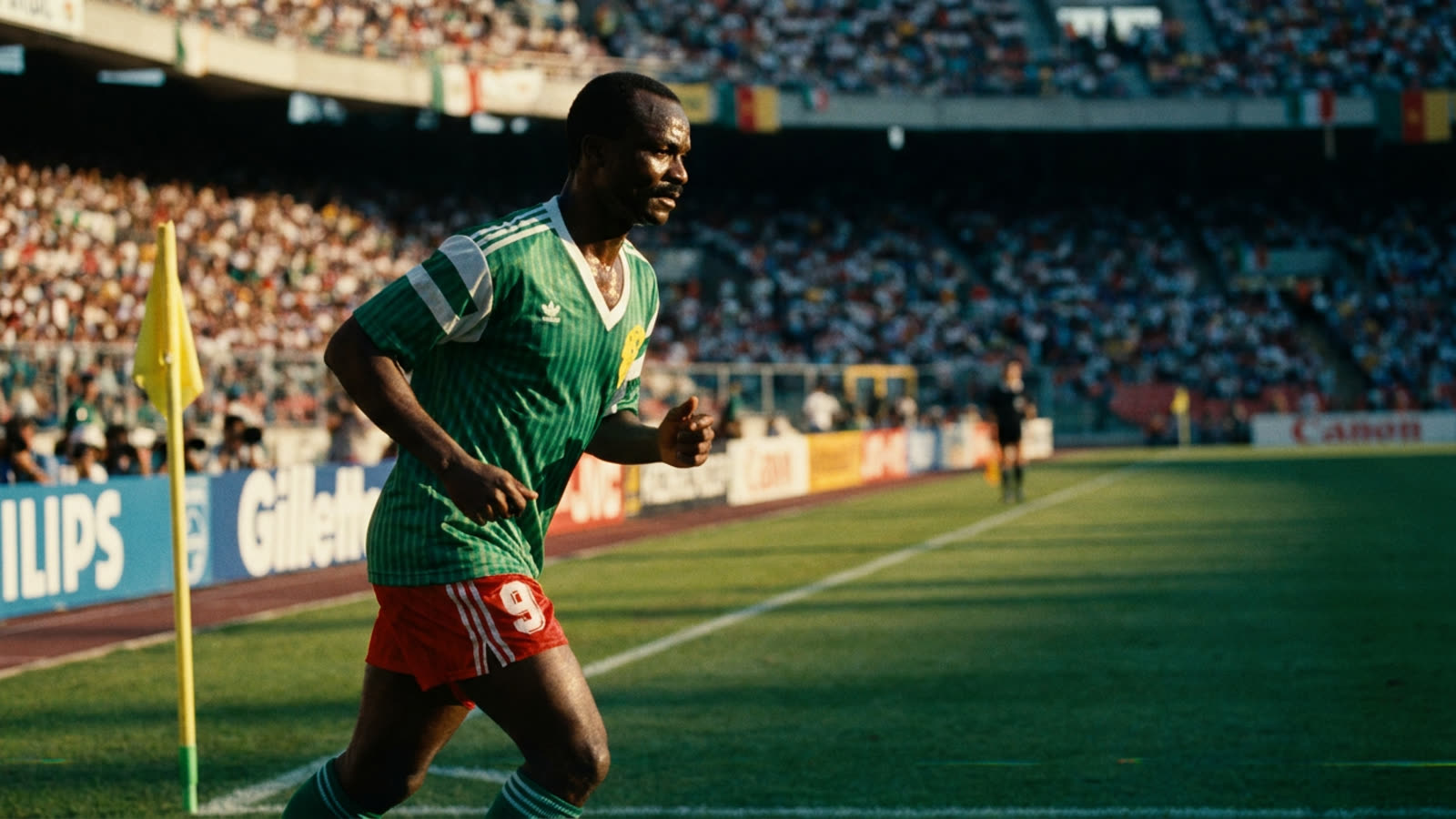
Before Roger Milla shimmied to the corner flag against Romania in Bari, African football at the World Cup was a curiosity, occasionally charming, never threatening. After he did it again against Colombia, it was a force that Europe and South America could no longer condescend to. The dance was joyful, unhurried, almost mocking in its ease. The message was unmistakable: we belong here, and we're having more fun than you.
Milla was not supposed to be in Italy. He had effectively retired from international football, living quietly in Réunion, playing occasional matches in the French lower leagues. Cameroon's president, Paul Biya, personally intervened to recall him for the squad. The decision was controversial—Milla was ancient by football standards, a sentimental pick that risked embarrassing a team with genuine ambitions. Instead, he became the tournament's most indelible image.
The goals that mattered
Cameroon had already shocked the world by beating defending champions Argentina in the opening match, a result so improbable that many dismissed it as a fluke. Milla entered as a substitute against Romania in the round of sixteen and scored twice in extra time, each goal followed by that hip-swiveling celebration at the corner flag. Against Colombia in the quarterfinals, he did it again—two more goals, two more dances, Colombia's eccentric goalkeeper René Higuita humiliated by Milla's predatory instincts.
The Indomitable Lions lost to England in the semifinals, narrowly, controversially, with two Gary Lineker penalties deciding the match. But the result was almost beside the point. Cameroon had reached the final four. An African nation had proven it could compete with anyone.
What the dance meant
Milla's corner-flag celebration was not choreographed or planned. It was spontaneous, rooted in makossa, a Cameroonian musical style, and it communicated something that statistics could not: joy as resistance, exuberance as a statement of arrival. European football culture at the time was dour, workmanlike, suspicious of individual expression. Milla's dance was a refusal to assimilate into that grayness.
The celebration became arguably the first truly global football meme, replicated in schoolyards and amateur pitches across the world long before social media existed to spread such things. It humanized African football for audiences who had barely paid attention before. Nigeria, Senegal, and Ghana would build on what Cameroon started, each subsequent African success at a World Cup tracing a line back to Bari.
The man himself
Albert Roger Mooh Miller, born in Yaoundé in 1952, had already won African Footballer of the Year twice before Italia 90. He had played in France, scored prolifically, earned respect in professional circles. But global fame eluded him until that improbable summer when age became irrelevant. Four years later, at the 1994 World Cup in the United States, Milla scored against Russia at the age of 42, becoming the oldest goalscorer in World Cup history—a record that still stands.
He did not dance that time. He did not need to. The point had already been made.
Our take
Football history is littered with great goals that fade from memory and modest ones that endure because of what surrounded them. Milla's strikes against Romania and Colombia were clinical but not spectacular. What made them immortal was the man scoring them—too old, supposedly past it, summoned by presidential decree—and what he did afterward. The corner-flag dance was football's first great act of cultural assertion from outside the traditional powers. Every African team that has threatened a deep World Cup run since owes something to a 38-year-old who refused to act his age.