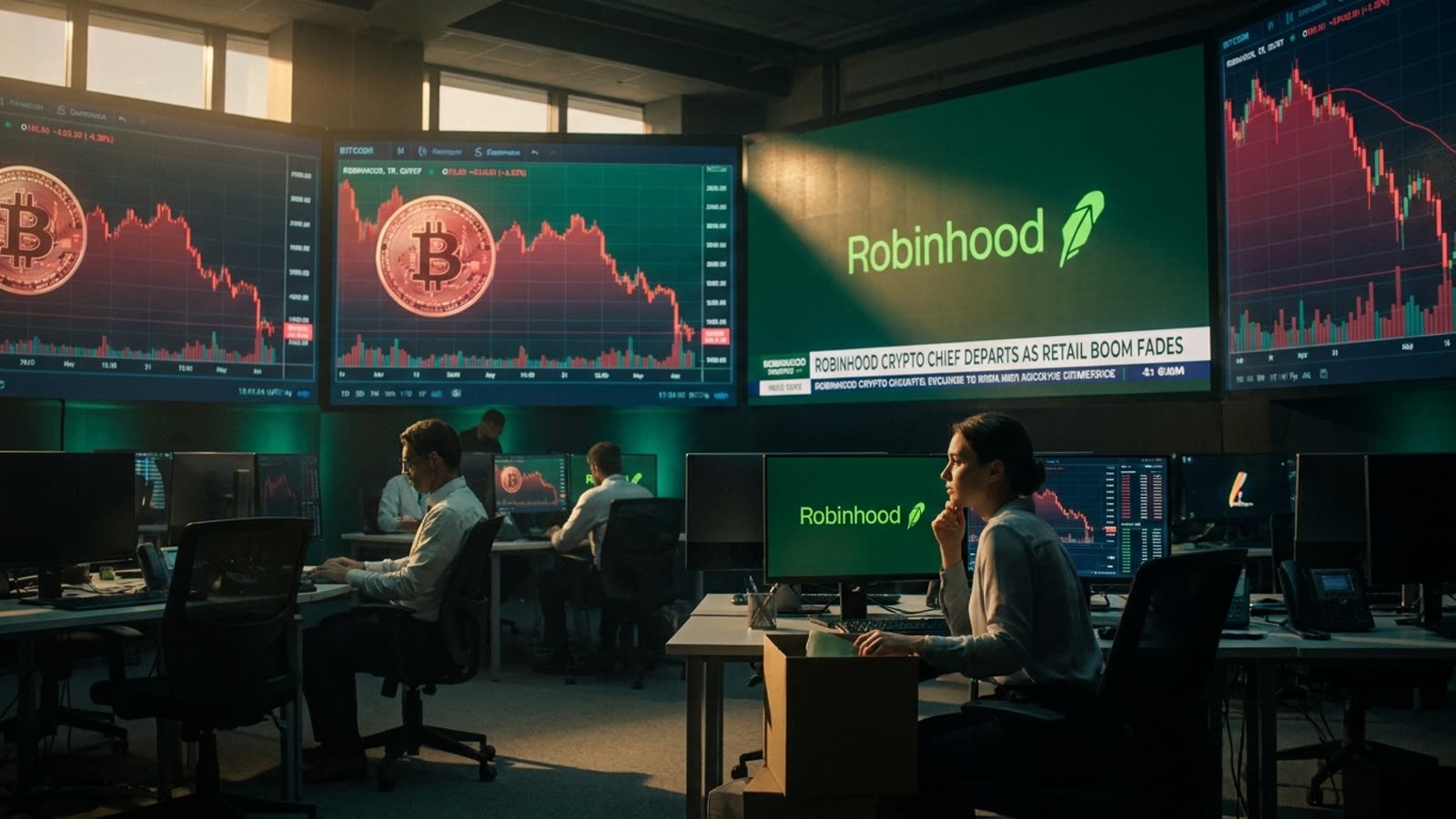
Robinhood's crypto division just lost its chief operating officer, and the timing tells you everything you need to know about where retail trading stands in 2026.
Tanya Denisova is leaving the company amid what reports describe as a revenue slowdown—corporate-speak for the uncomfortable reality that the meme-stock and crypto frenzy that made Robinhood a household name has evaporated, and nobody knows when it's coming back. The departure isn't a scandal; it's something worse. It's an admission that the party is over and the cleanup crew is heading home.
The revenue problem nobody wants to discuss
Robinhood built its empire on a simple premise: make trading feel like a game, and the players will come. They did—by the millions—during the pandemic years when stimulus checks met boredom met zero-commission trades. Crypto was the crown jewel of this strategy, generating transaction revenue that traditional equity trades couldn't match. But transaction revenue requires transactions, and retail traders have largely stopped transacting.
The company's crypto business was always a leveraged bet on volatility and enthusiasm. Both have cooled. Bitcoin has matured into something closer to a macro asset than a casino chip, and the retail crowd that once treated Dogecoin like a lottery ticket has moved on—some to actual casinos, others to savings accounts now paying real interest rates. Robinhood's core customer base isn't poor; they're just no longer gambling.
A leadership vacuum at the worst moment
Denisova's departure creates a hole at precisely the moment Robinhood needs steady hands in its crypto operation. The regulatory environment remains treacherous, with the SEC's posture toward crypto trading platforms still hostile despite industry hopes for clarity. Running a compliant crypto business in the United States requires both legal sophistication and operational discipline—qualities that are hard to maintain when your senior leadership is walking out the door.
The broader question is whether Robinhood can find anyone who wants this job. The crypto industry has been shedding talent for two years now, and the executives who remain employed tend to prefer companies with clearer paths to profitability. Robinhood's crypto arm is neither clearly profitable nor clearly positioned for the next cycle, assuming there is one.
Our take
Robinhood's problem isn't that one executive left; it's that the company never developed a business model that works outside of manias. The firm democratized access to markets, which was genuinely valuable, but it monetized that access through payment for order flow and crypto transaction fees—revenue streams that depend on customers making frequent, often ill-advised trades. When customers get smarter or poorer or simply bored, the model breaks. Denisova's exit is a symptom. The disease is that Robinhood needs its customers to be a little bit reckless, and they've sobered up.