The modern economy runs on noise—notifications, meetings, podcasts, the ambient hum of open-plan offices—which may explain why a growing class of affluent professionals now pays premium rates to experience its absence. Silent retreats, once the province of serious meditators willing to sleep on thin mats in spartan dharma halls, have evolved into a sophisticated hospitality category with price points to match.
The transformation tracks a familiar luxury-wellness trajectory. What starts as an ascetic spiritual discipline gets discovered by stressed executives, repackaged with better linens, and sold back to the secular market at considerable markup. The silent retreat industry has followed this arc with particular efficiency.
From monastery to resort
The contemporary silent retreat draws from Vipassana meditation, a Buddhist tradition that emphasizes extended periods of non-speaking as a tool for cultivating awareness. The practice gained Western traction through teachers like S.N. Goenka, whose network of centers offered free ten-day courses funded by donations. These programs remain available and popular, but they involve 4 a.m. wake-up calls, vegetarian meals, and accommodation that prioritizes function over comfort.
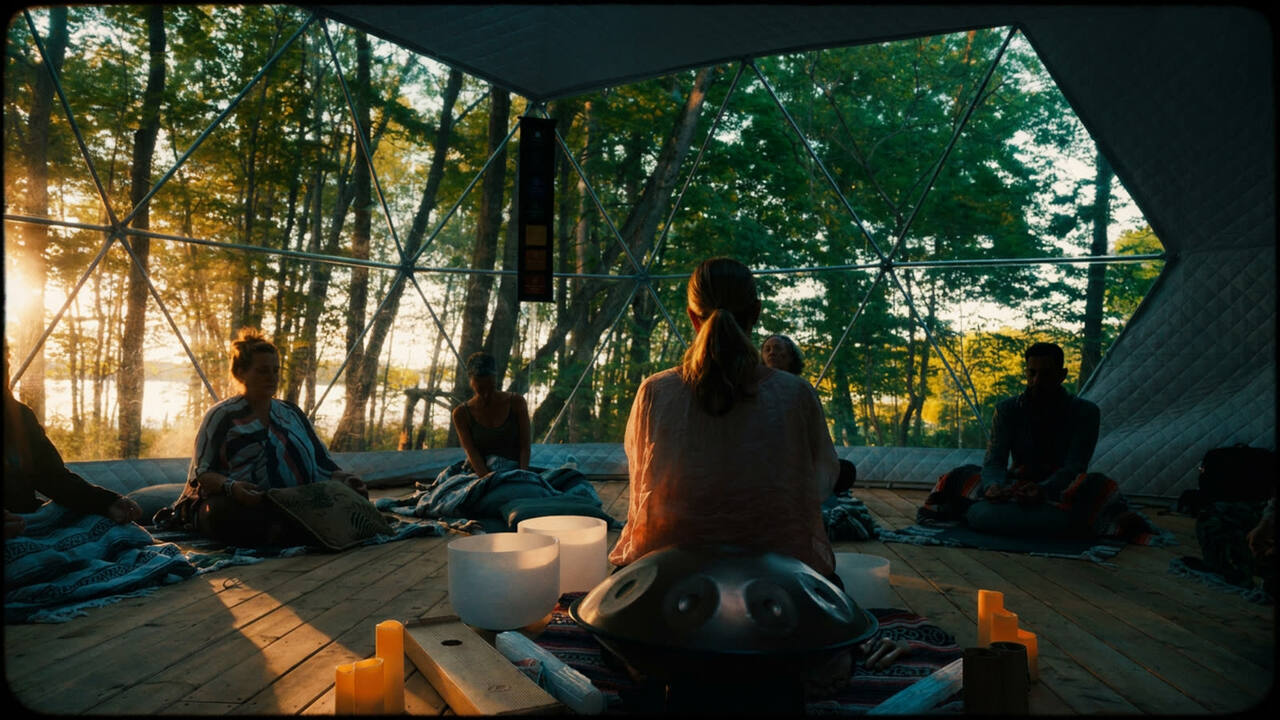
The commercial silent retreat sector has taken the core premise—sustained quiet as a path to mental clarity—and wrapped it in amenities that would be familiar to any boutique hotel guest. Properties in destinations from Big Sur to Bali now offer silent programs with organic farm-to-table cuisine, private rooms with ocean views, and optional spa treatments. Some have introduced tiered pricing, with premium rates for better accommodation during the same silent experience.
The corporate embrace
Perhaps more surprising than the luxury evolution is the corporate adoption. Companies in high-stress industries have begun sending employees on silent retreats as a form of professional development, treating the experience as a productivity investment rather than a personal indulgence. The logic follows research suggesting that periods of reduced stimulation can improve focus, creativity, and decision-making—qualities that translate directly to the bottom line.
This corporate interest has spawned a sub-industry of facilitators who specialize in designing silent experiences for organizational contexts. These programs tend to be shorter than traditional retreats—a weekend rather than ten days—and often include structured reflection exercises that participants complete in writing rather than speech. The silence becomes a container for strategic thinking rather than spiritual inquiry.
The paradox of premium quiet
There is something faintly absurd about paying substantial sums to not talk in a nice location. The original Vipassana teachers would likely find the commercial evolution puzzling, if not contrary to the practice's purpose. Silence, in the traditional understanding, is meant to strip away distraction and comfort, not provide a more refined version of both.
Yet the market has spoken with clarity. Waiting lists at prominent silent retreat centers now extend months into the future. New properties continue to open, each promising a more curated version of the quiet experience. The industry has discovered what luxury hospitality learned long ago: scarcity and exclusivity create their own demand.
Our take
The silent retreat boom reveals something genuine about contemporary life—the noise has become unbearable enough that people will pay real money to escape it. Whether the commercial version delivers the same benefits as the austere original is debatable, but the underlying impulse seems sound. In an attention economy that profits from constant interruption, choosing silence is almost a subversive act. That it now requires a booking and a credit card is simply the cost of opting out.