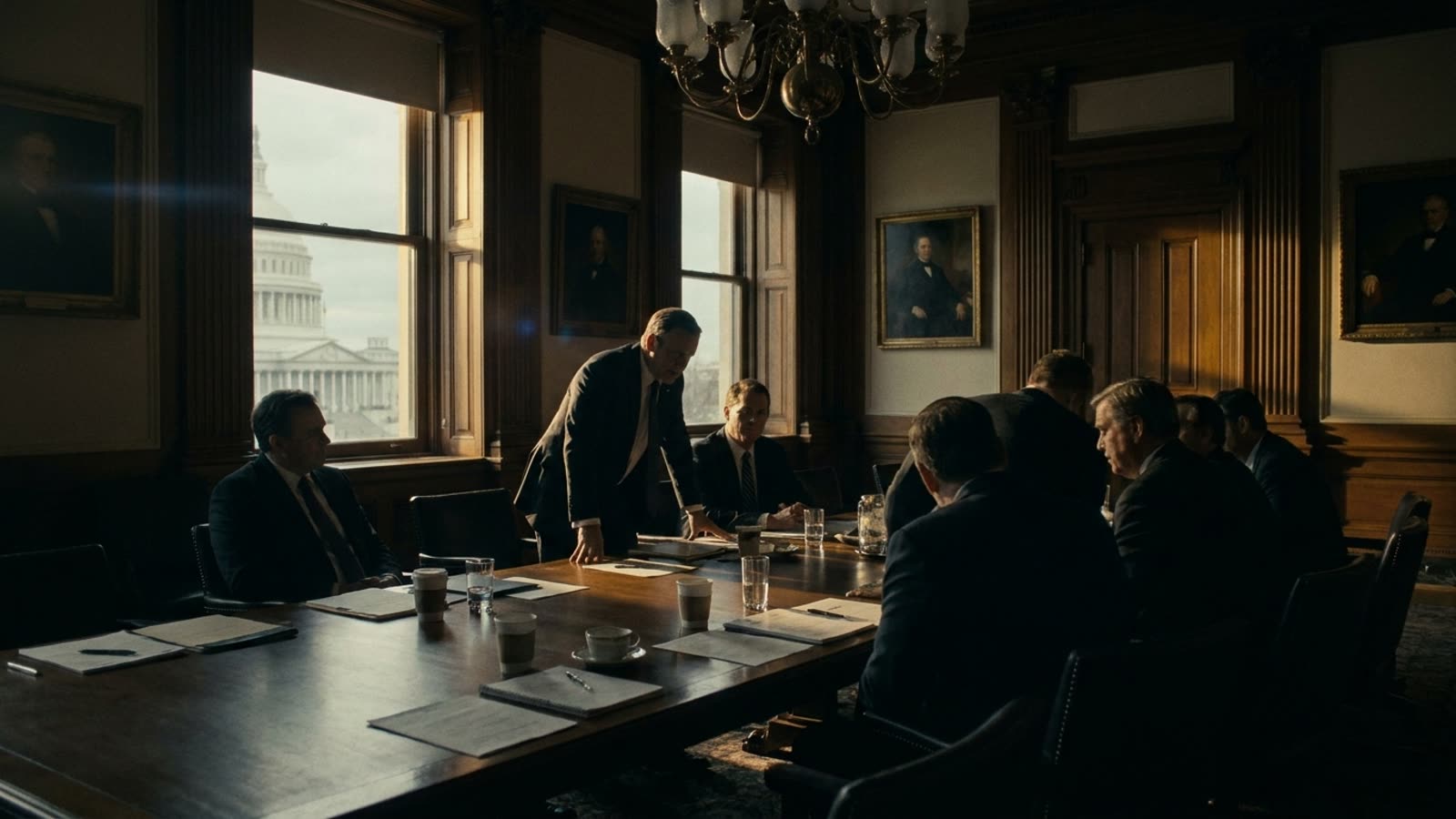
The image of a president screaming at members of his own party over a war he started would have been unthinkable eighteen months ago. That it happened this week, in a Senate lunch meeting that multiple attendees described as the most contentious in recent memory, suggests the political foundations beneath the Iran conflict are cracking faster than the White House anticipated.
The confrontation reportedly centered on growing Republican reluctance to rubber-stamp additional war funding and the administration's resistance to any congressional constraints on military operations. What began as a routine legislative strategy session escalated into a shouting match, with at least one senator directly challenging the president's handling of the conflict. The specific exchange remains disputed—some accounts describe the president questioning senators' patriotism, others suggest he threatened primary challenges—but the breach itself is undeniable.
The Numbers Behind the Revolt
The timing is not coincidental. The administration's request for $88 billion in supplemental war funding arrived on Capitol Hill the same week polls showed public approval for the Iran campaign dropping below 40 percent for the first time. Republican senators facing re-election in 2028 are watching those numbers with mounting alarm. The war's initial popularity, fueled by nationalist sentiment and promises of swift victory, has given way to the familiar exhaustion of a conflict with no visible endpoint.
More troubling for the White House: the dissent is coming from reliable allies, not the party's moderate fringe. Senators who enthusiastically backed the initial military authorization are now demanding oversight mechanisms they would have dismissed as obstruction a year ago. The shift reflects constituent pressure that has finally grown loud enough to override partisan loyalty.
What Congressional Pushback Actually Looks Like
The practical question is whether Senate discontent translates into legislative action. War powers fights between Congress and the executive branch have a long history of ending in presidential victory—lawmakers are generally reluctant to be seen as undermining troops in the field, and the procedural tools available to constrain a determined commander-in-chief are limited.
But the current moment differs in one crucial respect: the president needs Congress to fund the war's continuation. The supplemental request is not optional; without it, the Pentagon has warned of operational constraints within months. That gives skeptical senators leverage they rarely possess in foreign policy disputes. Whether they have the collective will to use it remains uncertain, but the shouting match suggests at least some are prepared to try.
Our take
Presidential tantrums are not strategy, and the spectacle of a commander-in-chief losing his composure over legitimate legislative questions does not inspire confidence in the war's management. The Republican senators asking hard questions are not betraying their party—they are doing their constitutional job, belatedly. The administration's response, treating oversight as disloyalty, reveals an executive branch that has grown accustomed to a compliant Congress and cannot adapt to the possibility that compliance has limits. Wars sustained by intimidation rather than persuasion tend to end badly for everyone involved.