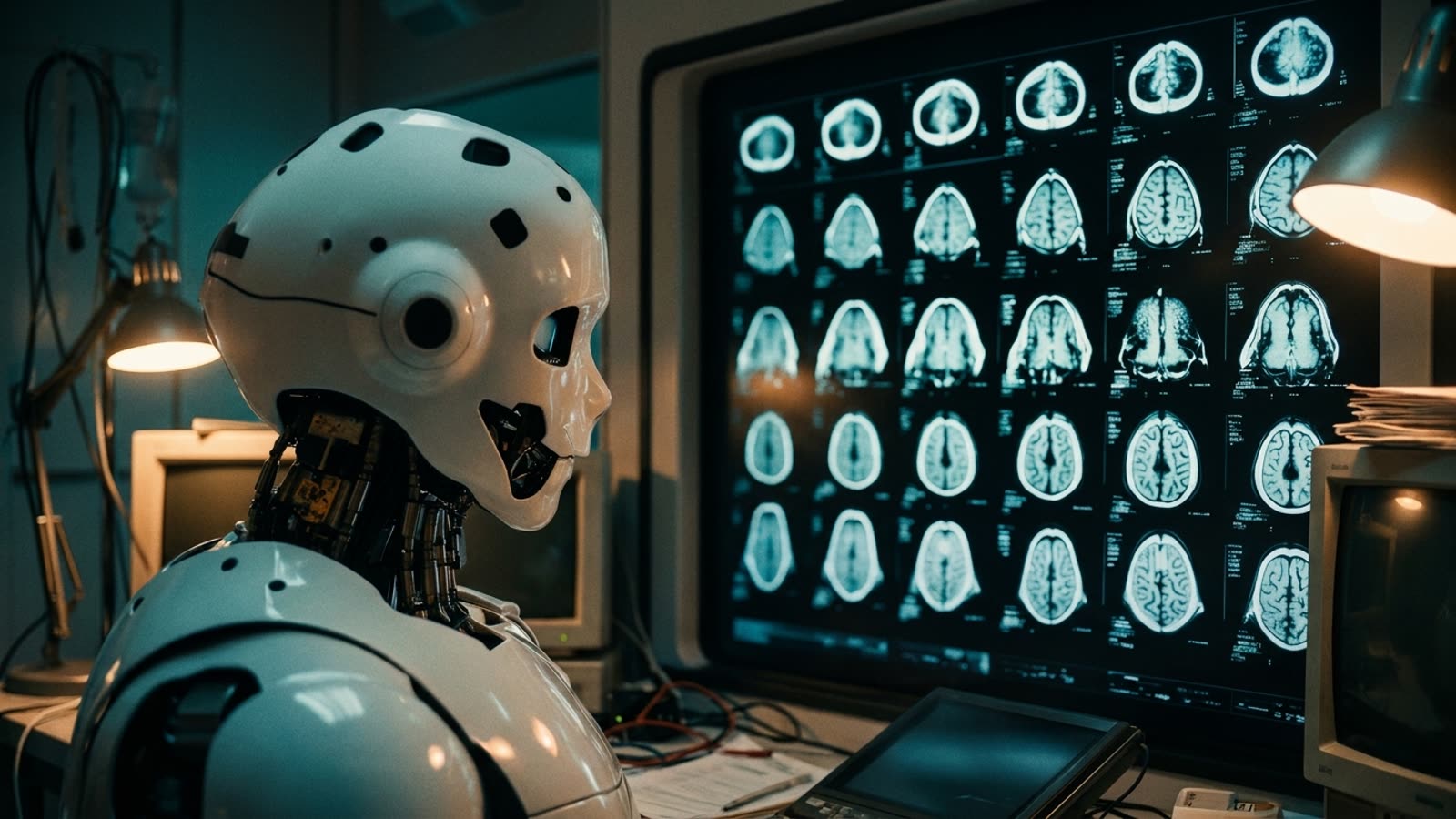
The modern radiologist sits in a darkened room, cycling through hundreds of images per shift, hunting for the shadow that shouldn't be there. It is lonely, exacting work that rewards pattern recognition above almost everything else. Which is precisely why radiology became the first medical specialty to confront a genuinely capable AI competitor—and why its response offers a preview of what every knowledge profession will eventually face.
The technology arrived not with a press conference but with a quiet FDA clearance, then another, then dozens more. Today, AI systems assist in reading mammograms, chest X-rays, CT scans for stroke, and retinal images for diabetic eye disease. The software doesn't replace the physician's signature on the report; it highlights regions of concern, flags missed nodules, and occasionally catches what a fatigued human eye skipped at hour nine of a twelve-hour shift.
The productivity bargain
Hospital administrators love the pitch: faster turnaround, fewer callbacks, liability mitigation. Radiologists themselves are more ambivalent. The tools genuinely help, particularly for high-volume screening studies where the base rate of disease is low and attention fatigue is real. A system that pre-sorts normal-looking mammograms from suspicious ones lets a physician allocate cognitive effort where it matters.
But the bargain has a catch. When AI flags an abnormality, the radiologist must still decide whether the flag is correct. When AI declares an image normal, the radiologist must decide whether to trust it. This is not the same skill as reading the image from scratch. It is a meta-skill—auditing a machine's judgment—and medical schools never taught it.
The automation paradox
Researchers who study human-machine teaming call this the "automation paradox." The better a system performs, the less vigilant its human supervisor becomes. A radiologist who overrides AI fifty times a day stays sharp. A radiologist who overrides it once a month may lose the instinct to notice when override is warranted. The profession is quietly wrestling with whether AI assistance, over time, erodes the very expertise that makes the assistance safe.
Some academic centers have begun experimenting with "AI-off" training rotations, forcing residents to read studies without algorithmic help so they develop autonomous judgment before becoming dependent on augmented workflows. Others argue this is nostalgic nonsense—akin to teaching surgeons to operate by candlelight because electricity might fail.
What the machines still cannot do
For all their pattern-matching prowess, current AI systems remain stubbornly narrow. They excel at detecting specific lesions they were trained to find. They struggle with the integrative reasoning that defines expert radiology: correlating imaging findings with a patient's history, recognizing that an ambiguous shadow matters more in a lifelong smoker than in a marathon runner, or knowing when to pick up the phone and tell the emergency physician to act now.
The radiologist's job, it turns out, was never just looking at pictures. It was synthesizing visual data with clinical context under uncertainty—a task that requires judgment, not merely perception.
Our take
Radiology is not dying; it is mutating. The profession that emerges will demand fewer pure image-readers and more physician-engineers comfortable interrogating algorithmic outputs. That shift will be wrenching for some and liberating for others. But the broader lesson extends well beyond medicine: AI does not eliminate expertise so much as relocate it. The question every profession should be asking is not whether machines will take over, but what new form of mastery will be required to keep them honest.