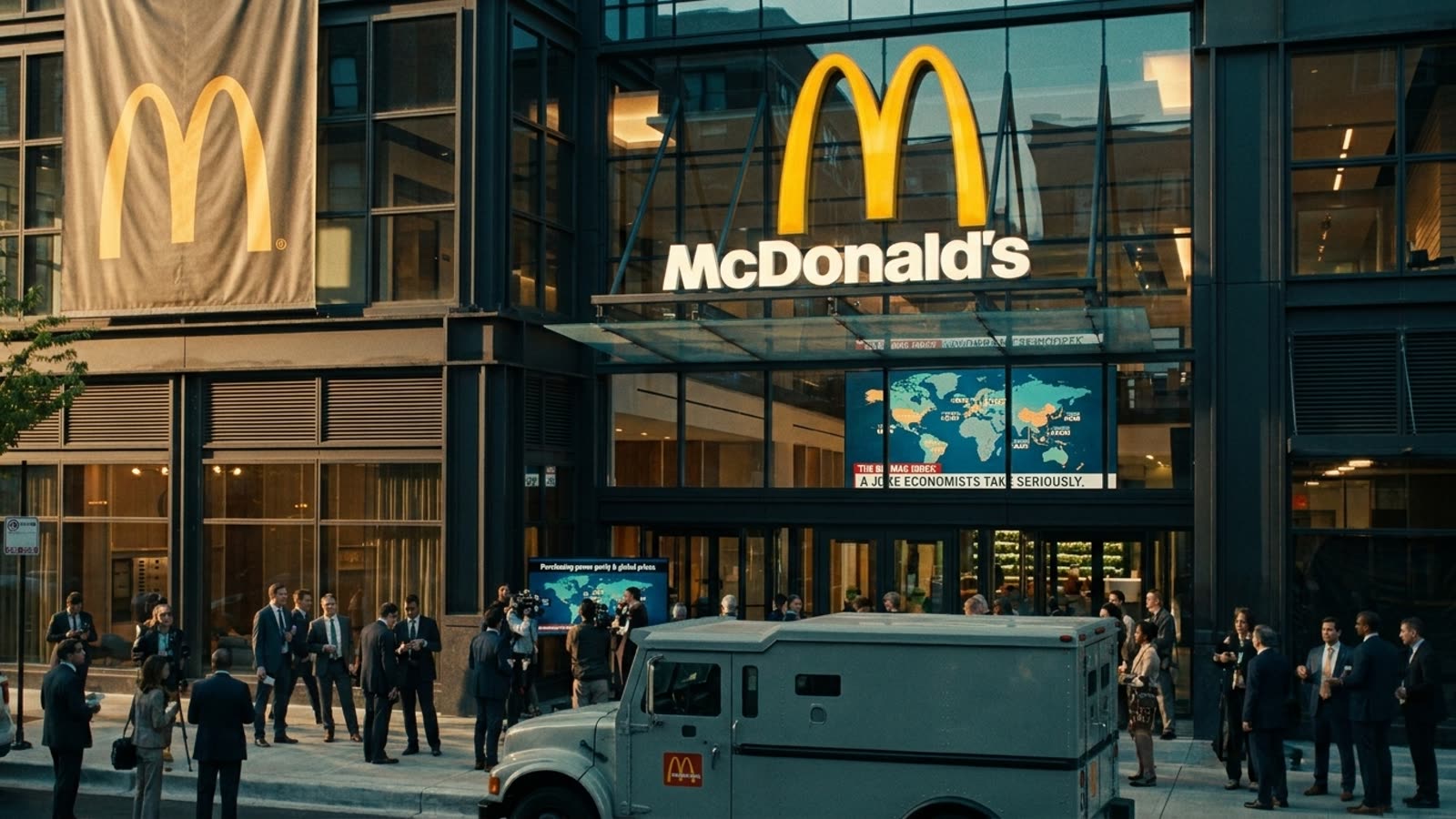
A McDonald's hamburger has no business being a serious economic indicator, yet for four decades the Big Mac Index has done more to explain purchasing power parity to ordinary people than any academic paper ever written.
The concept is deceptively simple: if markets worked perfectly, a Big Mac should cost the same in Tokyo, São Paulo, and Chicago once you convert currencies. That it doesn't — and by wildly different margins — tells us something profound about how disconnected exchange rates can be from the prices regular people actually pay for things.
The theory versus the checkout line
Purchasing power parity, or PPP, rests on the law of one price. In a frictionless world, arbitrage would ensure that tradable goods cost the same everywhere. Buy cheap in one country, sell dear in another, and the price difference disappears. Currencies, in this telling, should adjust until a dollar buys roughly the same basket of goods whether spent in Denver or Delhi.
Reality intervenes immediately. Transportation costs, tariffs, local taxes, labor regulations, and the simple fact that you cannot ship a haircut across an ocean all conspire to keep prices stubbornly local. A Big Mac in Switzerland might cost twice what it does in Malaysia not because the Swiss franc is overvalued by half, but because Swiss wages, rents, and agricultural policies make everything more expensive.
This gap between PPP-implied exchange rates and actual market rates is precisely what makes the concept useful. It doesn't tell you what currencies should be worth tomorrow; it tells you how much further your salary stretches depending on where you spend it.
Why it matters beyond academics
International institutions use PPP adjustments to compare economies in ways that market exchange rates would distort beyond recognition. China's economy looks dramatically different measured in PPP terms versus nominal dollars — the former suggests rough parity with the United States, the latter a significant gap. Neither figure is wrong; they answer different questions.
For individuals, PPP explains the otherwise baffling experience of feeling wealthy in one country and poor in another despite earning the same nominal salary. A software engineer's San Francisco income would fund a lavish lifestyle in Lisbon but barely cover rent in Zurich. The numbers on the paycheck haven't changed; the purchasing power has transformed completely.
Companies pricing products internationally wrestle with PPP constantly, even when they don't call it that. Charge the same dollar price everywhere and you've priced yourself out of emerging markets. Adjust for local purchasing power and you've created arbitrage opportunities and gray markets.
The limits of a burger-based worldview
The Big Mac Index works because McDonald's standardizes obsessively — same beef patty, same sesame seed bun, same special sauce from Reykjavik to Riyadh. But that very standardization makes it a poor proxy for the full range of goods and services that constitute an economy. Housing, healthcare, education, and locally produced foods follow entirely different pricing logic.
More fundamentally, PPP assumes people everywhere want the same things in the same proportions. They don't. Consumption patterns vary by culture, climate, and history. A price index weighted toward American preferences will systematically misread economies where those preferences don't apply.
Our take
Purchasing power parity is less a theory than a useful fiction — a reminder that exchange rates reflect capital flows, interest differentials, and speculative sentiment far more than they reflect what a loaf of bread costs. The Big Mac Index endures not because it's rigorous but because it makes visible an abstraction that otherwise hides in plain sight: money means different things in different places, and no amount of currency conversion changes that fundamental truth.