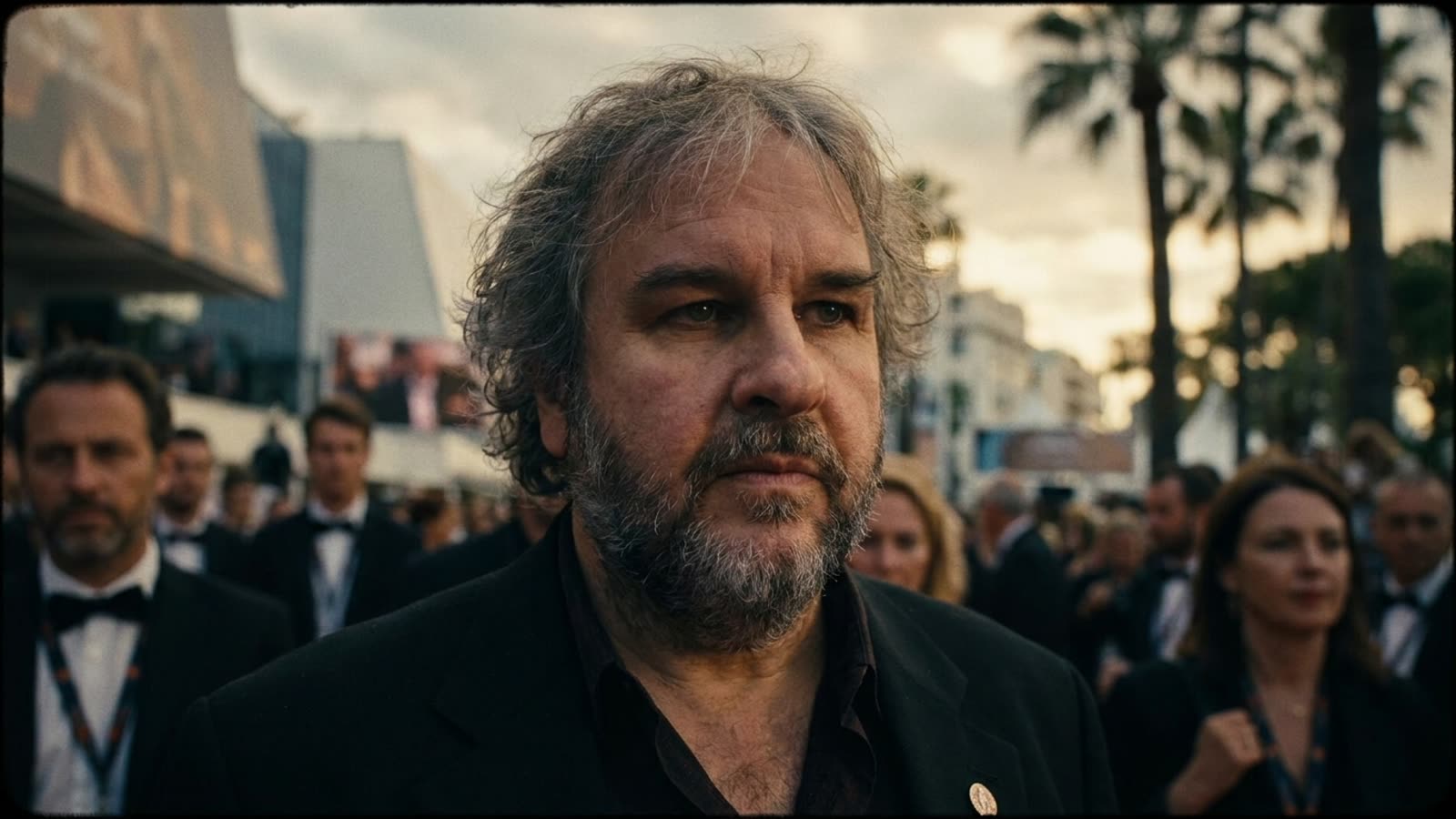
Twenty-five years after "The Fellowship of the Ring" premiered to uncertain industry forecasts, Peter Jackson stood on the Cannes stage Tuesday night and admitted what few blockbuster directors ever do: he was terrified, and the establishment wanted him to fail.
The honorary Palme d'Or ceremony became something more interesting than the usual lifetime-achievement pageantry. With Elijah Wood—forever Frodo Baggins—presenting the award, Jackson used his acceptance speech to credit Cannes with legitimizing a project that Hollywood considered commercially suicidal. "It was a huge gamble," he said, a phrase that undersells what was actually happening in 2001: a relatively unknown director from Wellington was handed $281 million to adapt an "unfilmable" trilogy that studios had rejected for decades.
The Cannes connection most people forget
Jackson's relationship with the festival predates the hobbits. His early splatter films—"Bad Taste," "Braindead"—found cult audiences through Cannes' midnight sections, where genre work could gain critical credibility unavailable in mainstream distribution. When New Line Cinema took the unprecedented risk of greenlighting all three "Lord of the Rings" films simultaneously, it was Cannes' earlier embrace of Jackson's gonzo sensibility that helped convince skeptical financiers he wasn't merely a horror craftsman but a genuine visual poet.
The festival's willingness to champion outsiders before they become safe bets remains its most valuable function. Jackson acknowledged this explicitly, noting that without early festival support, he would never have had the industry standing to pitch something as audacious as a nine-hour fantasy epic shot entirely in New Zealand.
What the reunion reveals about legacy
Wood's presence added emotional texture to what could have been a rote ceremony. The actor, now 45, has spent two decades navigating the peculiar burden of being permanently associated with a single role. His speech reportedly focused on Jackson's collaborative directing style—the willingness to let actors inhabit characters rather than execute predetermined visions. It's a method that feels increasingly rare in an era of franchise filmmaking by committee.
The timing matters too. Jackson is currently deep in production on new "Lord of the Rings" films for Warner Bros., returning to Middle-earth after the mixed reception of his "Hobbit" trilogy. The Palme d'Or functions partly as institutional blessing for this return, a reminder that whatever the internet discourse, the original films remain canonical achievements in popular cinema.
Our take
Honorary awards often feel like industry back-patting, but this one carried genuine weight. Jackson's career arc—from micro-budget gore to billion-dollar fantasy to documentary preservation work on World War I footage—represents a path that contemporary Hollywood makes nearly impossible. The system that enabled his rise has calcified. Cannes honoring him now is less about nostalgia than quiet acknowledgment that we may not see his like again.