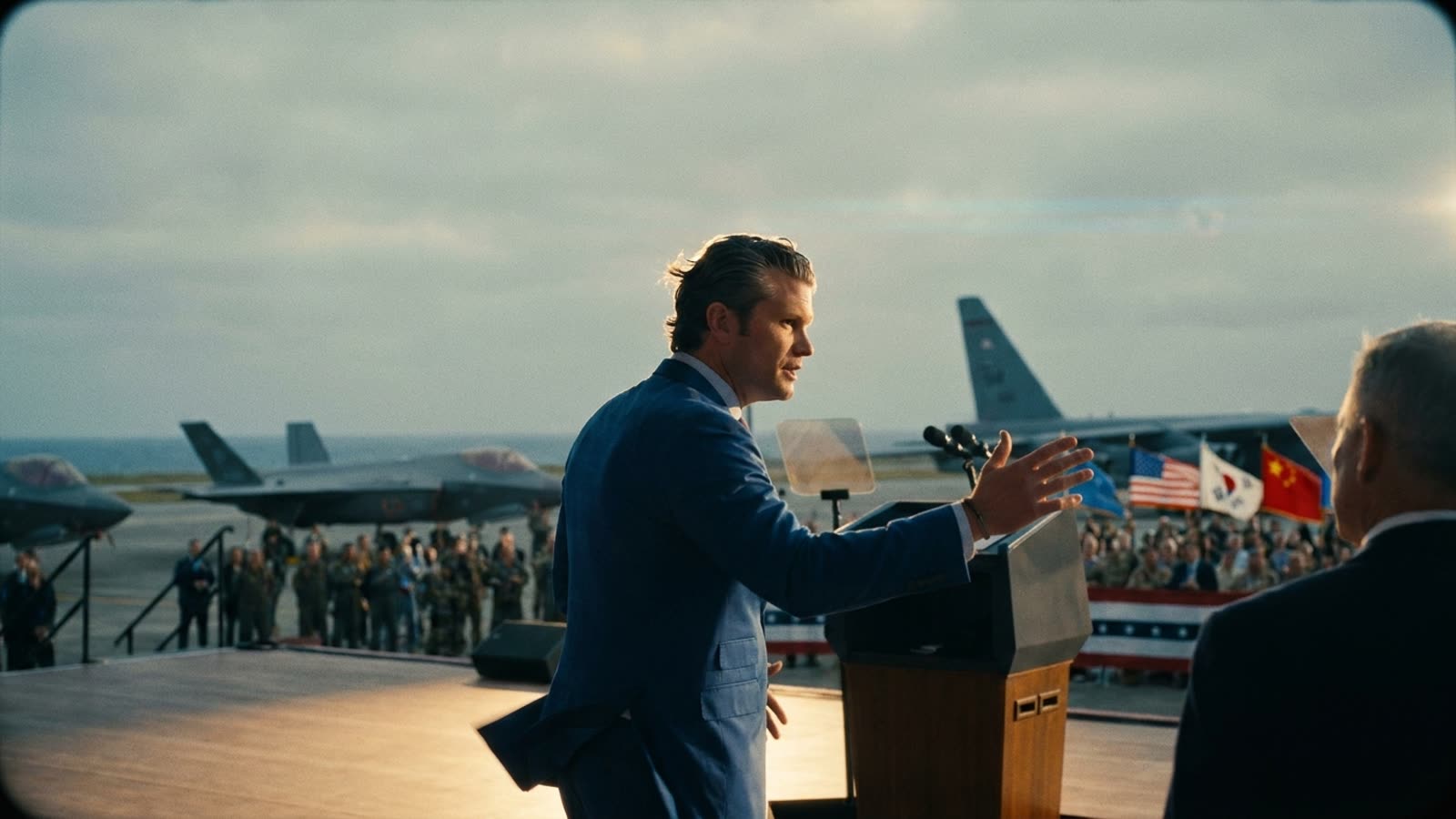
The Trump administration has spent much of its second term treating allies like debtors and adversaries like negotiating partners. Now, with Pete Hegseth sounding what he called an "alarm" over China's military buildup during his tour of Asian capitals, the Pentagon appears to be rediscovering the strategic value of friends.
Hegseth's message to regional allies was uncharacteristically orthodox for this White House: China's rapid military expansion poses a generational threat, and democracies must increase defense spending to counter it. The former Fox News host turned Defense Secretary urged partners across the Indo-Pacific to boost their military budgets and deepen cooperation with Washington—the kind of alliance maintenance that has been notably absent from the administration's foreign policy vocabulary.
The numbers behind the alarm
Beijing's defense modernization has accelerated dramatically. The People's Liberation Army Navy now operates the world's largest fleet by hull count, and China's nuclear arsenal is expanding faster than any other nation's. The Pentagon's own assessments project China could have more than a thousand deliverable nuclear warheads within the next several years. Meanwhile, Beijing has built artificial islands bristling with military installations across the South China Sea, fundamentally altering the regional balance of power.
Hegseth's tour comes as several key allies face their own defense spending debates. Japan has committed to doubling its defense budget, but implementation has lagged. Australia's AUKUS submarine program remains years from delivering operational vessels. The Philippines, increasingly assertive in resisting Chinese maritime claims, still operates one of Southeast Asia's most underfunded militaries.
The administration's cognitive dissonance
The pivot is notable precisely because it contradicts so much of the administration's prior conduct. Trump has repeatedly questioned the value of alliances, threatened to abandon NATO commitments, and imposed tariffs on partners like Japan and South Korea that complicated defense cooperation. His trade war with China, meanwhile, has been framed primarily in economic rather than strategic terms.
Hegseth himself arrived at the Pentagon with no military or diplomatic experience, his credentials consisting largely of weekend television commentary and a Bronze Star from his National Guard service. That he is now delivering the kind of sober alliance-maintenance message that could have come from any of his predecessors suggests either genuine learning or effective staff work—possibly both.
Our take
The alarm is overdue, even if the messenger is improbable. China's military expansion is real, consequential, and unlikely to slow regardless of who occupies the White House. If Hegseth's tour represents a genuine administration commitment to rebuilding Pacific alliances rather than a one-off photo opportunity, it would be the most strategically significant development of Trump's second term. The test will be whether Washington follows words with resources, exercises, and the kind of patient diplomatic engagement this administration has generally disdained. Allies have heard American warnings about China before; what they need now is American consistency.