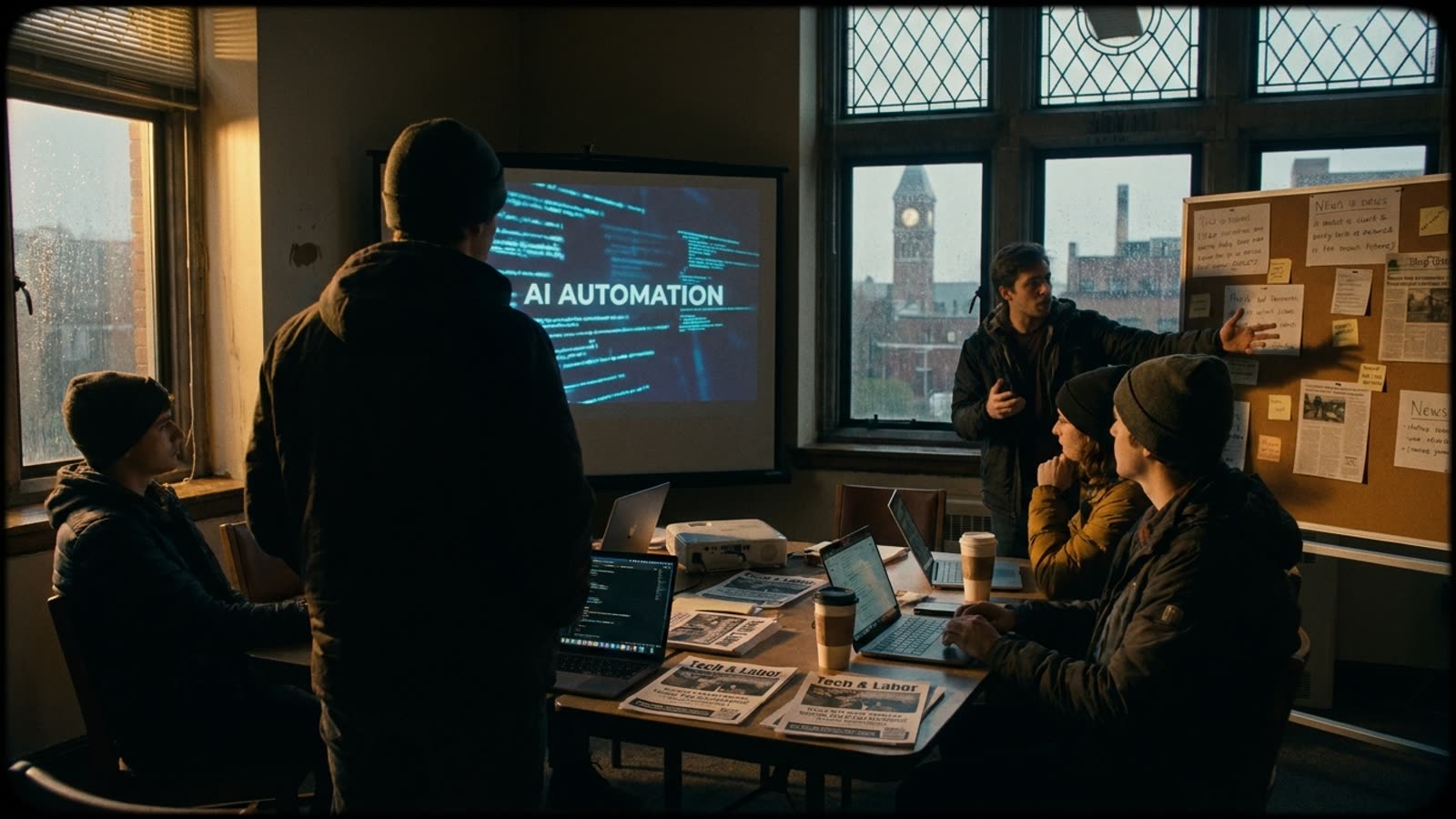
The undergraduates at Penn State and the University of Pittsburgh are not worried about the usual things. They are worried about becoming obsolete before they graduate.
In focus groups and campus polling conducted this autumn across Pennsylvania's university towns, a striking pattern has emerged: students pursuing degrees in accounting, paralegal studies, graphic design, and even entry-level software development increasingly believe their chosen careers will be substantially automated within five years of their graduation. More significantly, they are angry about it—and they are voting.
The new kitchen-table issue
For decades, economic anxiety among young voters manifested as concerns about student debt, housing costs, or healthcare. Those issues remain, but they have been joined—and in some precincts overtaken—by a more existential worry: that the cognitive labor they are training to perform will be performed better and cheaper by large language models before they can build a career.
This is not abstract futurism. Students point to specific examples: law firms reducing paralegal hiring, accounting software that handles tasks once requiring junior staff, design tools that generate professional-quality work in seconds. The acceleration has been particularly visible since 2024, when enterprise AI adoption crossed from pilot programs into production workflows.
Pennsylvania's political operatives have noticed. Both parties are testing messages around AI job displacement, though with different frames: Democrats emphasizing retraining programs and Big Tech regulation, Republicans focusing on China competition and the need for American AI dominance. Neither message has fully landed, because neither addresses the core student grievance—that the disruption is happening now, not in some policy-amenable future.
Why Pennsylvania matters
The state's status as a perennial swing-state battleground gives these anxieties outsized national significance. Young voter turnout in Pennsylvania's midterms has historically lagged presidential years, but early-voting data and registration patterns suggest unusual engagement this cycle. Campus organizers report that AI and automation rank alongside abortion rights and climate as mobilizing issues—a development that would have seemed implausible even two years ago.
The political implications extend beyond the midterms. If AI anxiety proves durable as a voting issue, it could reshape how both parties approach technology policy for a generation. The bipartisan Washington consensus that innovation is inherently good and job displacement is a manageable externality may not survive contact with voters who experience that displacement as a personal threat.
Our take
The students are not wrong to be anxious, and their anger is rational. The technology industry has spent two years insisting that AI will create more jobs than it destroys, while simultaneously selling enterprise customers on the promise of headcount reduction. Young people can read a pitch deck. What remains to be seen is whether their political energy translates into policy change, or merely into a new flavor of generational grievance that the system absorbs without responding to. Pennsylvania's midterm results will offer an early signal.