There is a particular kind of fame that no longer exists: the variety-show regular, beloved by millions, whose face appeared in living rooms weekly before anyone thought to call it content. Peggy King, who died Sunday at an assisted living facility in Pennsylvania following a battle with Alzheimer's disease, was the last of a certain species. She was ninety-six years old, which means she outlived not just her contemporaries but the entire cultural apparatus that created her.
King's death arrives at a moment when the entertainment industry is convulsing over the meaning of stardom in an age of infinite content and algorithmic discovery. She came up in an era when there were three networks, when a spot on a popular variety show could make you a genuine national figure overnight, and when the recording industry and television worked in elegant symbiosis rather than anxious competition.
The Gobel years and Columbia Records
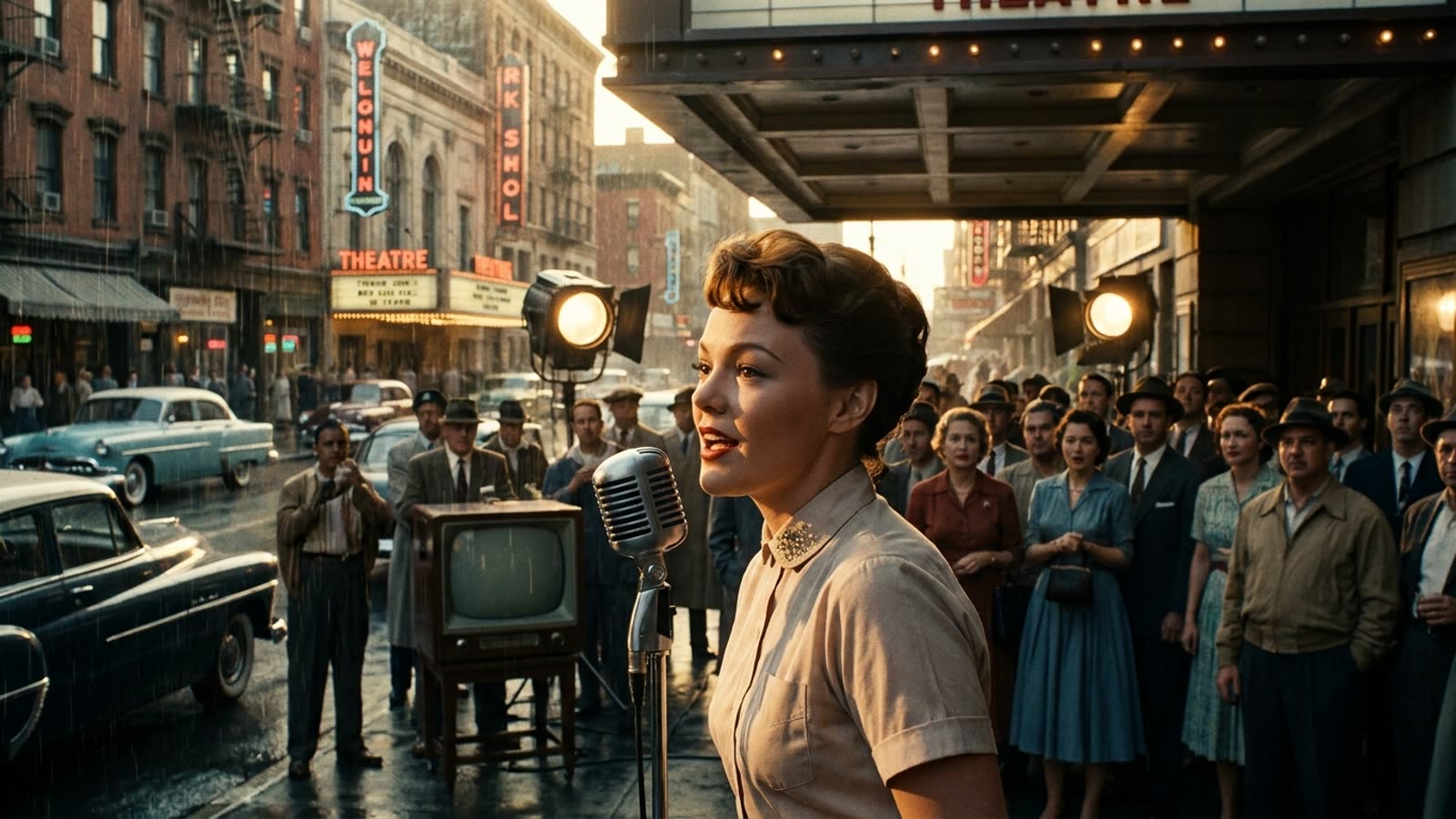
King joined "The George Gobel Show" in the mid-1950s as the program's featured vocalist, a role that sounds quaint now but was then a coveted position in American entertainment. Gobel, a deadpan comedian whose gentle Midwestern humor made him one of television's earliest stars, presided over a show that regularly drew audiences in the tens of millions. King's presence there led to a recording contract with Columbia Records, where she released several albums that showcased her warm, technically assured voice.
She also appeared in Vincente Minnelli's "The Bad and the Beautiful," the 1952 Hollywood-on-Hollywood drama that won five Academy Awards. It was the kind of career that moved fluidly between mediums—television, film, recording—in a way that seems almost impossible now, when each platform has its own celebrity ecosystem and crossing over requires elaborate strategic planning.
The vanishing of the variety star
What happened to Peggy King happened to an entire generation of performers: the variety format collapsed, rock and roll redrew the boundaries of popular music, and the intimate relationship between singer and television audience gave way to something more fragmented. By the 1970s, the world that had made her famous simply no longer existed.
This is not a tragedy, exactly. It is the ordinary operation of cultural time. But King's death, announced by her publicist Alan Eicher, invites reflection on what we have lost and what we have gained. The performers of television's golden age were not necessarily more talented than today's stars, but they operated in a context of shared attention that gave their work a different texture. When Peggy King sang on "The George Gobel Show," a significant percentage of American households were watching the same thing at the same time. That collective experience is now reserved for catastrophes and Super Bowls.
Our take
Peggy King deserves more than a footnote, though a footnote is probably what she will get. She was not a revolutionary artist or a cultural provocateur; she was a skilled professional who did her job well in an industry that has since been rebuilt from the ground up several times over. Her death at ninety-six, after years of Alzheimer's, is a reminder that the golden age of television is now genuinely historical—its stars are leaving us, and with them goes living memory of what it felt like to build an entertainment industry from scratch. The least we can do is notice.