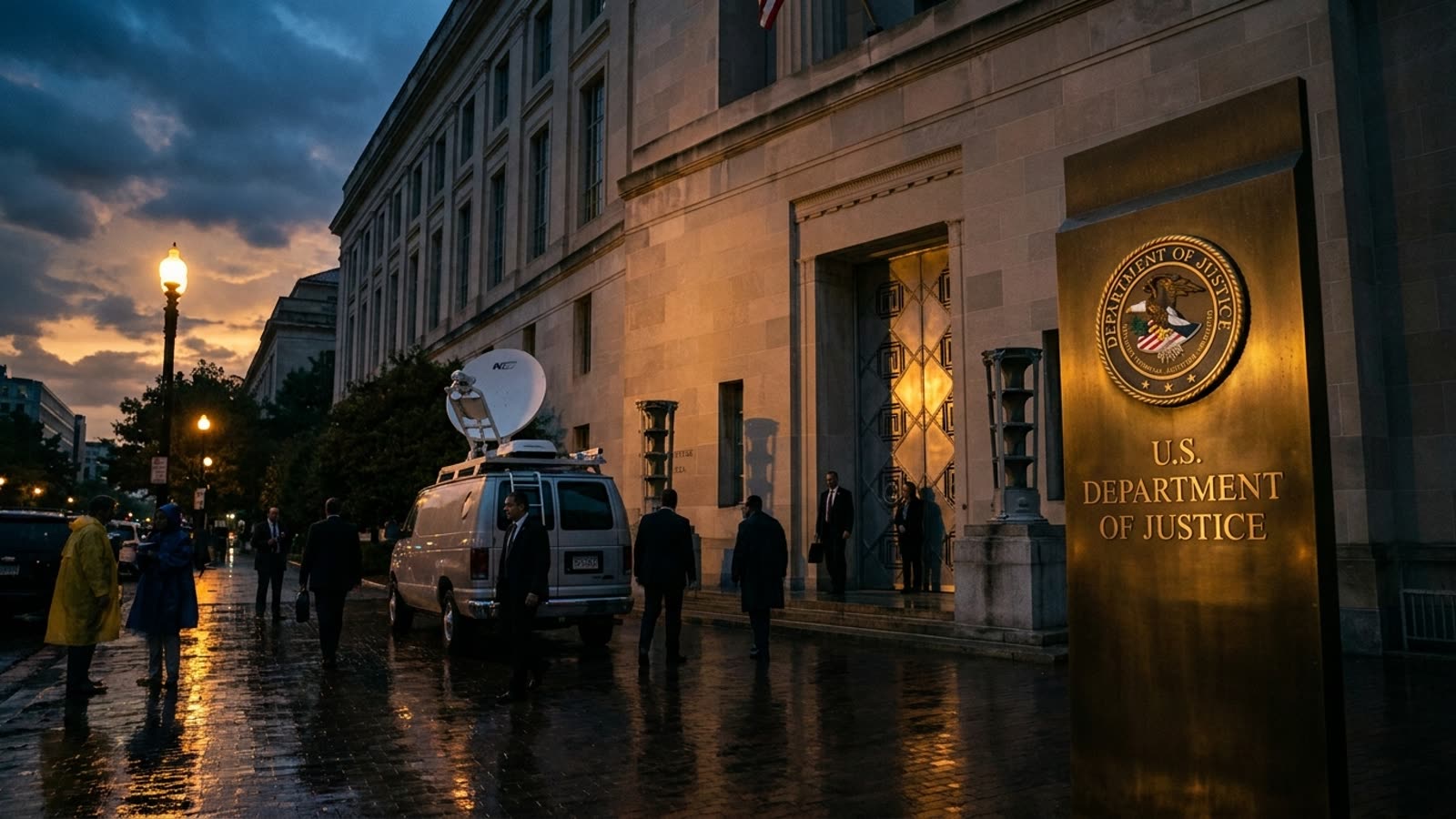
The Trump administration's Department of Justice has cleared Paramount Global's acquisition of Warner Bros. Discovery, removing the most significant federal obstacle to a merger that would reshape the American entertainment landscape. The decision, announced late Thursday, signals a permissive antitrust posture that state regulators appear eager to challenge.
The combined entity would control roughly a third of domestic box office revenue, unite streaming services Paramount+ and Max under one roof, and consolidate cable networks from MTV to CNN. It is precisely the kind of vertical and horizontal integration that antitrust enforcers once existed to prevent.
A merger born of weakness, not strength
Neither company arrives at this union from a position of power. Warner Bros. Discovery has struggled under the debt load from its 2022 formation, while Paramount has cycled through strategic reviews, potential buyers, and leadership turmoil for the better part of three years. The logic is less synergy than survival: two wounded giants hoping that combined scale can fend off Netflix, Amazon, and Apple.
The DOJ's blessing reflects the administration's broader skepticism of aggressive antitrust enforcement, particularly in media. Officials reportedly concluded that streaming competition from tech giants justified allowing traditional studios to consolidate. Critics counter that approving mergers because an industry faces disruption is precisely backwards—it rewards incumbents for failing to adapt.
State attorneys general circle
The federal greenlight may prove less decisive than it appears. Attorneys general in California, New York, and at least three other states have signaled they are examining whether the merger violates state competition laws. California, home to both companies' production operations, has particular leverage.
State-level antitrust challenges have proliferated in recent years as federal enforcement has waxed and waned with administrations. A coalition of states successfully blocked the Sprint-T-Mobile merger for months before ultimately settling, and similar coordination appears to be forming here. The merger's opponents argue that combining two of the six major studios crosses a concentration threshold that demands scrutiny regardless of streaming competition.
What consolidation means for creators and consumers
Should the merger ultimately close, the implications extend beyond corporate org charts. Fewer buyers for scripts and talent mean less leverage for creators. Fewer distributors mean exhibitors—already battered by pandemic-era changes—face partners with even greater negotiating power. And consumers may find that promised streaming efficiencies translate to higher prices and thinner libraries as redundant content gets rationalized away.
The combined company would also control a formidable news portfolio spanning CBS News, CNN, and a constellation of local stations, raising questions about editorial independence and media plurality that antitrust law is poorly equipped to address.
Our take
The DOJ's approval tells us more about this administration's antitrust philosophy than about the merger's merits. Two struggling companies combining their struggles rarely produces strength—it usually produces a larger, more leveraged entity that cuts its way to profitability rather than innovating toward it. The state attorneys general circling this deal understand something Washington has chosen to ignore: concentration in cultural industries carries costs that don't show up in market-share calculations. Whether they have the stomach for a prolonged fight remains the only interesting question left.