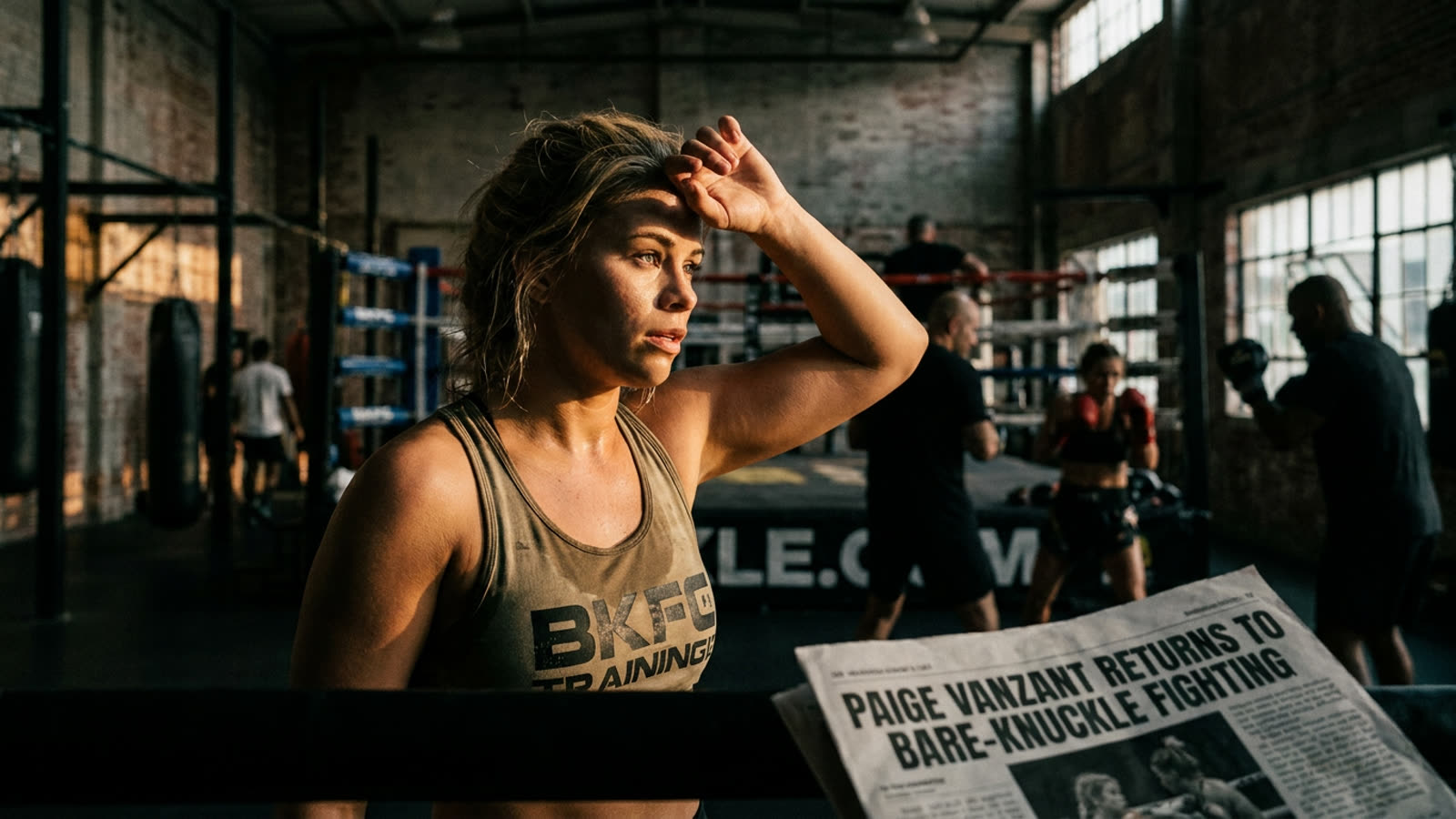
Paige VanZant has never been content with a single lane. The 32-year-old former UFC flyweight, who parlayed middling octagon results into a substantial social-media empire, is set to face Ashley Diaz de Villegas in what promises to be her most consequential bare-knuckle bout yet — a fight that will determine whether she remains a legitimate combat-sports attraction or completes her transition into pure celebrity spectacle.
VanZant's trajectory since leaving the UFC in 2020 has been a case study in modern athlete brand-building. She signed with Bare Knuckle Fighting Championship, launched a lucrative OnlyFans account, competed in influencer boxing matches, and maintained a social-media presence that dwarfs most active UFC champions. The question hanging over her return to BKFC is whether the audience that follows her for lifestyle content will actually pay to watch her bleed.
The Diaz de Villegas factor
Ashley Diaz de Villegas represents a genuine threat to VanZant's narrative. Unlike some of VanZant's previous opponents — selected, critics alleged, more for promotional value than competitive challenge — Diaz de Villegas brings legitimate striking credentials and none of the hesitancy that sometimes afflicts fighters facing celebrities. She has little to lose and everything to gain from handing VanZant a decisive defeat.
Bare-knuckle fighting's appeal lies precisely in its refusal to soften the violence. No gloves means faster knockouts, more cuts, and a rawness that boxing's padding obscures. For VanZant, whose brand depends partly on conventional attractiveness, the stakes extend beyond win-loss records. A disfiguring loss could complicate the influencer economics that now constitute the bulk of her income.
The economics of crossover fighting
VanZant's career illuminates a broader shift in combat sports. Traditional metrics — championship belts, pound-for-pound rankings — matter less than they once did when Instagram followers can be monetized directly. Jake Paul demonstrated that YouTube fame converts to pay-per-view buys regardless of boxing pedigree. VanZant is testing whether the same logic applies in reverse: can an athlete with declining competitive results maintain relevance through sheer content-creation savvy?
BKFC has bet heavily on this proposition, paying VanZant sums reportedly far exceeding what her fight record alone would command. The promotion needs her audience; she needs their platform. Whether this symbiosis produces compelling sport or merely content remains the central tension of her post-UFC career.
Our take
VanZant deserves credit for refusing the graceful retirement that her early UFC celebrity could have funded indefinitely. There is something admirable about a fighter who keeps fighting, even when the financial incentives point toward safer ventures. But bare-knuckle boxing is unforgiving, and Diaz de Villegas looks hungry. This bout will reveal whether VanZant's competitive fire still burns or whether she has become, as her harshest critics suggest, a celebrity who occasionally gets punched for content.