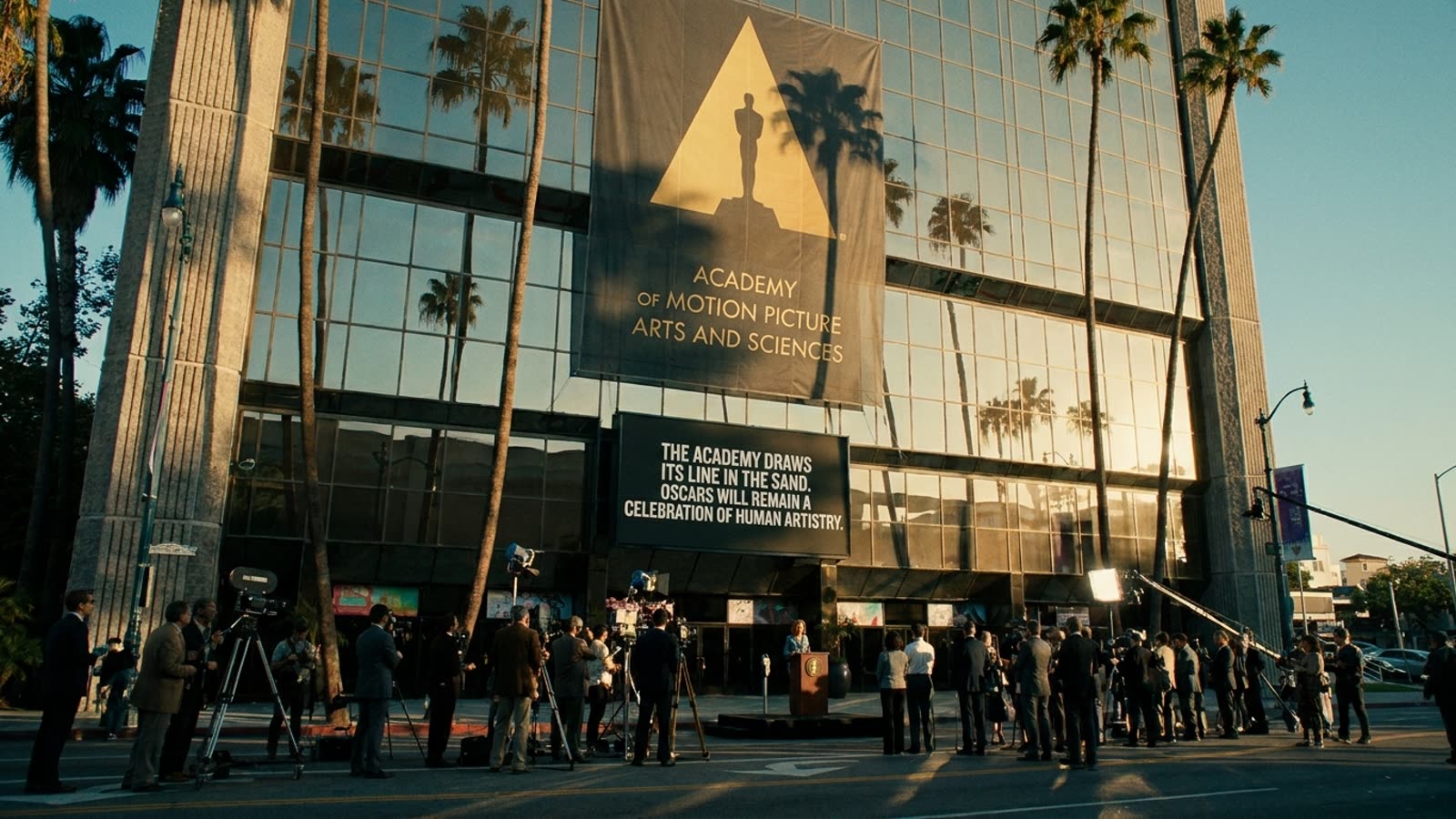
The Oscars have always been a monument to human vanity dressed up as artistic achievement, and the Academy of Motion Picture Arts and Sciences apparently intends to keep it that way. Speaking in Tokyo this week, Academy president Lynette Howell Taylor offered the clearest articulation yet of how Hollywood's most prestigious awards body plans to navigate the generative AI tsunami: by ignoring it, more or less, and continuing to reward the flesh-and-blood creators who still insist on doing things the hard way.
"Always" is a dangerous word in any industry undergoing technological upheaval, but Taylor deployed it without apparent hesitation when describing the Academy's commitment to human-driven excellence. The subtext is unmistakable: no matter how convincingly a machine can composite a performance, score a scene, or write dialogue that passes the Turing test, the little gold man will remain reserved for people.
The practical problem
The Academy's stance sounds principled until you consider the enforcement nightmare it creates. Modern filmmaking already relies on AI-assisted tools for everything from de-aging actors to generating crowd scenes to cleaning up dialogue in post-production. Where exactly does "AI-assisted" end and "AI-created" begin? The Academy has yet to publish bright-line rules, and the technology is evolving faster than any committee can draft policy.
Taylor's remarks also arrived alongside hints that the international feature category may see rule adjustments, a tacit acknowledgment that the Academy's existing frameworks are showing strain. If they're willing to tinker with eligibility criteria for foreign films, the AI question will eventually demand similar attention—whether the leadership admits it now or not.
The strategic calculation
Hollywood's guilds spent much of 2023 and 2024 fighting for AI protections in their contracts, and the Academy's position aligns neatly with that labor consensus. By doubling down on human authorship, the Oscars reinforce their relevance to the creative community that votes for them—a community that has existential reasons to believe machines shouldn't win awards. It's a savvy bit of constituency management disguised as artistic philosophy.
There's also a branding dimension. The Oscars have struggled for years with declining viewership and accusations of irrelevance. Positioning the ceremony as a last bastion of authentic human creativity gives the awards a narrative purpose beyond industry backslapping. In an age of synthetic everything, the Academy is betting that audiences will still care about celebrating what real people can do.
Our take
The Academy's declaration is less a policy than a prayer—a hope that the distinction between human and machine creativity will remain legible long enough for the Oscars to matter. It probably won't. Within a decade, the most interesting films may be collaborative works where human and artificial intelligence are so intertwined that separating their contributions becomes meaningless. When that day arrives, the Academy will either adapt or become a quaint historical society honoring a craft that no longer exists in pure form. For now, though, the message is clear: Hollywood's highest honor still requires a pulse.