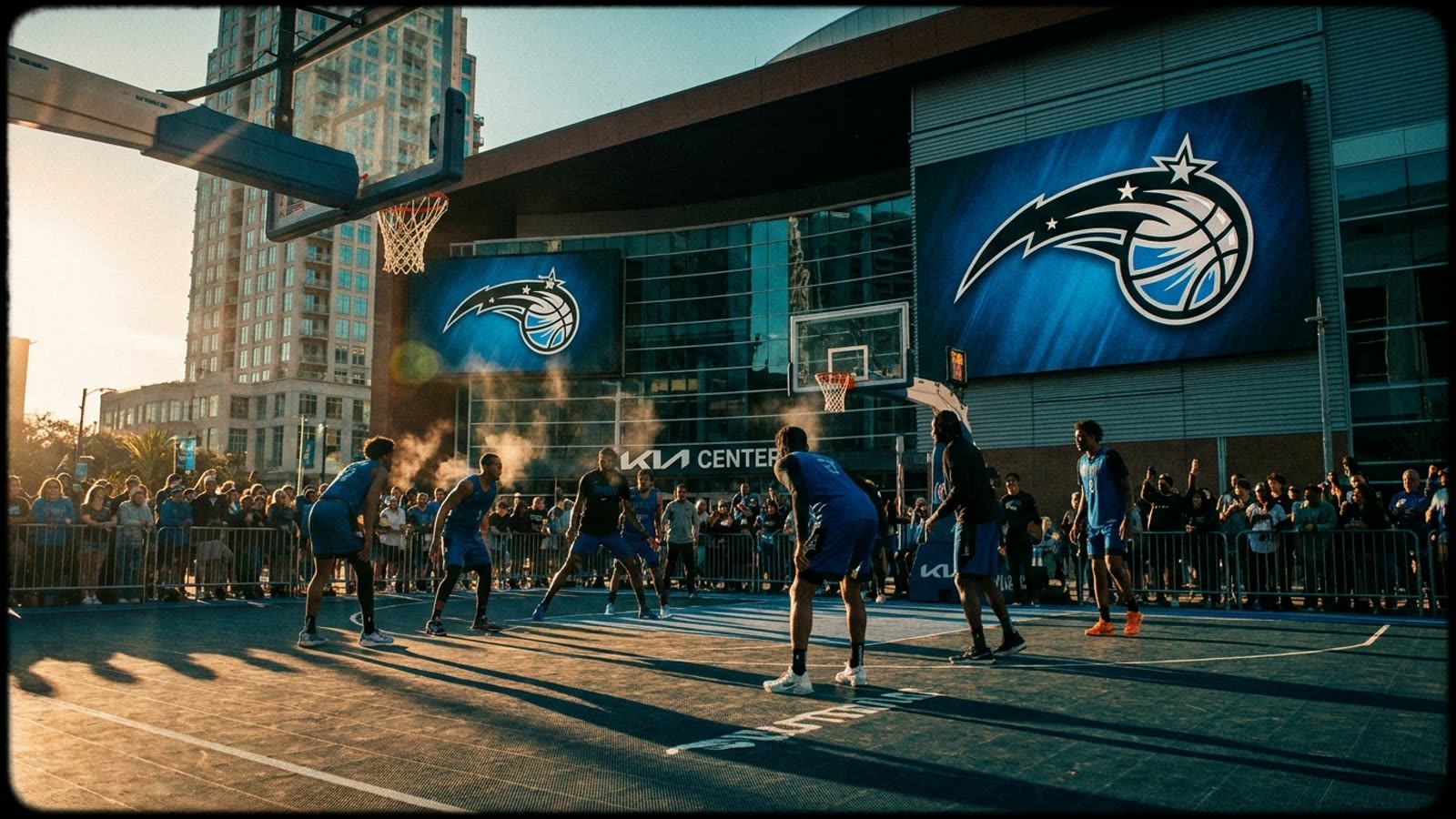
The most telling conversations in the NBA right now are not about the Lakers' latest reinvention or the Celtics' title defense. They are about Orlando—a franchise that has spent a decade in irrelevance and now finds itself the subject of genuine league-wide curiosity. Rival executives are not watching the Magic with fear, exactly, but with the kind of analytical fascination usually reserved for a chemistry experiment that might produce gold or might explode.
The Magic's situation is deceptively simple on the surface: a young team that exceeded expectations, a front office with assets to burn, and a window that appears to be opening. Beneath that surface lies the central tension of modern roster construction—when do you cash in developmental chips for win-now upgrades, and when do you trust the process?
The Paolo Problem (Which Is Not Really a Problem)
Paolo Banchero enters his fifth season as the franchise cornerstone, and rival scouts describe him in terms that would make any GM salivate: a 6-foot-10 playmaker who can create his own shot, facilitate for others, and anchor a half-court offense. The question is not whether Banchero is good enough to build around—he clearly is—but whether Orlando's supporting cast can elevate him to true contention.
Franz Wagner's extension looms as the next major decision, and the Magic's willingness to pay market rate will signal their ambitions. The Wagner-Banchero pairing has shown flashes of two-way dominance, but playoff basketball demands a third creator, and Orlando's options there remain thin.
Why Rivals Are Circling
The league's interest in Orlando is not purely academic. Several front offices view the Magic as a potential trade partner precisely because of their surplus of young talent and draft capital. A team with this many assets can either consolidate them for a star or watch other franchises poach their depth.
The expansion discussion adds another layer. With Seattle and Las Vegas expected to join the league within the next few years, Orlando's timeline becomes more urgent. Do you strike now, while the talent pool remains concentrated, or do you risk dilution?
The Coaching Variable
Jamahl Mosley has earned respect for developing young players without sacrificing competitive spirit, but playoff success remains elusive. The Magic's defensive identity—built on length, switching, and controlled chaos—translates well to postseason basketball in theory. Whether Mosley can make the tactical adjustments required for a seven-game series against elite competition is the open question.
Our take
Orlando is the NBA's Rorschach test. Optimists see a future dynasty in embryo; skeptics see another promising young team that will plateau in the second round. The truth is probably somewhere in between, but the Magic's next twelve months will determine which narrative wins. They have the assets to make a bold move, the youth to justify patience, and the pressure of a league that has noticed. Standing still is the only option that guarantees failure.