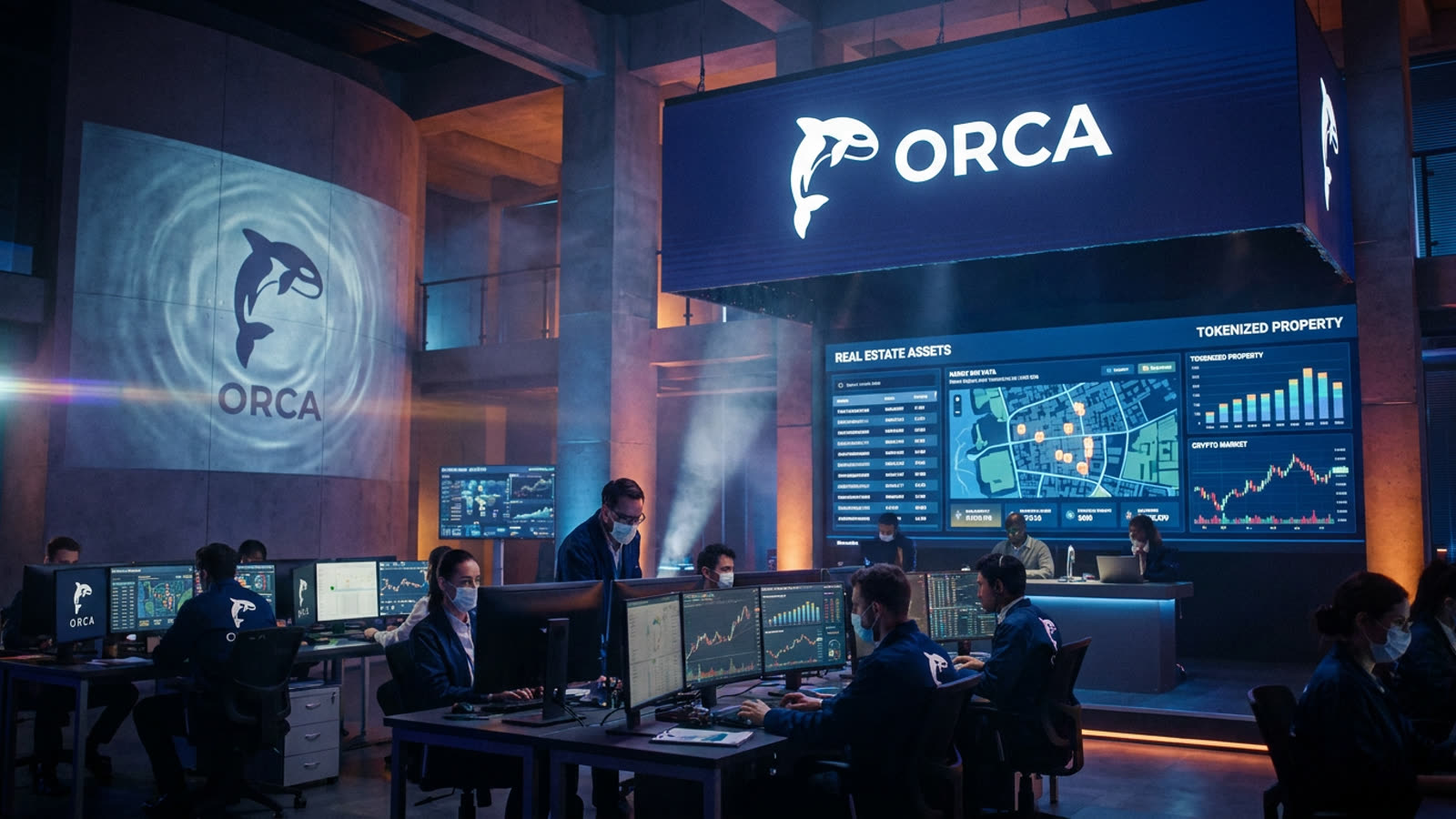
Orca, the dominant decentralized exchange on Solana, is opening a new front in crypto's long-promised tokenization revolution—a dedicated marketplace for real-world assets that will let users trade everything from tokenized treasuries to fractional property stakes without leaving the chain's native trading infrastructure.
The move represents a calculated bet that DeFi's next growth phase won't come from another animal-themed token but from the mundane machinery of traditional finance: bonds, real estate, commodities, and the other instruments that Wall Street has spent the past two years threatening to put on blockchains. Orca is positioning itself as the trading layer for whatever actually arrives.
The infrastructure thesis
Orca's marketplace addresses a genuine gap in the tokenization stack. While issuers from BlackRock to Franklin Templeton have launched tokenized funds, and protocols like Centrifuge and Maple have built lending markets around real-world collateral, secondary trading remains fragmented. Most tokenized assets sit in wallets, illiquid, waiting for institutional platforms that may never achieve the depth of public DEXs.
Solana's speed and cost structure make it a natural candidate for high-frequency trading of low-margin instruments—exactly the profile of tokenized treasuries, which offer yields in the low single digits and cannot absorb meaningful transaction fees. Orca's existing liquidity pools already process billions in monthly volume; routing RWA trades through the same concentrated liquidity mechanisms could provide instant depth that purpose-built platforms struggle to match.
The compliance question
The harder problem is regulatory. Tokenized securities, unlike stablecoins, carry transfer restrictions, KYC requirements, and jurisdictional limitations that sit awkwardly on permissionless rails. Orca's marketplace will need to accommodate these constraints without fragmenting liquidity into compliance silos—a balance that has defeated previous attempts to marry DeFi mechanics with securities law.
Solana's ecosystem has been experimenting with identity layers and permissioned pools, but none have achieved the scale necessary to matter. Orca's success will depend on whether issuers trust its compliance architecture enough to whitelist the venue, and whether retail users find enough tradeable assets to justify the onboarding friction.
The competitive landscape
Orca is not alone in chasing this market. Ethereum's Uniswap has explored institutional pools, and newer chains like Avalanche have built dedicated subnets for tokenized assets. But Solana's recent momentum—driven partly by memecoin speculation, partly by genuine infrastructure improvements—gives Orca a window to establish first-mover advantage in a category that could define the next cycle.
The timing is deliberate. With stablecoin legislation advancing in Washington and major banks quietly building tokenization capabilities, the industry consensus holds that RWAs will finally cross from pilot programs to production scale within the next eighteen months. Orca is betting its marketplace will be ready when they arrive.
Our take
Tokenization has been crypto's most durable vaporware—always two years away, perpetually awaiting regulatory clarity that never quite materializes. Orca's marketplace is a sensible hedge: if RWAs do arrive at scale, having the trading infrastructure already built is worth more than any first-mover advantage in issuance. If they don't, the exchange has lost little beyond engineering hours. The real signal will come from which issuers actually list, and whether compliance frameworks hold under regulatory scrutiny. Until then, this is infrastructure looking for an asset class—a familiar position in crypto, but one that occasionally pays off.