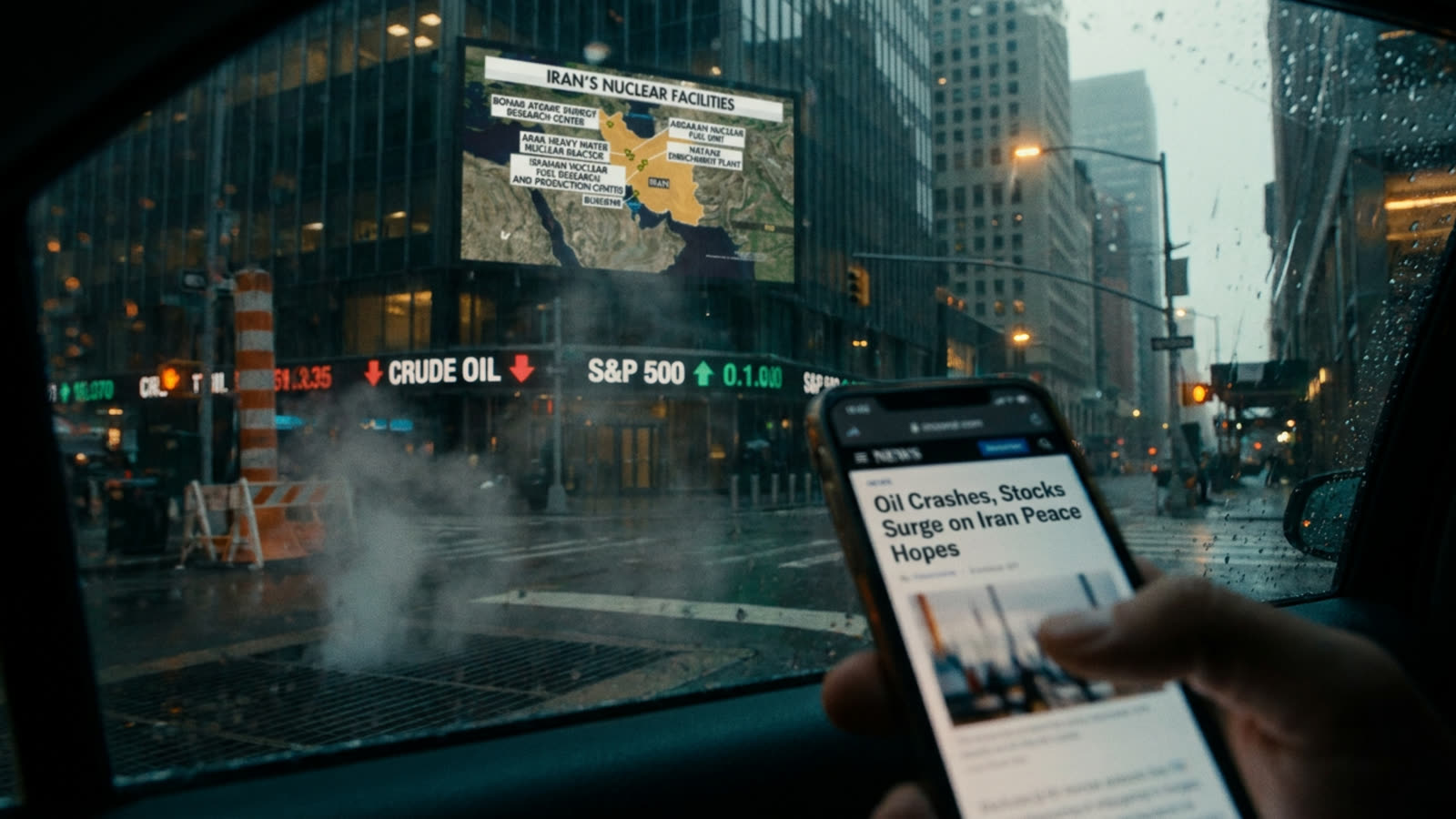
The speed with which markets moved tells you everything about the tension they've been holding. Within hours of the Trump administration signaling that an Iran nuclear deal was "taking shape," Brent crude cratered below $70 a barrel for the first time since February, while the S&P 500 posted its best single-day gain in three months. Traders didn't wait for details, signatures, or verification protocols. They simply exhaled.
This is what happens when geopolitical risk becomes so embedded in asset prices that even the suggestion of its removal triggers a repricing cascade. The Strait of Hormuz premium—that invisible tax on every barrel of oil that passes through the world's most strategically fraught chokepoint—appears to be evaporating in real time, whether or not the underlying diplomacy justifies the optimism.
The mechanics of a relief rally
Oil's 8% plunge wasn't just about Iranian barrels potentially returning to legal markets. It was about insurance costs, shipping routes, and the elaborate hedging structures that energy traders have maintained for months as tensions escalated. When those hedges unwind simultaneously, the move amplifies. Energy stocks, which had been market leaders on supply-scarcity narratives, gave back weeks of gains in a session.
Meanwhile, rate-sensitive sectors—technology, homebuilders, consumer discretionary—caught a bid on the logic that cheaper oil means lower inflation, which means a more accommodative Federal Reserve. The two-year Treasury yield dropped as traders recalibrated their expectations for the September meeting. The entire financial ecosystem repositioned around a diplomatic development that remains, at this hour, more aspiration than agreement.
What markets are assuming
The implied bet is substantial: that sanctions relief will bring meaningful Iranian supply back online, that OPEC+ won't cut production to offset the new barrels, and that the deal will actually hold through what promises to be a contentious ratification process. Each assumption carries significant uncertainty. Iran's oil infrastructure has degraded under years of underinvestment. Saudi Arabia has shown little appetite for ceding market share. And any agreement will face immediate legal challenges from hawks in Congress who view engagement with Tehran as capitulation.
Yet markets have decided to front-run all of it. The risk-reward calculus, evidently, favors being long equities and short crude heading into what could be weeks of negotiation.
Our take
This is either prescient positioning or a classic buy-the-rumor setup waiting for a sell-the-news reversal. The market's willingness to move this aggressively on diplomatic atmospherics—before any text, any timeline, any mechanism for enforcement—speaks to how desperately investors want to believe the geopolitical backdrop is improving. It might be. But the last time markets priced in Middle East peace this enthusiastically, the subsequent disappointment was measured in percentage points lost and volatility spikes endured. The trade may work. The certainty with which it's being executed almost certainly won't.