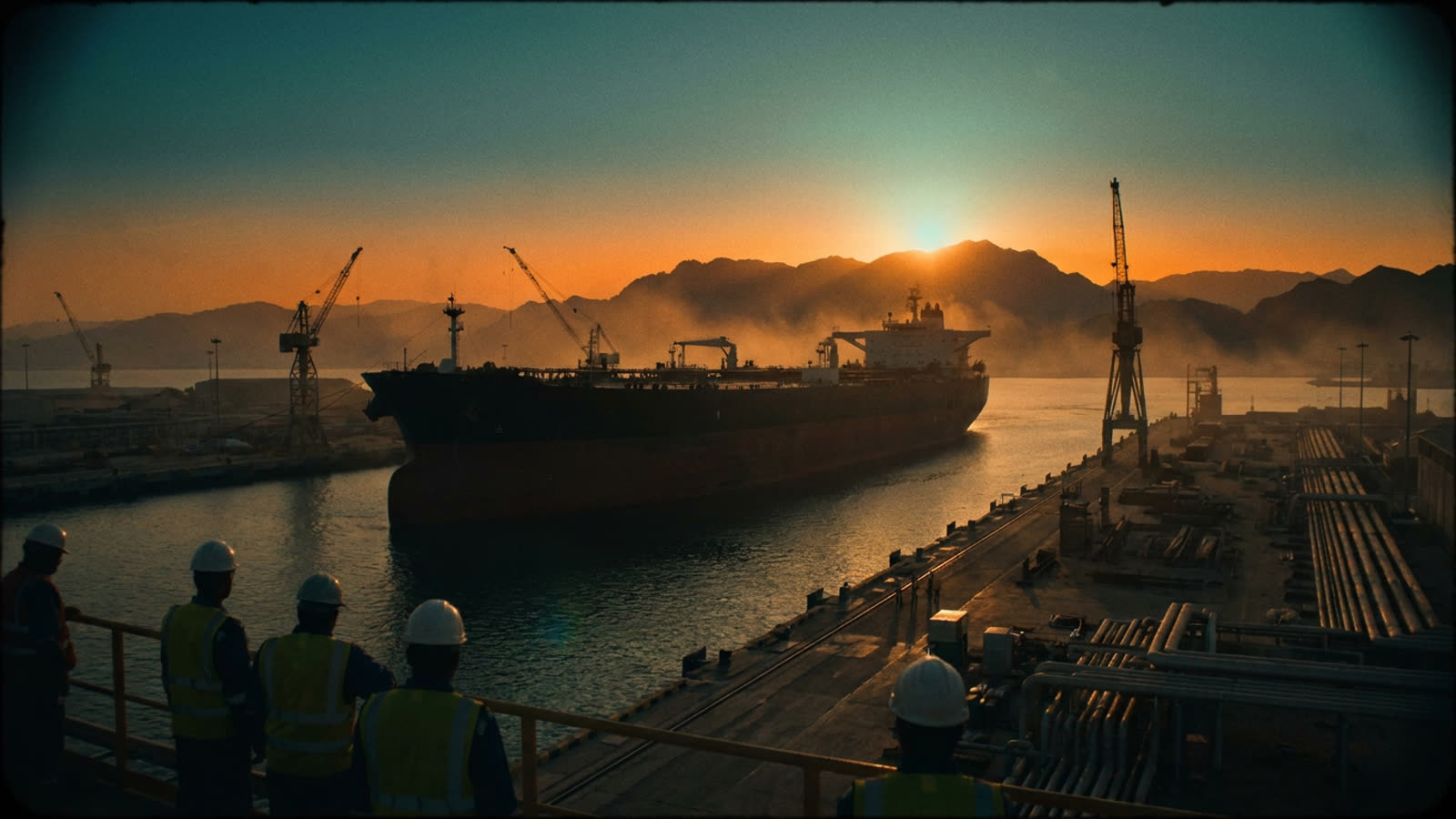
Commodity traders have a habit of front-running history, and on Friday they sprinted. Brent crude slid past $62 a barrel—its lowest level since early 2024—after reports that American and Iranian negotiators in Muscat had agreed on the broad contours of a deal to reopen the Strait of Hormuz and wind down hostilities. No text has been released; no signatures have been affixed. Yet the market, which spent the past year pricing in supply disruptions and tanker-insurance premiums, decided the war premium was no longer worth carrying.
The move is significant not because oil is cheap—it has been cheaper—but because of its velocity. A single-session drop of this magnitude typically follows a confirmed ceasefire or a surprise inventory glut. Neither has occurred. What has occurred is a collective judgment by energy desks in London, New York, and Singapore that the probability distribution around Middle East supply has shifted decisively toward normalization.
The mechanics of the unwind
For months, Iranian crude has been effectively off the global market, squeezed by sanctions, insurance restrictions, and the physical reality of a contested chokepoint. That scarcity supported prices even as demand softened in China and Europe. Now traders are modeling a scenario in which Iranian barrels—perhaps a million or more per day—return within the year. The arithmetic is brutal for long positions: OPEC-plus already holds spare capacity it has been reluctant to deploy, and American shale producers remain disciplined but ready to drill if prices warrant.
The dollar's parallel weakness amplifies the effect. A softer greenback makes oil cheaper for buyers outside the United States, theoretically supporting demand, but the geopolitical signal overwhelmed the currency math. Traders sold first and asked questions later.
Winners and losers
Consumers in importing nations—India, Japan, much of Europe—stand to benefit if the slide holds. Lower energy costs feed directly into headline inflation, giving central banks room to ease or at least pause. The European Central Bank, which has been cautious about cutting rates while energy volatility persisted, may find its June meeting less fraught.
Producers face a different calculus. Saudi Arabia and the Gulf states have fiscal breakevens well above current prices; a sustained slump would force difficult choices about spending and output. American shale executives, many of whom promised shareholders capital discipline, will be tested if Brent lingers in the low sixties. And Russia, already squeezed by sanctions and discount pricing to Asian buyers, loses another lever of economic leverage.
Our take
Markets are not foreign-policy analysts, but they are ruthlessly efficient at aggregating information. Friday's plunge is a vote of confidence—hedged, probabilistic, but real—that the diplomats in Oman are closer to success than the cautious official statements suggest. If the traders are wrong, oil will snap back and someone will lose a great deal of money. If they are right, the global economy just received a modest but meaningful tailwind, and the post-war energy order is already being priced in before the war is formally over.