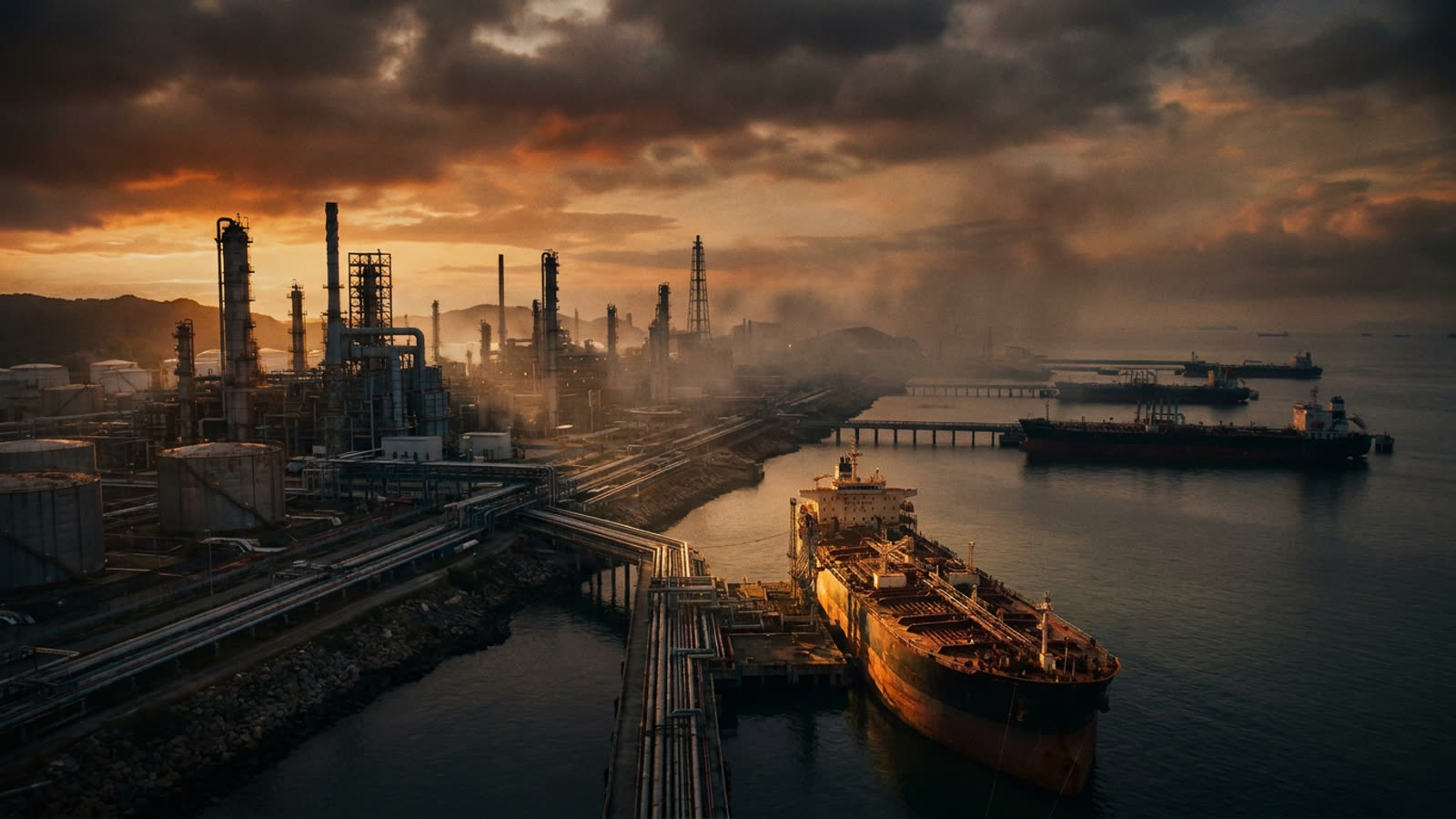
The oil market just told you everything you need to know about how much fear has been priced into every barrel: the mere possibility of a U.S.-Iran deal sent crude tumbling sharply, erasing weeks of war-premium gains in a single session. Not an actual agreement—just the news that one might be days away.
This is the market confessing. For months, traders have been paying a hefty insurance premium against the worst-case scenario in the Persian Gulf: sustained conflict, disrupted shipping lanes, Iranian oil permanently off the table. Now that premium is being unwound at speed, and the repricing is telling us something important about where energy prices might settle if diplomacy actually succeeds.
The anatomy of a fear discount
Brent crude and WTI both dropped several percentage points on reports that a peace framework could materialize within days. The move was swift and decisive—the kind of coordinated selling that happens when algorithmic traders and human speculators simultaneously realize they're overexposed to a risk that may be evaporating.
The math here is brutal for anyone who went long on conflict. Iranian oil production, constrained by sanctions and war, represents a meaningful chunk of global supply that could theoretically return to markets. Even partial normalization would add barrels at a moment when demand growth remains uncertain and OPEC+ is already managing a delicate production balance. The market isn't waiting for signatures; it's front-running the possibility.
What this means for inflation
Central bankers in Washington, Frankfurt, and London are watching these charts with intense interest. Energy costs remain the wild card in the inflation equation—the variable that can undo months of careful monetary tightening or accelerate the path back to target. A sustained drop in oil prices would filter through to gasoline, shipping costs, and eventually core goods prices within quarters.
The European Central Bank, which just last week signaled continued vigilance on inflation, may find its job considerably easier if crude stabilizes at lower levels. The Federal Reserve's rate path could similarly bend toward earlier easing if energy disinflation proves durable. This is the macroeconomic dividend of diplomacy that rarely gets priced into political calculations.
The fragility of the trade
But here's the catch: oil markets are trading a rumor, not a reality. The same reports indicating progress also note that a deal could take days to finalize—diplomatic language for "anything could still go wrong." If talks collapse, if hardliners on either side torpedo the framework, crude will snap back violently. The traders unwinding positions today will scramble to rebuild them tomorrow.
This is the peculiar volatility of geopolitically-driven commodities. Unlike earnings reports or economic data, diplomatic outcomes are genuinely unpredictable. The market is essentially placing a probability-weighted bet on peace, and that probability is shifting hour by hour based on leaks, briefings, and the body language of negotiators.
Our take
The oil market's reaction is rational but premature. Yes, an Iran deal would fundamentally alter energy economics, and yes, the war premium was probably overdone. But trading the headline before the ink dries is a game that burns as many players as it rewards. The smarter read here isn't about where to position on crude—it's about what this volatility reveals: energy markets remain hostage to geopolitics in a way that makes long-term planning nearly impossible. For corporations, governments, and investors alike, that uncertainty is itself a cost, and no peace deal fully eliminates it.