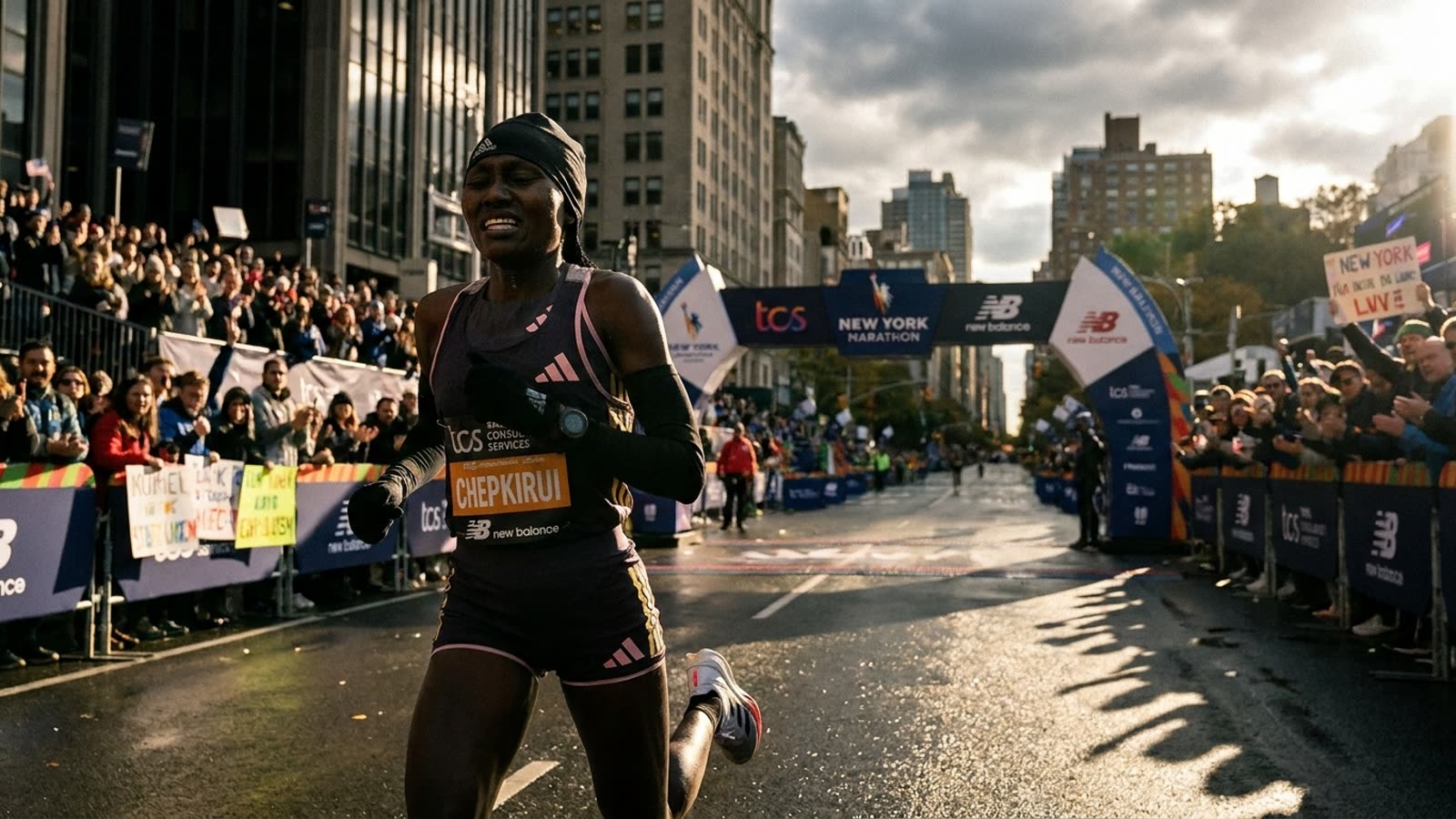
The New York City Marathon has always been more theater than race — five boroughs, two million spectators, and a finish line in Central Park that transforms exhausted runners into instant folklore. On Sunday, Sheila Chepkirui of Kenya delivered a performance worthy of the stage, pulling away from compatriot and defending champion Hellen Obiri in the final 150 meters to claim her second title in the world's most-watched 26.2-mile event.
The margin was agony-thin, the drama maximal. Chepkirui and Obiri ran shoulder-to-shoulder through Brooklyn, Queens, the Bronx, and into Manhattan, trading surges that whittled the lead pack down to two Kenyan women who have spent the better part of five years trading victories at the sport's highest level. When Chepkirui finally broke free on the slight downhill toward Tavern on the Green, it was less a sprint than a controlled collapse forward — the kind of finish that separates marathon champions from marathon contenders.
A debut for the ages
The men's race offered its own narrative surprise. Sweden's Jonas Almgren, the reigning world half-marathon champion, chose New York for his full-marathon debut and rewarded the gamble with a victory that announced European distance running's quiet resurgence. Almgren's win marks the first time since 2009 that a European man has taken the NYC title, and it arrives amid a broader shift: Scandinavian and British athletes are increasingly competitive at distances once dominated almost exclusively by East African runners.
Almgren's approach was tactically conservative through 20 miles, then audaciously aggressive over the final 10K — a blueprint that suggests he understands the marathon's peculiar math, where the race truly begins when most runners' legs have already quit.
The marathon's commercial moment
New York's race is the crown jewel of the Abbott World Marathon Majors, and Sunday's dual thrillers will only accelerate the sport's commercial momentum. Broadcast viewership for major marathons has climbed steadily since the pandemic, driven partly by the running boom that filled parks worldwide during lockdowns and partly by the sport's TikTok-friendly accessibility — no equipment, no team, just shoes and suffering. Sponsors have noticed: prize purses across the Majors have increased by roughly 40 percent since 2022, and appearance fees for elite athletes now rival those in mid-tier tennis.
For Chepkirui, the win cements her status as the best women's marathoner currently racing. For Almgren, it opens a door to the kind of global recognition that track specialists rarely achieve. For the sport itself, the New York double-header offered a reminder that distance running's oldest format remains its most compelling.
Our take
Marathons reward patience, and Sunday's races rewarded viewers who stayed through the final miles. Chepkirui's finishing kick was the product of years of near-misses and tactical education; Almgren's debut win was the payoff for a half-marathon career spent learning how to suffer efficiently. In an era of instant gratification, the marathon remains stubbornly analog — no VAR, no timeouts, just 26.2 miles of unscripted human drama. That's why it still matters.