The summit in Geneva was supposed to clarify Nvidia's China problem. Instead, it confirmed that clarity was never on offer.
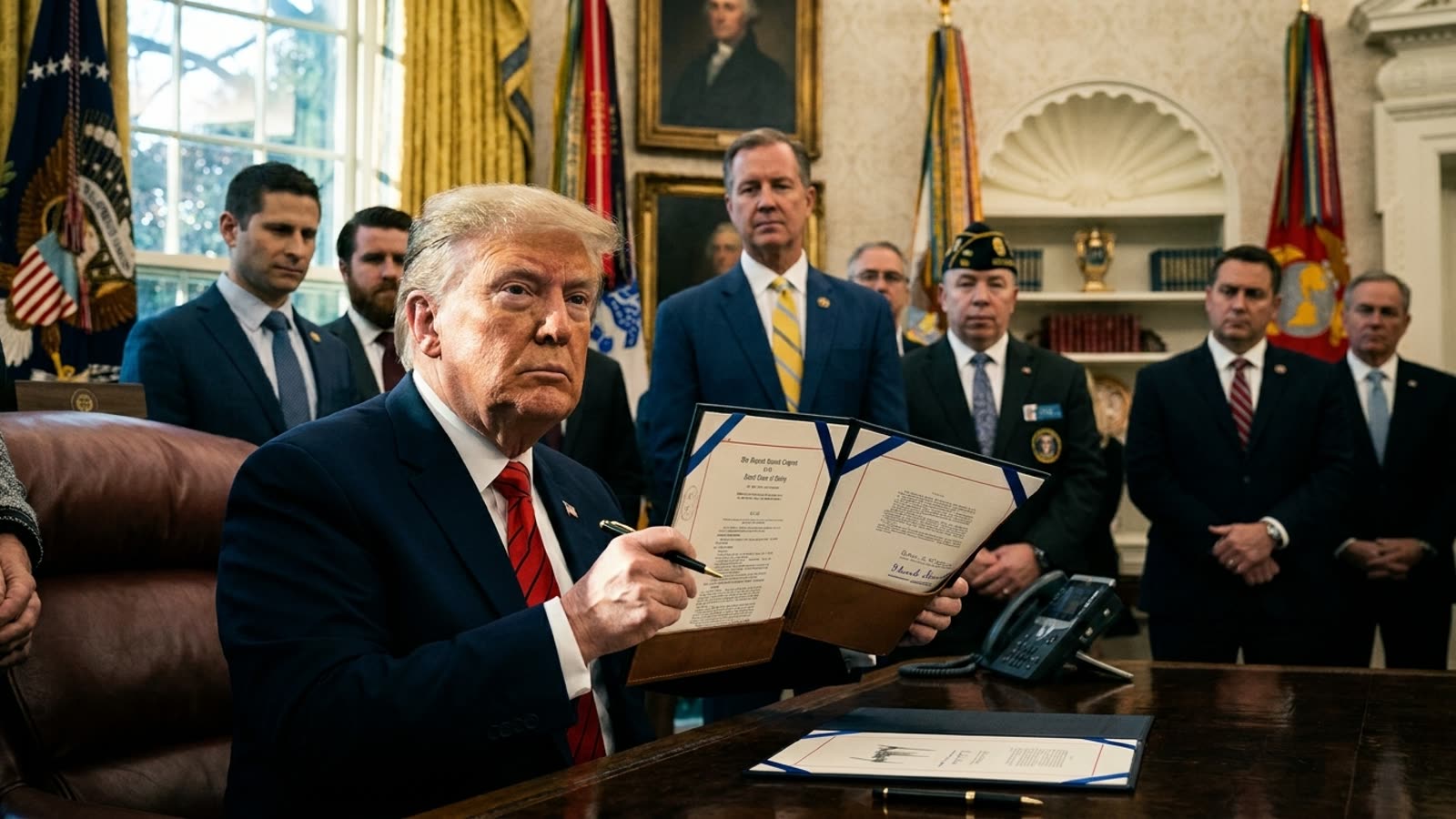
After two days of talks between President Trump and President Xi, the status of Nvidia's chip exports to China remains precisely where it was before Air Force One touched down: suspended in regulatory amber, subject to licensing requirements that Beijing calls discriminatory and Washington calls essential. The two leaders issued a joint statement praising "constructive dialogue on technology cooperation." They announced nothing concrete about semiconductors.
For Jensen Huang, this diplomatic non-outcome arrives at an awkward moment. Nvidia's data-center revenue—the engine behind its $2.8 trillion valuation—grew 18% last quarter, but China-derived sales fell for the third consecutive period. The company has already designed three different chips specifically to comply with U.S. export controls, each one promptly rendered obsolete by subsequent rule changes. At some point, the exercise starts to resemble Sisyphus with better margins.
The Huawei factor changes the calculus
What makes this moment different from previous U.S.-China chip skirmishes is the accelerating competence of domestic Chinese alternatives. Huawei's Ascend 910C processor, released in February, now powers training clusters at Baidu, Alibaba, and ByteDance. Independent benchmarks suggest it performs at roughly 80% of Nvidia's H100 on large language model workloads—a gap that was 50% eighteen months ago.
More significantly, Chinese cloud providers are redesigning their infrastructure around the assumption that American chips may become permanently unavailable. Alibaba Cloud announced last month that all new AI capacity would be "supply-chain sovereign" by 2027. Tencent has made similar commitments. These are not hedging strategies; they are architectural decisions that, once made, are expensive to reverse.
Washington's leverage is eroding
The Biden and Trump administrations both operated on the theory that choking China's access to advanced chips would slow its AI development by years. The evidence increasingly suggests the timeline was optimistic. Chinese labs have compensated through algorithmic efficiency, aggressive talent recruitment, and what one researcher called "the clarifying effect of sanctions"—a forced march toward self-sufficiency that might have taken a decade under normal market conditions.
This does not mean export controls were pointless. They have imposed real costs and delays. But the strategic window in which those controls could have established permanent American dominance appears to be closing faster than policymakers anticipated. Every quarter that Nvidia cannot sell freely into China is a quarter that Huawei's installed base grows.
Our take
Nvidia remains an extraordinary company with an extraordinary moat in the West. But the China story has shifted from "temporarily restricted growth market" to "market that is actively engineering its exit from Nvidia dependency." The summit's non-result is, in that sense, the worst possible outcome for Huang: not a resolution that reopens China, nor a clean break that lets everyone move on, but an indefinite limbo that gives Chinese competitors exactly the runway they need. Sometimes the cruelest thing diplomacy can do is buy time for the wrong side.