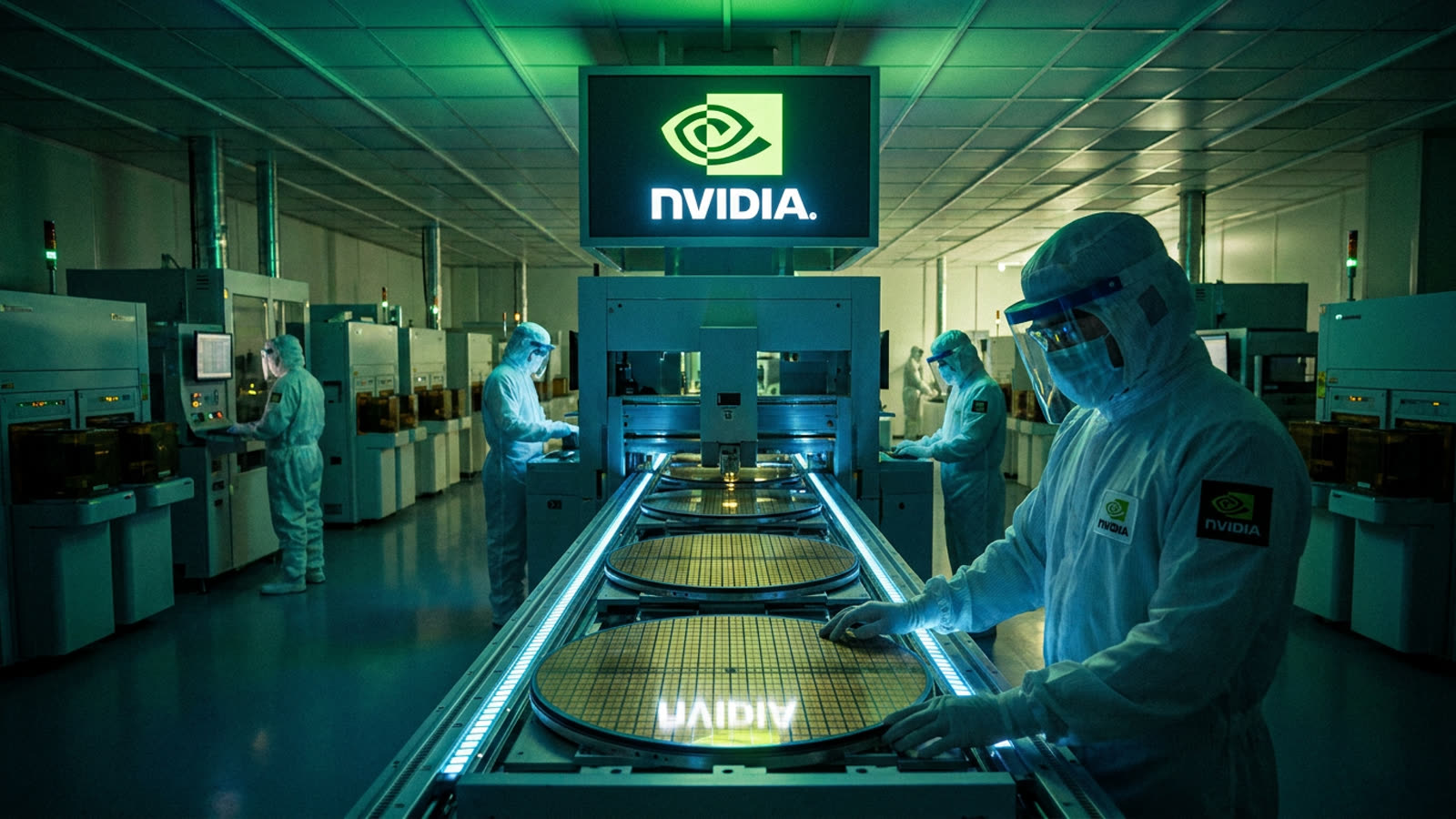
When a company with $80 billion in annual revenue and margins that would make a luxury-goods executive weep decides it needs to tap the bond market for $25 billion, the question isn't whether it can raise the money. It's what it plans to do with the firepower.
Nvidia's first bond issuance since 2021 arrives at a peculiar moment. The chipmaker is printing money faster than any semiconductor company in history, yet it's choosing to borrow rather than rely solely on its cash machine. The logic is straightforward: with interest rates still elevated but credit spreads tight for investment-grade issuers, Nvidia can lock in relatively cheap long-term capital while its stock trades near all-time highs and its credit rating remains pristine. Why dilute shareholders when bondholders are practically begging to lend?
The strategic calculus
The proceeds will almost certainly fund some combination of manufacturing capacity expansion, research and development acceleration, and strategic acquisitions. Nvidia's current bottleneck isn't demand—every hyperscaler, enterprise, and sovereign wealth fund wants its chips—it's supply. TSMC, which fabricates Nvidia's most advanced processors, is already running at capacity. Locking in future wafer allocations requires capital commitments years in advance.
There's also the competitive moat to consider. AMD and Intel are scrambling to catch up, but they're at least two generations behind on AI training silicon. Custom chips from Google, Amazon, and Microsoft pose a longer-term threat, but none have demonstrated they can match Nvidia's CUDA software ecosystem. The $25 billion war chest buys time and optionality—whether that means acquiring smaller AI companies, funding next-generation chip architectures, or simply outspending rivals on talent.
Why now, specifically
Timing matters. The Federal Reserve's next move remains uncertain, and while markets are pricing in eventual cuts, the window for locking in favorable terms could narrow. Nvidia's debt-to-equity ratio is negligible by any standard measure; adding $25 billion barely moves the needle on a company with a market capitalization exceeding $3 trillion. The rating agencies will shrug.
More subtly, this signals management's confidence that the AI investment cycle has years left to run. Companies don't issue long-dated bonds when they expect demand to crater. Jensen Huang is betting that by the time these bonds mature, Nvidia will be even more dominant than it is today—and that the interest payments will look like rounding errors against future profits.
Our take
Nvidia borrowing money it doesn't technically need is the corporate finance equivalent of a poker player raising when they're already holding aces. The company is so far ahead that it can afford to play offense with other people's capital while preserving optionality for its shareholders. The real risk isn't that Nvidia misjudges the AI cycle—it's that regulators eventually notice just how much of the global compute stack runs through a single company in Santa Clara. For now, the bond market is happy to fund the monopoly.