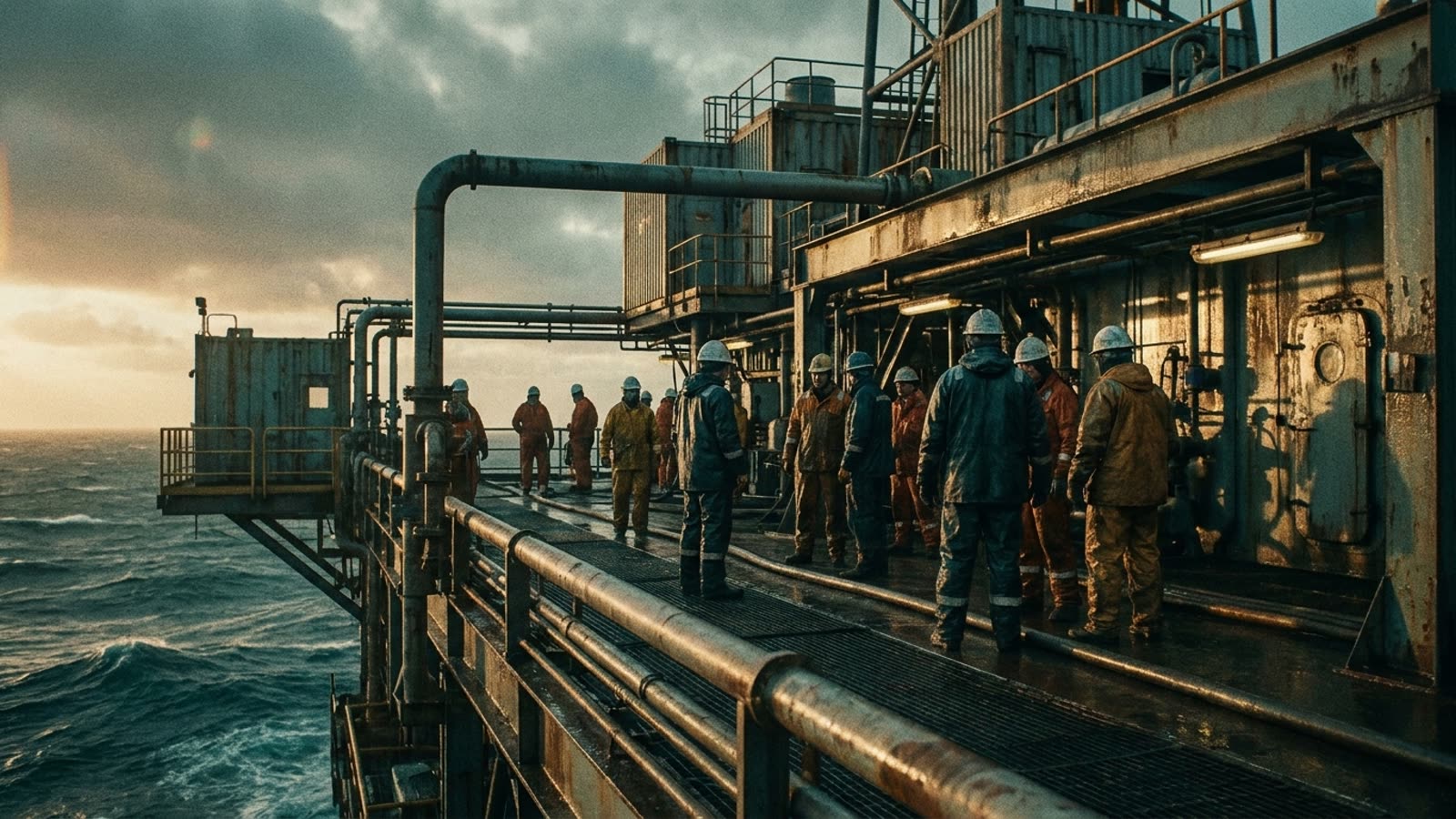
The timing could hardly be worse. As Britain enters its third consecutive winter of elevated heating costs and the government scrambles to reassure households that energy bills will stabilize, offshore workers across the North Sea are preparing to down tools. The walkouts, which could begin within weeks, threaten to disrupt fuel supplies at precisely the moment the country can least afford it.
The dispute centers on the familiar grievances of industrial action—pay, conditions, the creeping sense that workers are being squeezed while shareholders prosper—but the context makes it explosive. The North Sea basin is aging, its infrastructure increasingly temperamental, its workforce shrinking. A strike now would not merely inconvenience the oil majors; it could cascade through supply chains that were never designed for this kind of shock.
The arithmetic of disruption
More than 160 workers across multiple rigs have signaled their intention to strike, according to union officials who have been in increasingly fractious negotiations with operators. The number sounds modest until you consider the skeletal crews that keep these platforms running. North Sea production has declined precipitously since its peak in 1999, but the UK still relies on domestic output for roughly 40% of its oil and 45% of its gas. A coordinated walkout at even a handful of major installations could force operators to halt production entirely rather than risk safety incidents with skeleton crews.
The operators, for their part, have made the calculations that operators always make: that workers will blink, that public sympathy will erode, that the government will intervene before things get truly ugly. They may be right. But the unions have a card they have rarely played so effectively—the spectre of genuine shortage. This is not a strike at a car plant or a distribution center. This is the infrastructure that keeps lights on and homes warm.
The government's impossible position
Whitehall finds itself caught between competing imperatives. The official line remains that the UK is committed to an orderly transition away from fossil fuels, that North Sea production is a bridge, not a destination. But bridges are rather important when you are standing on one. Ministers have spent months insisting that energy security is paramount, that the lessons of the 2022 crisis have been learned, that Britain will never again be caught flat-footed by supply disruptions.
A prolonged strike would make a mockery of those assurances. The strategic petroleum reserve exists for genuine emergencies, not for industrial disputes that could have been averted with better negotiation. And the political optics of deploying emergency measures to break a strike—or of appearing to capitulate to union demands—are toxic in either direction.
Our take
The North Sea dispute is a preview of a much larger reckoning. As legacy energy infrastructure ages and the workforce that maintains it shrinks, the leverage of those who remain will only grow. Britain has spent years debating the energy transition in the abstract—targets, timelines, net-zero pledges. It has spent rather less time thinking about who, exactly, will keep the old systems running while the new ones are built. The workers preparing to strike have noticed.