Before Nora Ephron, the personal essay was largely the province of academics and memoirists working through serious trauma. After her, it became acceptable — even fashionable — to write fifteen hundred words about your neck, your apartment, or your inability to pack light. The difference was not merely tonal. Ephron understood something that most confessional writers still fail to grasp: the reader must come away feeling clever, not voyeuristic.
This was her genuine innovation. When Ephron wrote about her failed marriages, her complicated relationship with her mother, or her feelings about aging, she never positioned herself as a victim seeking sympathy or a sage dispensing wisdom. Instead, she constructed elaborate comedic arguments in which her personal disasters served as evidence for broader cultural observations. The reader laughed not at Ephron's misfortune but at the shared absurdity of being a person with a body and expectations in modern America.
The journalism beneath the jokes
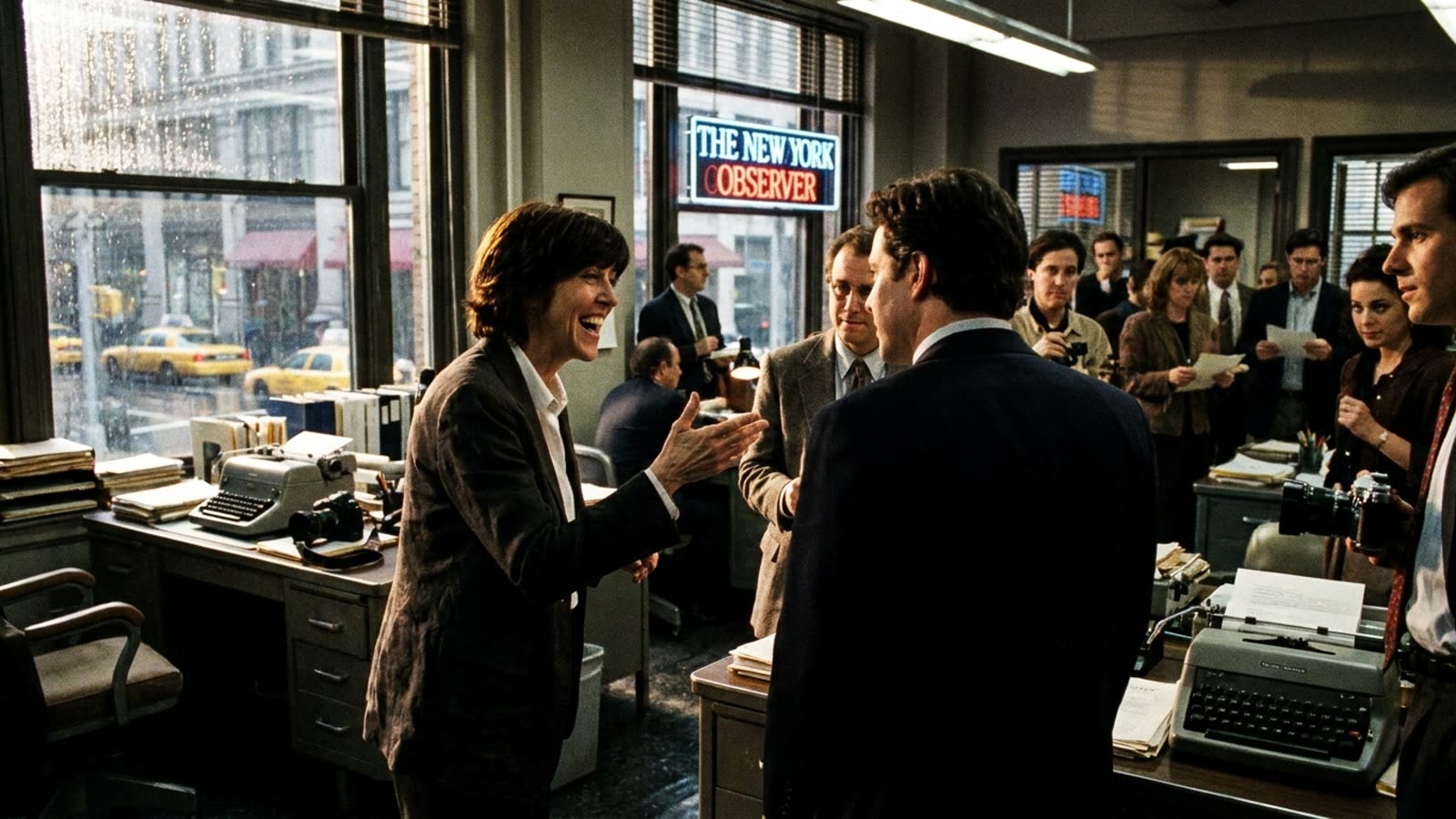
Ephron came up through magazine journalism in the 1960s, writing for Esquire and New York during an era when the field was dominated by men performing literary machismo. Her early work covered serious subjects — the women's movement, media culture, political scandal — with the same observational precision she would later apply to her own life. This background matters. Her personal essays were never mere diary entries; they were reported pieces in which she happened to be the primary source.
Consider her famous essay on her hair, which functions simultaneously as autobiography, social history, and cultural criticism. She traces her relationship with her curls through decades of American beauty standards, Jewish assimilation anxieties, and feminist politics. The personal detail is the hook, but the analysis is the substance. Lesser imitators took the wrong lesson, assuming that any personal revelation automatically constitutes insight.
The romantic comedy problem
Ephron's screenplay work, particularly the films she wrote and directed, presents a more complicated legacy. Her romantic comedies were enormously successful and remain genuinely pleasurable to watch, but they also established certain conventions — the meet-cute, the grand gesture, the idea that the right relationship will solve your fundamental problems — that have calcified into cliché. She was too intelligent not to recognize the fantasy she was selling, and her best films contain enough irony to acknowledge it. But the imitators, again, missed the nuance.
The tension between her essayistic skepticism and her cinematic romanticism was never fully resolved. In her writing, Ephron was bracingly honest about the limitations of love and the persistence of disappointment. In her films, she offered the fairy tale anyway, perhaps understanding that audiences needed both the truth and the escape.
Our take
The contemporary personal essay industrial complex owes Ephron an enormous debt it rarely acknowledges. Every viral piece about dating disasters, every confessional newsletter about domestic life, every first-person meditation on minor indignities operates in the space she carved out. But most of her successors have inherited only her willingness to share, not her discipline in shaping that sharing into argument. Ephron made it look easy, which was perhaps her greatest trick and her most misleading gift to those who followed.