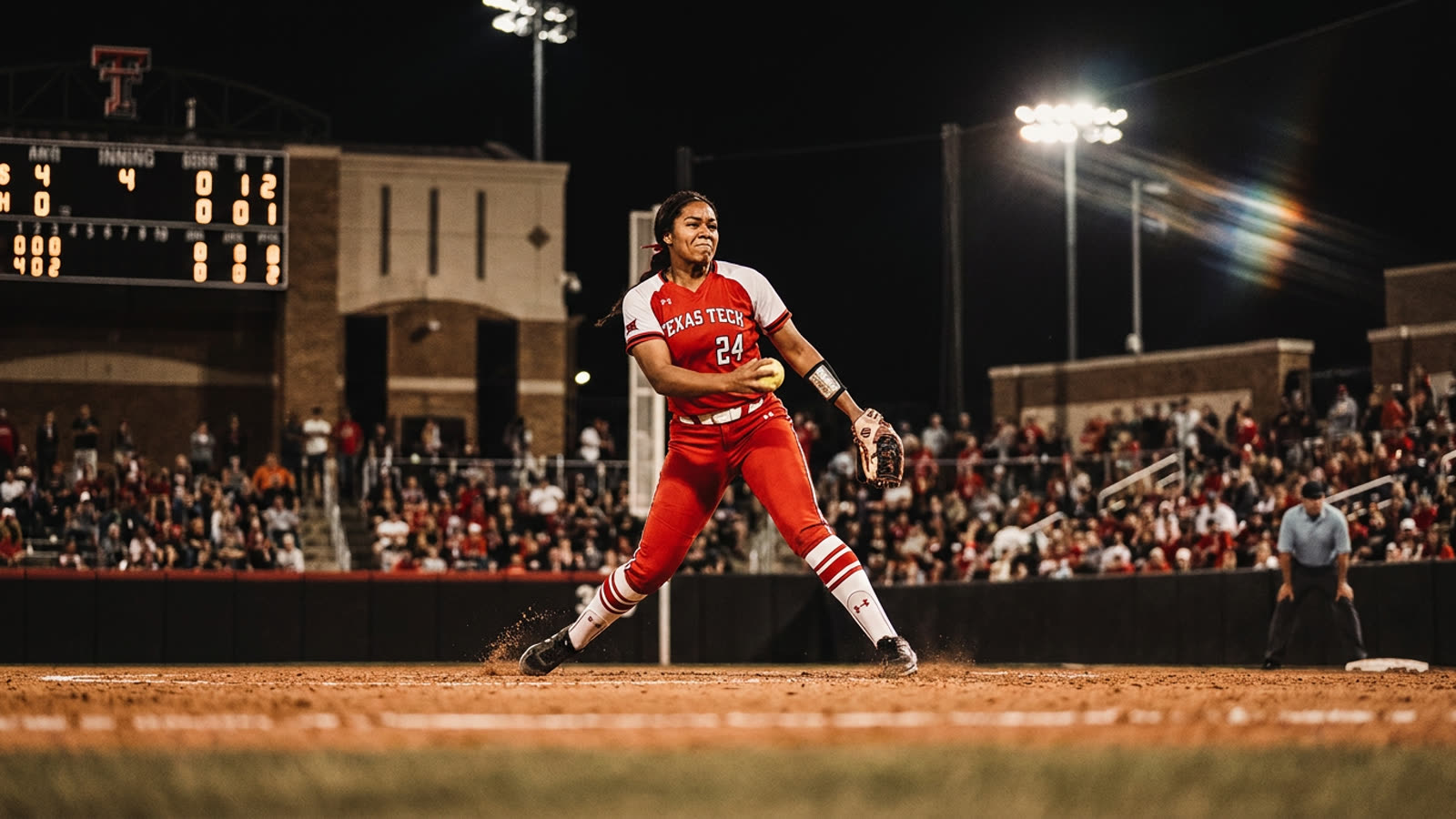
Texas Tech has spent decades building credible athletic programs across the board, pouring resources into facilities, coaching hires, and recruiting infrastructure. The Red Raiders have won national championships in men's golf and baseball. They have never won one in a women's sport. NiJaree Canady, the most unhittable pitcher in college softball, is their best chance to change that—and everyone in Lubbock knows it.
Canady transferred from Stanford after last season, a move that raised eyebrows given the Cardinal's own championship pedigree. But Texas Tech offered something Stanford couldn't: a program that would build its entire identity around her arm. The gamble has paid off spectacularly. Canady enters the Women's College World Series with a 0.58 ERA, 412 strikeouts, and a fastball that touches 75 mph—elite velocity for softball, where the mound sits just 43 feet from home plate. Opposing lineups have hit .119 against her this season.
The transfer portal's ultimate test case
The NCAA transfer portal has reshaped college athletics, but softball presents a unique case study. Unlike football or basketball, where rosters run deep and systems matter more than individual talent, softball's seven-game playoff format can hinge on a single dominant pitcher throwing complete games on short rest. Canady is the logical endpoint of portal strategy: acquire the best arm available, clear the path, and let her work.
Texas Tech coach Craig Snider has been refreshingly candid about the arrangement. "We recruited NiJaree to do exactly what she's doing," he said earlier this month. "We're not asking her to fit into our system. We built the system around her." The supporting cast has held up its end—the Red Raiders rank 12th nationally in batting average—but make no mistake: this is a one-woman show with a competent ensemble.
The pressure of firsts
For Canady, the WCWS represents familiar territory; she reached Oklahoma City with Stanford in 2024. For Texas Tech's women's athletics department, it represents something else entirely. The Red Raiders have produced Olympic athletes and All-Americans, but the program has never experienced the validation of a national championship. Athletic director Kirby Hocutt has publicly framed Canady's recruitment as a turning point for the department's ambitions.
That pressure cuts both ways. Canady is 21 years old, carrying not just her team's hopes but an institution's narrative about itself. She has handled the scrutiny with preternatural calm, crediting her faith and her family for keeping perspective. "I know what I can control," she told reporters this week. "I throw the ball. Everything else is noise."
Our take
College softball's format rewards exactly what Texas Tech has built: a team with one transcendent talent and enough competence elsewhere to avoid catastrophe. Canady is the best pitcher in the country, and she's pitching for a program that has never tasted this particular glory. That combination—elite skill meeting institutional hunger—tends to produce memorable tournament runs. Whether it produces a championship depends on whether anyone in Oklahoma City can solve a pitcher who has been, statistically, unsolvable. The smart money says no.