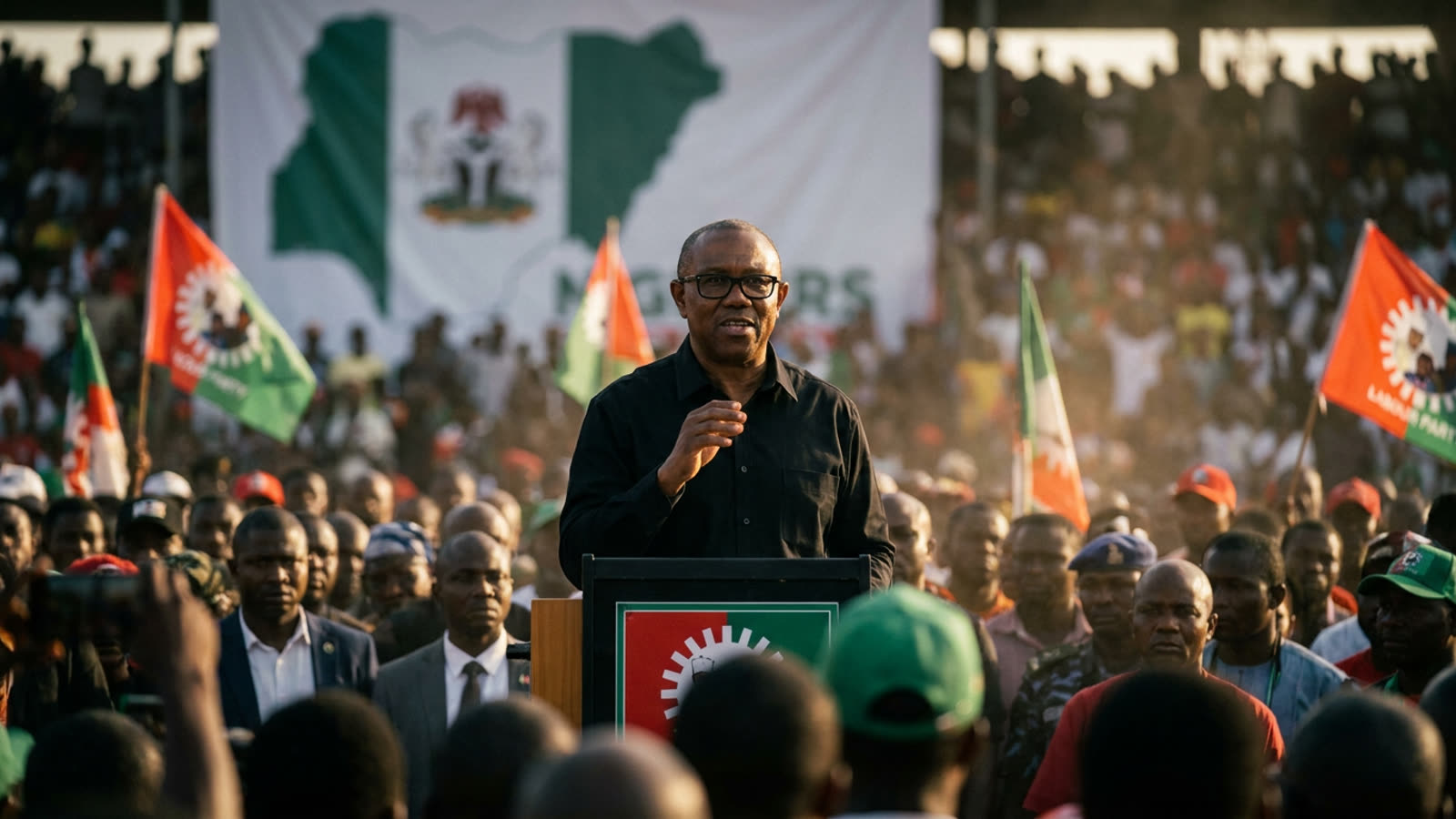
Peter Obi's announcement that he will contest Nigeria's 2027 presidential election is the most predictable move in African politics this year—and possibly the most self-defeating. The former Anambra governor, who finished third in 2023's disputed contest with 25 percent of the vote, commands genuine grassroots enthusiasm among young, urban Nigerians. But his insistence on running under the Labour Party banner rather than building a unified opposition front against President Bola Tinubu virtually guarantees another fractured race that the ruling All Progressives Congress will win by default.
The arithmetic is brutal. In 2023, Tinubu captured the presidency with just 37 percent of valid votes—the lowest winning share in Nigeria's democratic history. Obi and Atiku Abubakar of the Peoples Democratic Party together commanded 44 percent. A merged ticket, or even tactical coordination, could have forced a runoff. Instead, mutual suspicion and regional pride delivered the keys to Aso Rock to a candidate most Nigerians did not choose.
The Obidient problem
Obi's young supporters—the self-styled "Obidients"—remain the most energized political movement Nigeria has seen in a generation. Their social-media savvy and voter-registration drives genuinely expanded the electorate. But enthusiasm is not infrastructure. The Labour Party has no governors, controls no state assemblies, and lacks the ward-level machinery that delivers votes in Nigeria's patronage-heavy system. Obi's 2023 performance, impressive as it was, came almost entirely from the Southeast and Lagos; he was a non-factor across the North, where elections are won.
Running again without addressing these structural deficits is not courage. It is repetition dressed as conviction.
Tinubu's gift
The president should be vulnerable. His fuel-subsidy removal triggered the worst cost-of-living crisis in decades. The naira has collapsed. Insecurity persists across the Northwest and Northeast. Yet Tinubu retains the formidable APC apparatus and the loyalty of most northern governors. An opposition that enters 2027 divided between Obi, a PDP candidate (likely Atiku again or a northern alternative), and regional spoilers is handing him a second term on a platter.
Nigeria's winner-take-all system punishes fragmentation mercilessly. Obi's supporters argue that principle matters more than coalition math—that the PDP is too compromised to partner with. Perhaps. But principles do not govern; pluralities do.
Our take
Obi is the rare Nigerian politician who inspires genuine belief rather than transactional loyalty. That is valuable and vanishingly uncommon. But belief without strategy is sentiment, not politics. If the opposition cannot subordinate egos to arithmetic before 2027, Tinubu will coast to re-election, and the Obidients will have learned the hardest lesson in democracy: passion that refuses to compromise often loses to mediocrity that knows how to count.