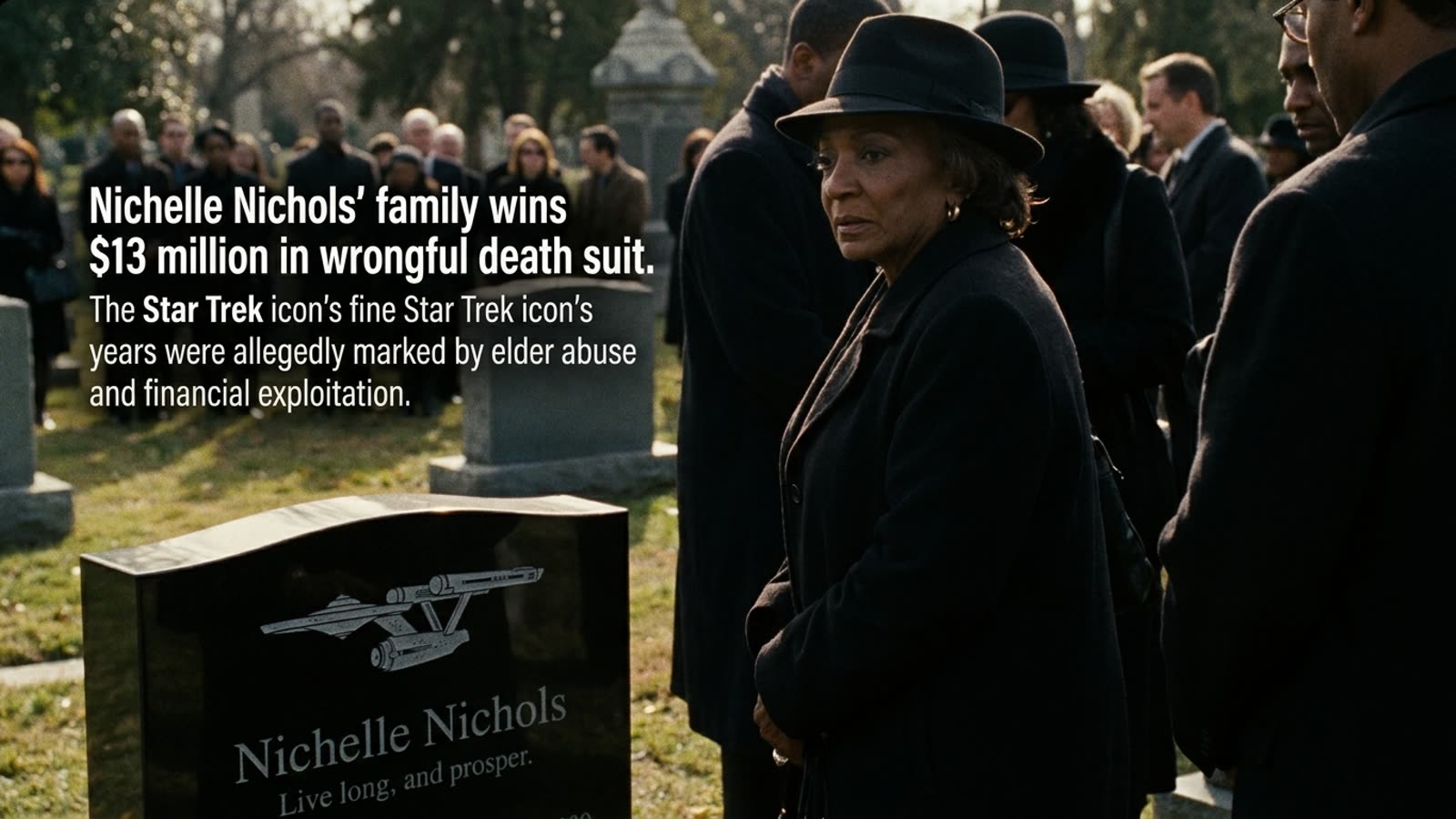
The family of Nichelle Nichols, the actress whose portrayal of Lieutenant Uhura on Star Trek broke racial barriers in American television, has been awarded $13 million in a wrongful death lawsuit that paints a disturbing picture of the icon's final years. The verdict represents both a measure of justice and a sobering reminder that even those who changed the cultural landscape can become vulnerable to exploitation in their twilight.
Nichols died in July 2022 at age 89, but the circumstances surrounding her care in the years preceding her death had long troubled her family. The lawsuit alleged that individuals responsible for managing her affairs engaged in a pattern of elder abuse, financial exploitation, and neglect that hastened her decline. The jury's substantial award suggests they found these allegations credible.
A legacy that transcended entertainment
Nichols' significance extended far beyond her screen credits. Her role as Uhura, which she nearly abandoned after the first season, became a touchstone for representation in American media. Martin Luther King Jr. himself reportedly persuaded her to remain on the show, telling her she was breaking ground that could not be ceded. She later worked with NASA to recruit minority and female astronauts, directly influencing the composition of the American space program. Mae Jemison, the first Black woman in space, cited Nichols as an inspiration.
That someone of such cultural importance could allegedly be subjected to exploitation speaks to the broader vulnerabilities facing elderly celebrities. The entertainment industry has seen numerous cases where aging stars, some suffering from cognitive decline, have had their finances and care compromised by those closest to them.
The legal reckoning
The $13 million verdict emerged from a Los Angeles courtroom after the jury heard testimony about the alleged mistreatment. While the specific defendants and detailed allegations vary across court documents, the core claim centered on a failure of duty by those who had assumed responsibility for Nichols' wellbeing. Her family had raised concerns publicly for years before her death, suggesting a prolonged battle to protect her.
The size of the award indicates the jury found not merely negligence but something more egregious. Wrongful death verdicts of this magnitude typically require evidence of willful misconduct or reckless disregard for the victim's welfare.
Our take
There is something particularly cruel about the alleged exploitation of someone who spent decades opening doors for others. Nichols gave American culture a vision of a future where race was no barrier to competence and command. That her own final chapter may have been written by people who saw only an asset to be managed—or milked—is a grim coda to an otherwise triumphant life. The verdict cannot restore what was allegedly taken from her, but it does establish a record. Sometimes that is what justice looks like: not redemption, but documentation.